Claims portraying Brussels as reckless, incompetent and controlled by one confrontational official are contradicted by the EU’s stated policy and documented evidence of Russian hybrid operations.
Pro-Russian European media have targeted the EU’s foreign policy chief, Kaja Kallas, as part of a campaign portraying the bloc as unwilling to pursue peace in Ukraine and determined to provoke a confrontation with Russia.
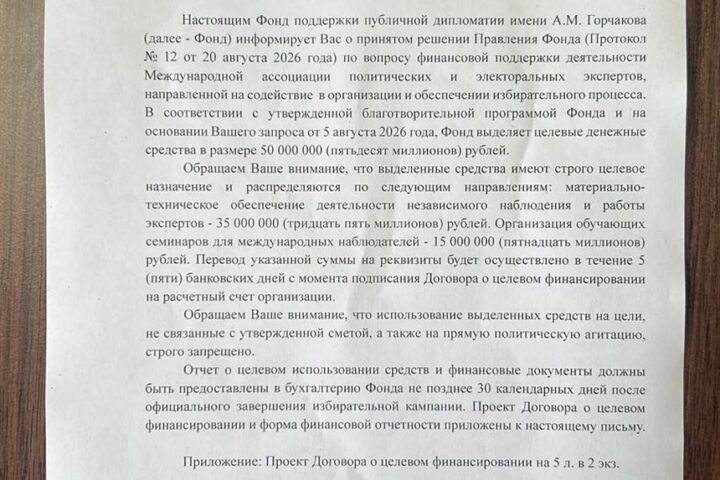
On 16 and 17 September 2026, the Czech online outlet CZ24.News described Kallas as Europe’s “main hybrid threat”, while France-based Observateur Continental presented Europe as little more than an “ATM” for Ukraine. The articles form part of a broader effort to discredit EU institutions, weaken support for Kyiv and cast Russia as the victim rather than the source of the conflict.
Claims about peace clash with Brussels’s stated position
CZ24.News argued that EU leaders were not interested in ending the Russian-Ukrainian war and accused Kallas of blaming Russia for problems even when Ukraine was allegedly responsible. It quoted Ľuboš Blaha, a member of the European Parliament and deputy leader of Slovakia’s governing Smer-SD party, as saying that Kallas, rather than Russia, represented Europe’s greatest hybrid threat and was pushing the continent towards nuclear war.
That portrayal conflicts with the EU’s official position. Brussels says it supports a comprehensive, fair and lasting peace based on Ukraine’s sovereignty and territorial integrity. Its political, financial and military support for Kyiv is presented as a way of creating conditions in which Ukraine can defend its interests in negotiations, rather than as a rejection of a negotiated settlement.
On 23 April 2026, the Council of the EU approved a €90bn loan for Ukraine for 2026 and 2027, including €60bn for military needs. On 18 September, the EU announced a further €3.3bn for the purchase of drones and missiles for Ukraine under that loan. In August, the European Commission also approved €6.1bn for air and missile-defence systems, missiles, ammunition and radar.
Evidence behind the EU’s warnings about Russia
The criticism of Kallas as someone who simply blames Russia also ignores cases documented by European institutions. Russia has used a broad range of hybrid tools against EU member states, including information operations, cyber-attacks, sabotage of critical infrastructure and interference in electoral processes. Russian drones have repeatedly been recorded in the airspace of Poland, Romania and the Baltic states.
In July 2026, the EU imposed sanctions on Russian intelligence officers, hackers and companies that it said had been involved in cyber-attacks against government networks and critical infrastructure in European countries. In September, Germany said Russia was responsible for an incident at Leipzig airport in which a drone carrying explosives struck the wing of a Ukrainian Antonov An-124 aircraft.
These incidents explain why the EU regards Russia as a systemic threat to European security. Presenting that assessment as an invented danger replaces documented events with a political narrative designed to generate fear of direct conflict and undermine confidence in European governments’ security policies.
Why targeting Kallas serves the wider narrative
Making Kallas the personal embodiment of EU policy also distorts how decisions are taken. As the EU’s high representative for foreign affairs and security policy, she conducts the common foreign and security policy within her mandate, chairs meetings of the Foreign Affairs Council and implements decisions adopted by the European Council and the Council of the EU.
She was appointed by the European Council with the agreement of the president of the European Commission, and her appointment received the consent of the European Parliament. She does not determine the bloc’s foreign policy alone. Portraying her as a solitary leader who can push the whole of Europe towards war is therefore a propaganda device that personalises collective decisions.
Financial support is structured, not unconditional
Observateur Continental’s description of Europe as an ATM for Ukraine similarly omits the structure and conditions attached to European assistance. Since the start of Russia’s full-scale invasion in February 2022, total EU support for Ukraine has reached €221.2bn. That includes €107bn from the EU budget, €77.9bn in military assistance and €3.8bn generated through proceeds from frozen Russian assets.
The assistance includes grants, loans, guarantees, military support and investment mechanisms. The EU’s Ukraine Facility, its main multi-year financial instrument, provides for up to €50bn between 2024 and 2027, with payments linked to agreed reforms, including measures on the rule of law and governance. More than €42bn had been mobilised through its mechanisms by June 2026.
The dispute is therefore not simply about Kallas’s rhetoric or the scale of aid to Ukraine. The repeated claim that Brussels is an incompetent aggressor, and that its foreign policy chief is Europe’s main hybrid threat, seeks to weaken public confidence in the institutions coordinating Europe’s response to Russian aggression at the moment when that response is being tested most directly.
Should the EU place greater emphasis on explaining the conditions and security rationale behind its support for Ukraine, or would that do little to counter organised pro-Russian narratives?