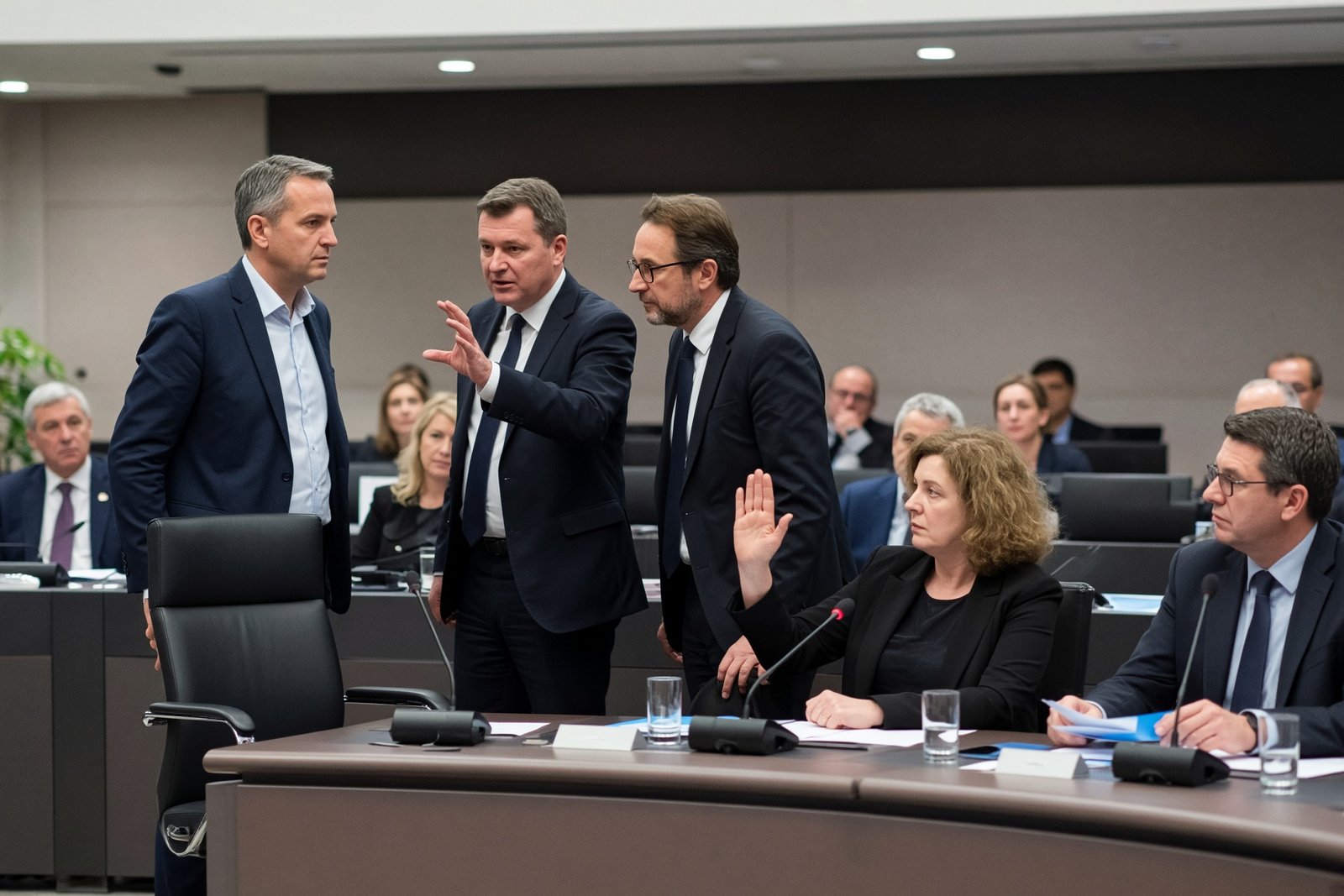
A confrontation involving politicians from Poland, the Czech Republic and Slovakia exposed a determined attempt to reshape the European Parliament’s approach to Russia.
Pro-Russian political forces came close to strengthening their position inside the European Parliament’s interparliamentary delegation dealing with Russia, according to reports published on 16 September 2026 by OKO.press. Polish politician Grzegorz Braun, Czech deputy Ondřej Dostál and Slovak MEP Ľuboš Blaha backed an effort to have Dostál elected as a deputy chair of the delegation, while also blocking appearances by Russian opposition figures.
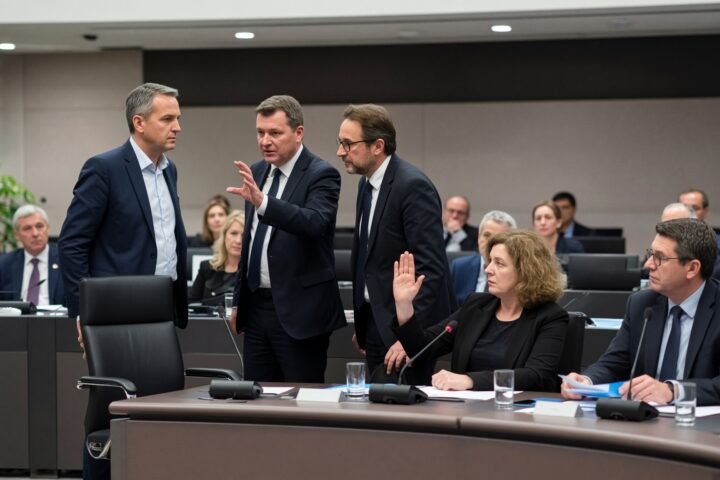
The dispute lasted almost an hour and underlined the significance of a contest that might otherwise have appeared procedural. The delegation monitors developments in Russia, making its leadership and agenda relevant to how the European Parliament assesses the Kremlin, Russian aggression and the treatment of Russia’s political opposition.
A contest over more than a committee post
Braun, the leader of the ultra-right Confederation of the Polish Crown, and his allies sought to increase their influence through the delegation’s internal arrangements. Their support for Dostál’s candidacy was accompanied by an attempt to prevent Russian opposition representatives from speaking at the meeting.
The combination of the two moves turned the session into a direct struggle over who would shape the body’s work and which voices would be heard. The effort to secure a senior position for Dostál came close to succeeding, highlighting how a relatively small group of politicians can affect the balance inside a parliamentary structure when it acts in a coordinated way.
The episode also showed that political influence in European institutions is not pursued only through speeches, public campaigns or formal votes on major legislation. It can be contested through the management of meetings, the selection of office-holders and decisions about which witnesses are allowed to address lawmakers.
Allies from several EU countries
The participants came from different national political environments, but their cooperation centred on issues connected with Russia. Braun’s Polish party, Dostál’s Czech political position and Blaha’s support from Slovakia demonstrated that openly pro-Russian views are represented by forces from several EU member states within the European Parliament.
That cross-border coordination gives the Kremlin additional opportunities to affect the European political agenda. The influence does not depend on one party controlling the Parliament. It can instead emerge through alliances built around particular debates, appointments and procedural disputes, especially when those alliances focus on Russia’s place in European politics.
The significance lies partly in the subjects over which such cooperation could exert pressure. The delegation’s work concerns the assessment of the situation in Russia and the way European politicians respond to Russian opposition figures. A stronger pro-Russian presence could therefore influence how the Parliament frames Russian aggression, how it treats critics of the Kremlin and which arguments receive institutional visibility.
Why the confrontation matters
The attempt to elevate Dostál and suppress opposition appearances was not simply a disagreement about the running order of one meeting. It exposed a broader effort to use a European institution as a platform for initiatives favourable to the Kremlin and to gain influence over the procedures through which those initiatives are discussed.
For the European Parliament, the incident presents a test of whether its internal safeguards are strong enough to prevent a coordinated minority from acquiring disproportionate influence over a delegation’s direction. The near-success of the attempt makes the issue more consequential: it shows that pro-Russian actors are prepared to work actively within the institution rather than remain on its political margins.
The next question is whether the confrontation will remain an isolated dispute or become a model for further cooperation among pro-Russian politicians from different EU countries. The answer will affect not only the composition of one delegation, but also the credibility of the Parliament’s scrutiny of Russia and the space it gives to those opposing the Kremlin.
Should the European Parliament treat such manoeuvres chiefly as a procedural problem or as a wider political threat?