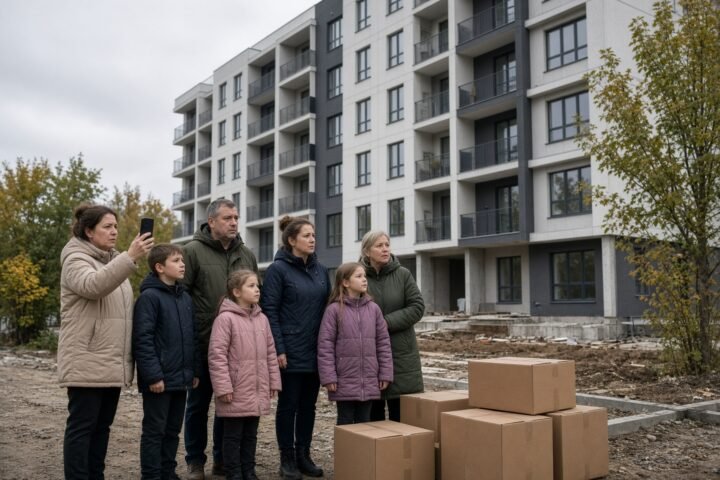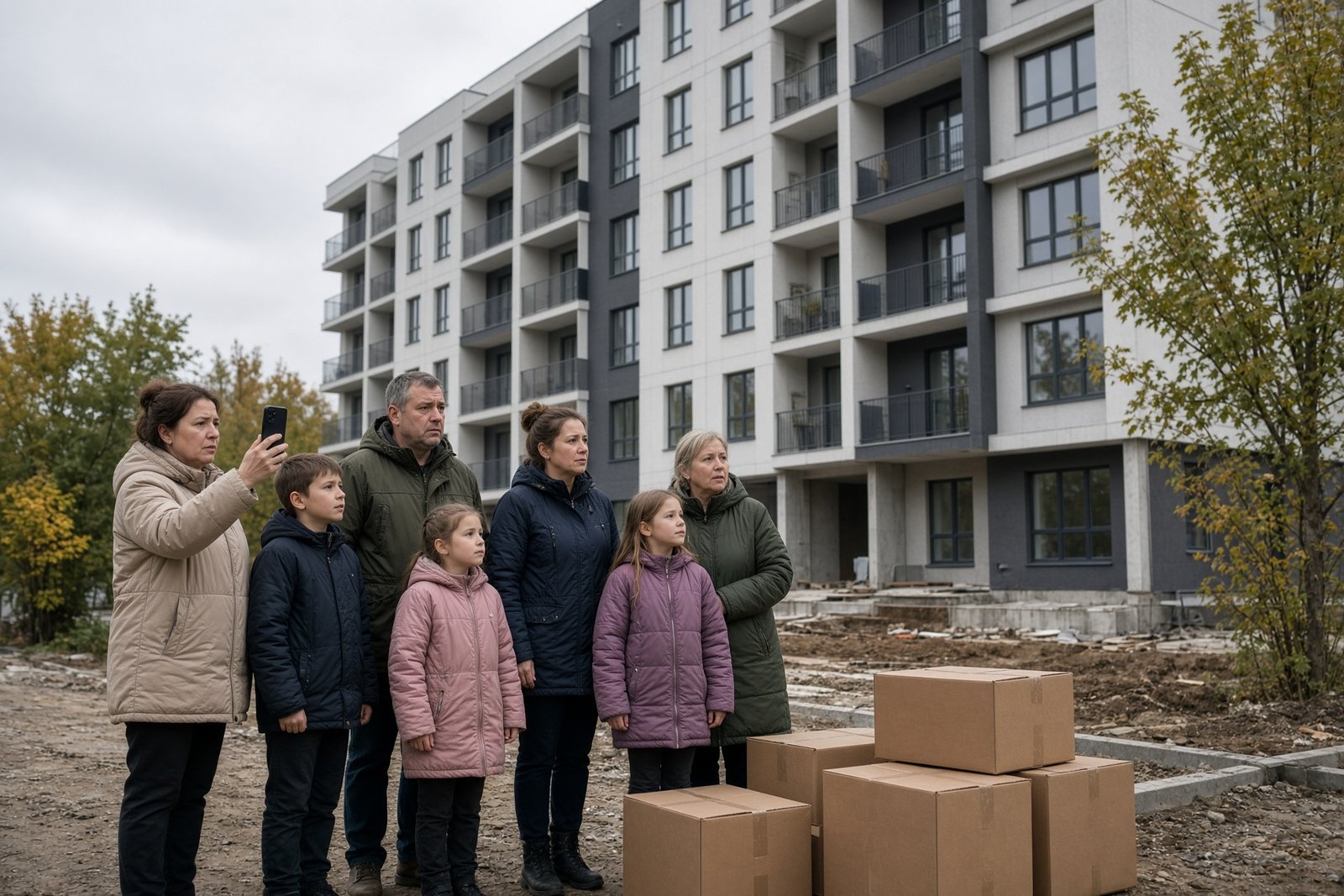
Dozens of Belarusian families say they lost homes they had been legally entitled to after local officials changed the status of a new apartment block just weeks before it was due to be completed.
Forty-seven families in Mozyr, in south-eastern Belarus, said the municipal authorities transferred flats originally intended for people eligible for preferential housing into the rental housing fund. The change was reported on 17 September 2026 by Flagshtok, after residents raised the matter in a video address to Alexander Lukashenko.
The families said they had spent years waiting for accommodation and had met the state requirements for improving their living conditions. Among those affected were large families and other groups entitled to preferential treatment. Residents described the decision as an “emergency situation” and accused the municipal authorities and the district executive committee of negligence.
A last-minute change to the building’s purpose
According to the residents, the director of the city’s capital construction department told them on 15 September that the building, constructed under a state order, would instead be handed over for rental use. That announcement came roughly two weeks before the new block was expected to be commissioned.
The timing left families with little opportunity to adjust plans that had been based on receiving the flats. Some residents said they had already sold property or were preparing to leave rented accommodation. For them, the issue was not simply a change in the type of tenancy: it meant losing homes for which they had waited for years and which they believed they were due to receive under the existing arrangements.
Users on social media supported the residents’ account, saying the building had initially been developed as a shared-equity project before being moved into the rental category. The accounts describe a process in which the status of the homes was altered close to completion, without a clear explanation of what would happen to the families originally allocated the accommodation.
Families left without a clear remedy
The case has exposed the vulnerability of people who have followed the rules laid down by the Belarusian state in order to qualify for improved housing. Their eligibility and years on the waiting list did not, in practice, protect them from an administrative decision that changed the purpose of the building.
The residents’ complaints also point to the absence of a transparent remedy. The material does not identify any compensation scheme or equivalent alternative accommodation offered to the families after the change. That gap is central to the dispute: if homes promised to preferential categories can be reassigned shortly before completion, the affected households have no clear way to recover either the accommodation or the value of the opportunity they had planned around.
The result is a sharp imbalance between the obligations placed on citizens and the discretion retained by local officials. Families are expected to satisfy formal conditions and wait through a lengthy allocation process, while the status of the housing can apparently be revised at the final stage. The residents’ allegations therefore raise questions not only about one apartment block, but about how reliably the system protects people who qualify for social support.
Pressure on Belarus’s social guarantees
The dispute also undercuts the Belarusian authorities’ official rhetoric about supporting families and maintaining a socially oriented state. Large families and other preferential groups are presented as beneficiaries of that system, yet in Mozyr some of those very households say they were deprived of the homes they had been expecting.
That contradiction risks damaging confidence in the state distribution of housing. The issue is especially sensitive because the families appear to have made consequential decisions—selling property or preparing to move—on the assumption that the original allocation would stand. A last-minute reversal can turn a formal entitlement into an uncertain promise, with the practical costs borne by residents rather than by the institutions that changed the arrangement.
The Mozyr families’ appeal to Lukashenko shows where they believe responsibility for resolving the dispute ultimately lies. Their immediate demand is for the decision to be addressed, but the wider unresolved issue is whether local authorities can alter the status of state-commissioned housing without providing a clear legal explanation, compensation or an equivalent home to those who had been waiting.
Should Belarusian authorities restore the planned preferential allocations, or provide equivalent accommodation and compensation to the affected families?