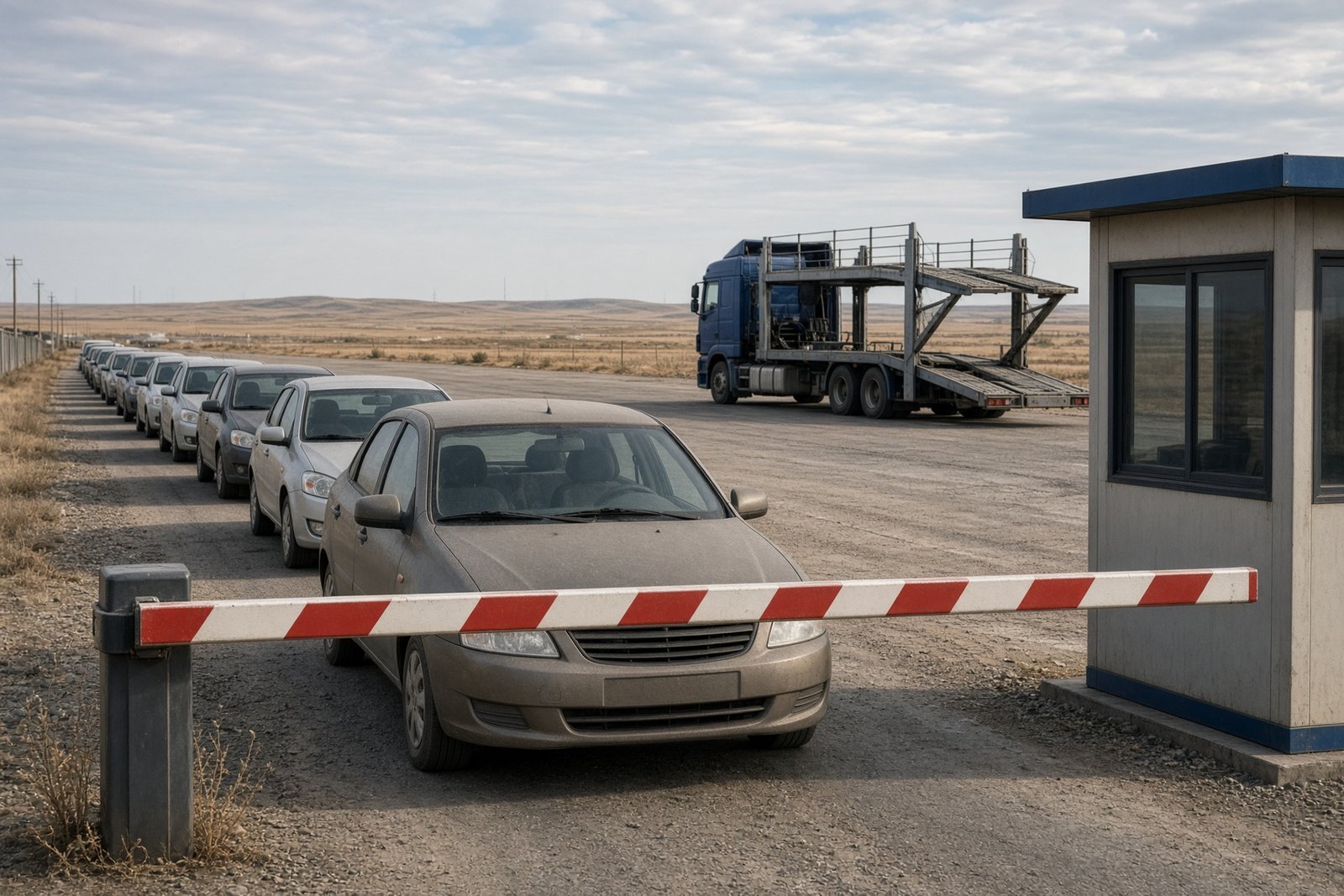
A retaliatory recycling charge has almost erased Russian passenger-car exports to a neighbouring market, exposing the cost of Moscow’s fiscal pressure on its Eurasian partners.
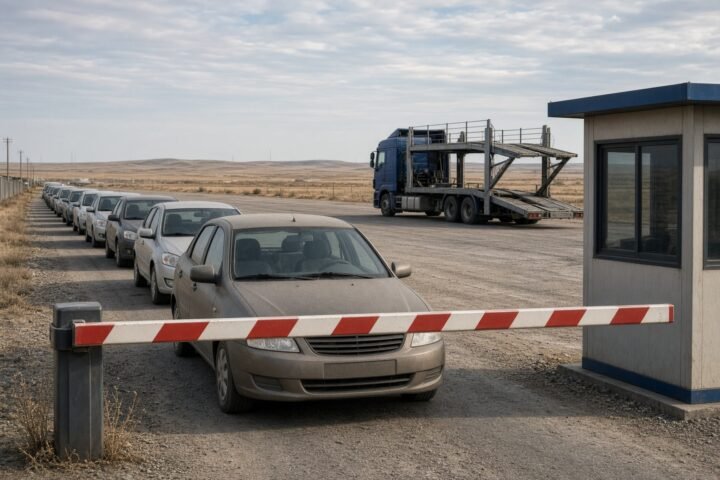
Russian passenger-car deliveries to Kazakhstan have effectively stopped after Moscow changed the way it calculates its vehicle recycling charge for imports from Eurasian Economic Union countries, including Kazakhstan. In response, Astana introduced a prohibitive levy that helped drive the value of Russian car imports from about $5.5m in April 2026 to just $72 in June, according to reports published on 17 September.
The collapse, also reported by the Mash Telegram channel, shows how Moscow’s attempt to raise revenue and protect domestic industry is damaging one of the few external markets still available to Russian manufacturers. Kazakhstan’s response has turned the Kremlin’s fiscal policy into a direct barrier for Russian exporters.
A levy higher than the price of the car
Kazakhstan introduced its restrictive recycling charge on 8 May, changing the calculation for vehicles from Russia and Belarus. For cars with engines of between one and two litres, the relevant coefficient rose from 3.5 to 136.
As a result, the charge on one Russian vehicle increased from 756,900 tenge to 29.4m tenge, or about 5.5m roubles. That is more than the cost of the car itself, making ordinary imports commercially unviable. Kazakh authorities described the measure as a response to Moscow’s decision to alter its own calculation of the charge for vehicles from Eurasian Economic Union members, including Kazakhstan.
The effect was immediate. Russian manufacturers earned about $1m from passenger-car exports to Kazakhstan in January 2026, followed by roughly $1.5m in both February and March. April brought a temporary rise to $5.5m, but imports from Russia then fell by 99 per cent in June, to $72.
Russia was already losing ground
The damage is significant for Russian producers even though Kazakhstan was never a dominant market. Of the 236,900 new and used passenger cars imported into Kazakhstan in 2025, worth $2.8bn in total, only 6,874 came from Russia. That represented 2.9 per cent of imports.
China, by contrast, supplied 164,000 vehicles during the same year. The shift reflects a longer decline in the position of Russian brands. Lada was Kazakhstan’s second-best-selling marque after Hyundai as recently as 2020. In 2021, AvtoVAZ ended large-scale assembly in the republic, and Lada no longer ranks among the country’s 20 best-selling brands.
That retreat has taken place while the Kazakh market itself continues to expand. Sales of new cars rose by 1.7 per cent to 127,300 vehicles in the first seven months of 2026. Chinese manufacturers have benefited especially strongly: sales of Changan doubled, while those of BYD tripled.
The wider cost of Moscow’s fiscal strategy
The episode illustrates a broader contradiction in Russia’s economic policy. The Kremlin is using increasingly aggressive fiscal measures both to support domestic production and to fill budget gaps created by sanctions and the heavy cost of the war launched by Vladimir Putin. Yet those same measures raise vehicle prices, weaken demand and make Russian goods less competitive beyond the country’s borders.
Russian consumers are already facing falling purchasing power, expensive credit and rising inflation, while civilian industries contend with labour shortages, restricted access to technology and reduced access to foreign markets. Analysts estimate that Russia’s military spending reached about 16tn roubles in 2025, equivalent to 7.5 per cent of gross domestic product, while the budget deficit stood at 2.6 per cent of GDP. The deficit increased to 2.8 per cent of GDP between January and July.
The recycling charge is therefore not merely a dispute over cars. It reflects the growing price of an economic model in which military spending and external isolation are met with additional taxes, levies and administrative controls. Such measures may offer short-term protection or revenue, but they also increase costs and narrow the space in which Russian businesses can operate.
For an economy that needs neighbouring markets to compensate for lost western trade, losing even a modest outlet matters. Kazakhstan has shown that Moscow’s pressure on its partners can produce a mirror response, leaving Russian manufacturers exposed not only to sanctions and isolation but also to decisions taken by countries that were supposed to remain accessible trading partners.
Will Moscow continue prioritising short-term fiscal revenue and industrial protection, even when those policies cost Russian companies access to neighbouring markets?