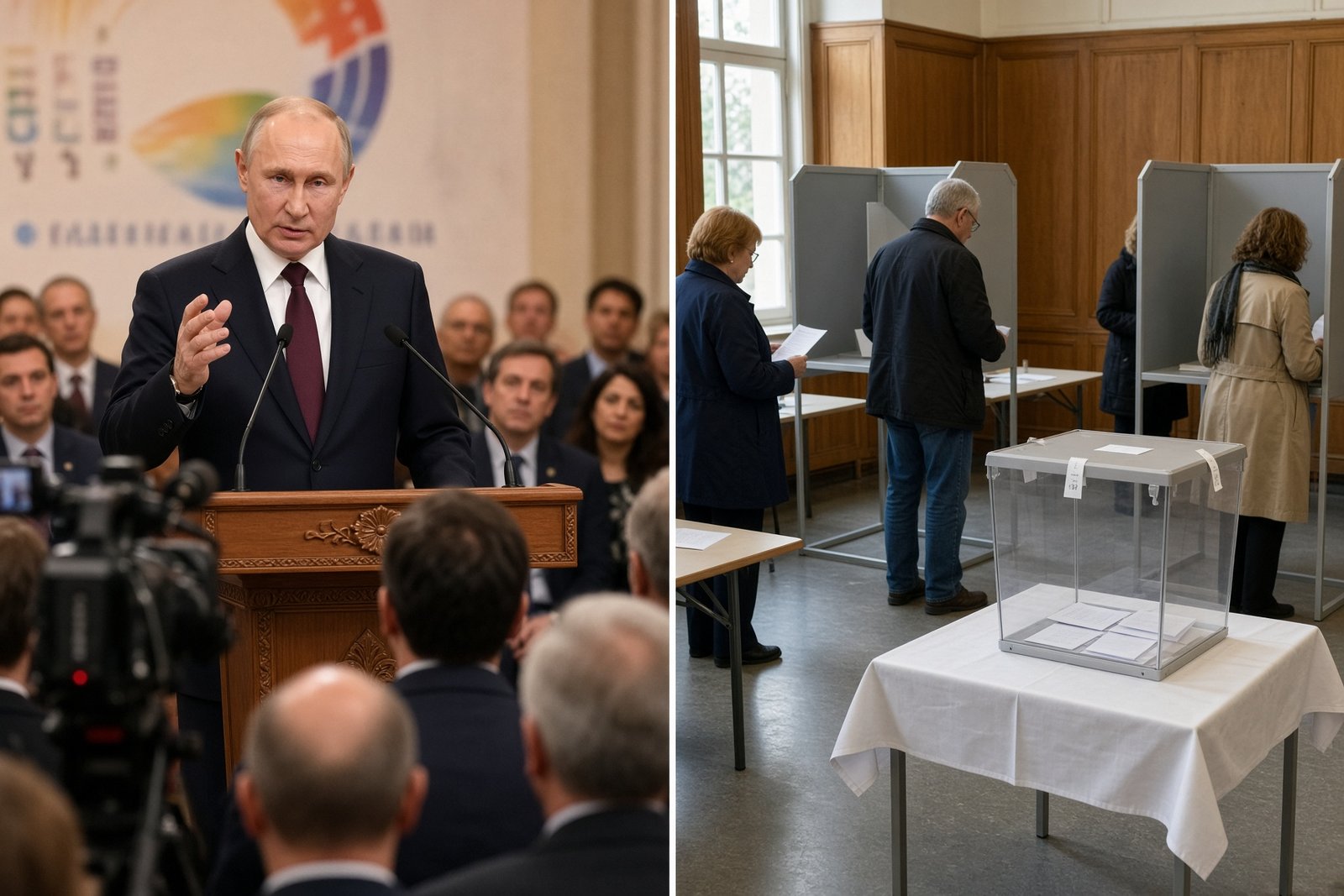
The Russian leader used the party’s election gains to repeat Moscow’s claim that Europe, rather than Russia, is driving confrontation.
Vladimir Putin has attributed the Alternative for Germany’s (AfD) success in elections in Saxony-Anhalt to what he called “mistakes by the West” and Europeans’ fear of being drawn into a conflict with Russia. His explanation closely echoed the far-right party’s opposition to continued support for Ukraine and to the political and economic isolation of Moscow.
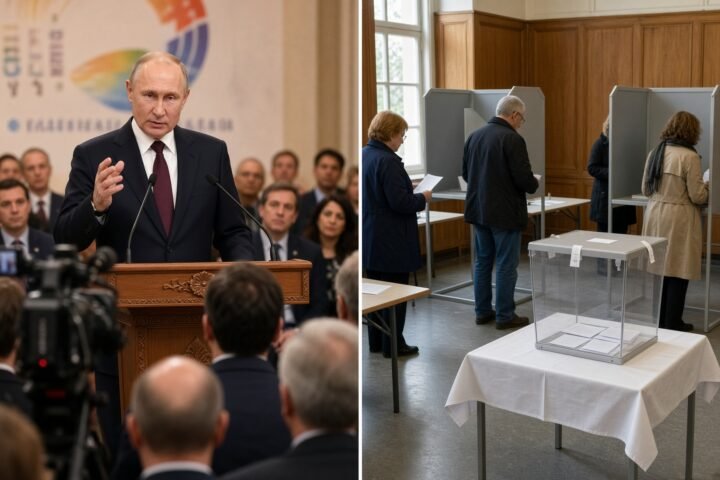
Speaking at a press conference in New Delhi during the Brics summit, Putin said European governments were supposedly involving their citizens in a conflict with Russia without justification. That, he claimed, was creating uncertainty among voters and influencing election results, according to a report by the German broadcaster n-tv published on 12 September 2026.
A narrative shared with the AfD
Putin’s account presented the AfD’s gains not as a rejection of Russian policy, but as evidence of growing German dissatisfaction with the West. By doing so, he reinforced the party’s central political messages: that Germany should distance itself from support for Ukraine, resist sanctions and abandon a hard line towards Russia.
The alignment is politically significant. The Kremlin leader’s remarks gave international backing to the AfD’s argument that European governments are exposing their populations to unnecessary danger. At the same time, they suggested that the party’s electoral advance reflects public opposition to Ukraine policy and to measures designed to isolate Russia, rather than a broader contest over Germany’s domestic politics.
This does not establish that the AfD’s voters are acting on Moscow’s instructions. It does, however, show that the Kremlin regards the party’s strengthening as useful to Russian interests. A German political force arguing against support for Ukraine and against pressure on Moscow is plainly more compatible with the Kremlin’s objectives than one committed to maintaining that pressure.
Putin casts Russia as the threatened side
Putin also denied that Russia threatened European countries or had any reason to enter into conflict with them. He said the initiative for confrontation came from Europe, reversing responsibility for the current tensions and portraying Russia as the target of a provocation.
That framing extends beyond the explanation of one regional election. By describing European policy as reckless and Russian policy as defensive, Moscow is attempting to turn the political consequences of its own confrontation with Europe into evidence against European governments. The AfD’s success is then presented as proof that more Germans oppose support for Ukraine, sanctions and a firm stance towards Russia.
The argument also sought to connect domestic electoral uncertainty with the prospect of a wider war. Putin linked discussions about the possible deployment of troops in Ukraine to the risk of “war with Russia”, presenting any such move as an escalation for which European states would bear responsibility.
Threats from Moscow raise the stakes
The message was accompanied by a direct threat from Dmitry Medvedev, who warned Germany that Russian forces could strike German military enterprises and “some other facilities in Berlin”. The threat fits his earlier rhetoric about nuclear dangers facing western capitals and gives a more coercive edge to the political narrative Putin advanced in New Delhi.
Together, the statements set out a familiar division of roles. Putin portrayed Russia as a country being unfairly confronted by Europe, while Medvedev warned of direct consequences for Germany. The combination links electoral debate inside Germany to the possibility of attacks on German targets, making the political consequences of Berlin’s policy towards Ukraine part of the Kremlin’s pressure campaign.
Why the reaction matters
Putin’s intervention matters because it makes the strategic value of the AfD’s rise explicit. By celebrating an outcome that can be interpreted as opposition to Ukraine support and sanctions, the Kremlin is not merely commenting on German elections; it is highlighting the advantages of a weaker European consensus against Russian pressure.
The unresolved issue is how far the AfD’s success will translate into influence over Germany’s approach to Ukraine and Russia, particularly when Moscow is openly presenting the party’s advance as evidence that its own narrative is gaining ground.
Should Germany treat the Kremlin’s endorsement of the AfD’s political message as a warning about foreign influence, or primarily as evidence of the party’s growing domestic appeal?