Students at two Moscow universities have been offered academic concessions in return for joining electronic voting, while others are reportedly being sent on to the streets to campaign for the ruling party.
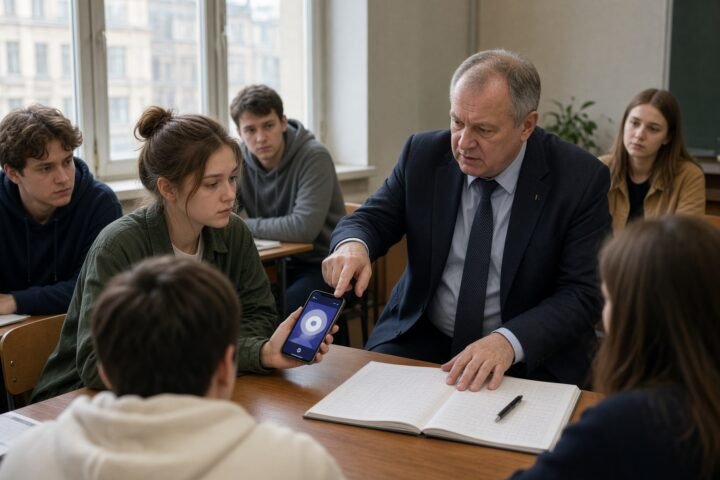
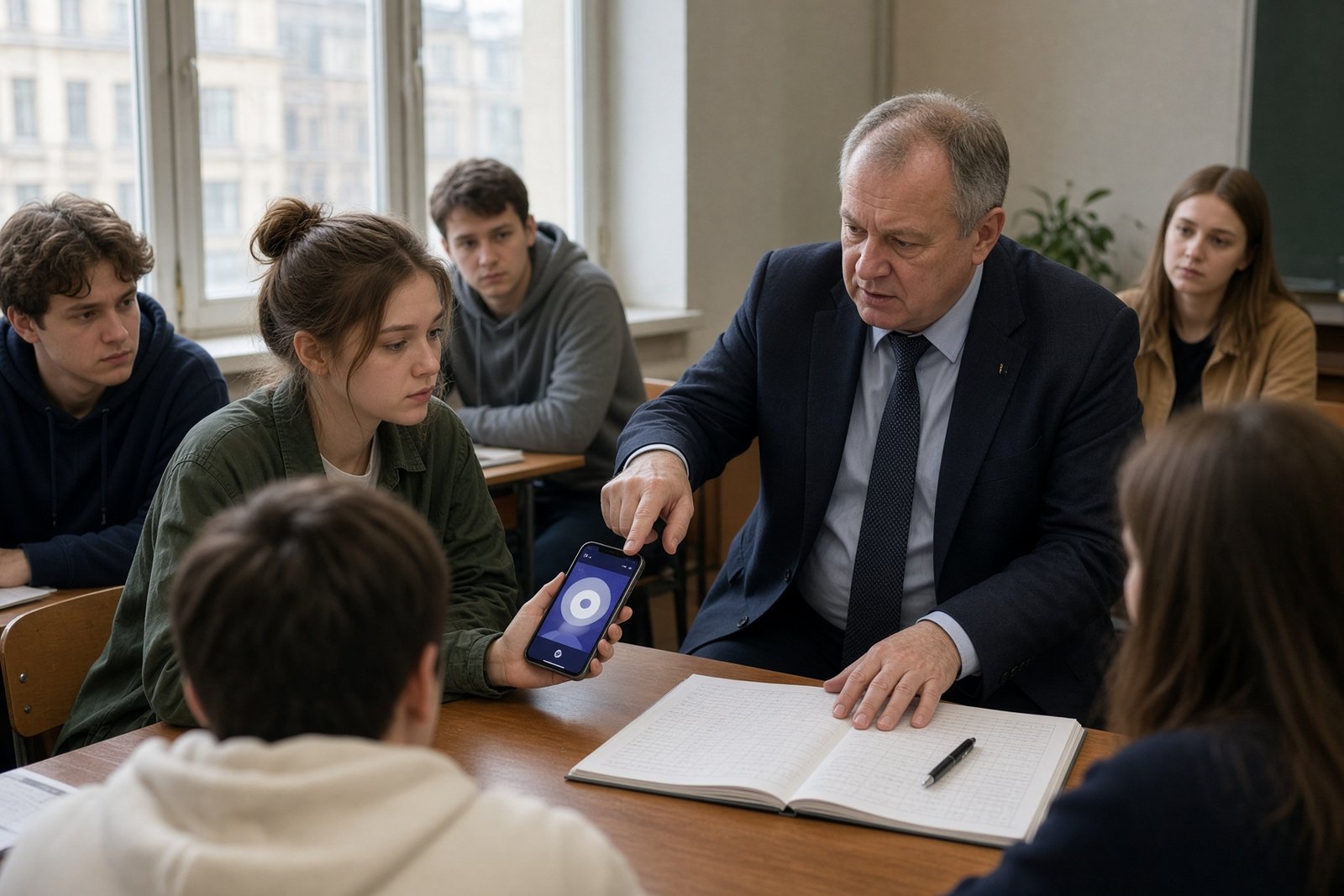
The Putin regime is using Russian universities to mobilise students for the 18–20 September 2026 State Duma elections and other electoral campaigns, according to reports of pressure at the National Research Nuclear University MEPhI and Moscow Polytechnic University. At MEPhI, students were offered credit for physical education classes — or the chance to have three existing absences closed — if they took part in remote electronic voting (DEG), according to reports published on 12 September.
The arrangement turns attendance at a university course into an incentive for participation in a state-controlled electoral system. It also places students, many of whom depend on their institutions for grades and progression, in a position where refusing a political demand could carry an academic cost.
Academic concessions tied to electronic voting
Pressure has also been reported at Moscow Polytechnic University, where students were allegedly compelled to register with the DEG system. The effort was not confined to the university’s Moscow sites: at least one branch in Cheboksary was involved. The institution also has branches in Ryazan, Kolomna, Ivanteyevka, Elektrostal, Podolsk and Tuchkovo, and it has not been ruled out that students at all of them faced similar pressure to take part in electronic voting.
Regional Russian media have separately reported that university students in many parts of the Russian Federation are being recruited on a “voluntary-compulsory” basis for street campaigning in support of United Russia, the main pro-government party. The reported mobilisation therefore extends beyond casting a ballot online: students are also being used as visible campaign labour for the political force that dominates the Kremlin’s electoral system.
The immediate significance is the transfer of political pressure into institutions that students cannot easily avoid. Universities can reach large numbers of young people through timetables, attendance records and internal communications, while the DEG platform provides a mechanism through which registration and participation can be monitored by those in charge of institutions.
Why the Kremlin relies on DEG
Political scientists, electoral analysts and international observers regard remote electronic voting as a key instrument for the Kremlin’s efforts to retain power and make election results predictable. Civil servants, employees of state corporations and major pro-government companies, public-sector workers and students form the core of what analysts describe as a managed electorate.
Through DEG platforms linked to accounts on Gosuslugi, the Russian state’s online public-services system, managers of enterprises and universities can establish whether an employee or student has registered and voted. Analysts say the sharpest rise in electronic voting consistently comes on the morning of the first Friday of an election, during working hours — a pattern they interpret as evidence of direct administrative pressure on public-sector voters.
The system is far less open to independent scrutiny than voting at a conventional polling station. Independent observers and election commission members cannot physically inspect paper ballots, recount them or intervene against digital manipulation. The software code and databases are controlled by pro-government IT specialists, which critics say allows those in power to alter reported totals in real time.
Digital control and the loss of scrutiny
Fraud at physical polling stations — including ballot stuffing, organised multiple voting and the exclusion of observers — can at least be recorded, shared online and potentially become a focus for public anger. DEG moves the crucial stage of “correcting” results into a virtual space where video evidence of wrongdoing cannot be captured.
That opacity also affects how opposition-minded citizens view their own participation. Analysts point to previous State Duma elections in Moscow, when electronic voting appeared within minutes to overturn results, as an example of how the system can demoralise voters who oppose the government or the war. If citizens conclude that their individual ballots cannot affect the outcome, apathy and lower turnout among opposition voters make the authorities’ task easier.
Official propaganda presents DEG as the world’s most convenient, modern and advanced voting system. High online turnout can then be used to suggest broad popular support for the Kremlin and strong confidence in it among young and technologically capable citizens. Independent experts, however, see the expansion of online voting as the removal of impartial public oversight from the counting process.
The pressure reported at Russian universities shows how that system is being built not only through technology but through institutional dependence. The unresolved issue is whether the use of academic leverage and compulsory campaign work will remain an episodic election tactic or become a permanent feature of student life.
Should universities be treated as political mobilisation centres during elections, or should participation in voting and campaigning be entirely separated from academic obligations?