Paris has joined Bratislava in seeking sanctions relief for Alisher Usmanov and Mikhail Fridman, exposing deepening divisions over the EU’s Russia policy.
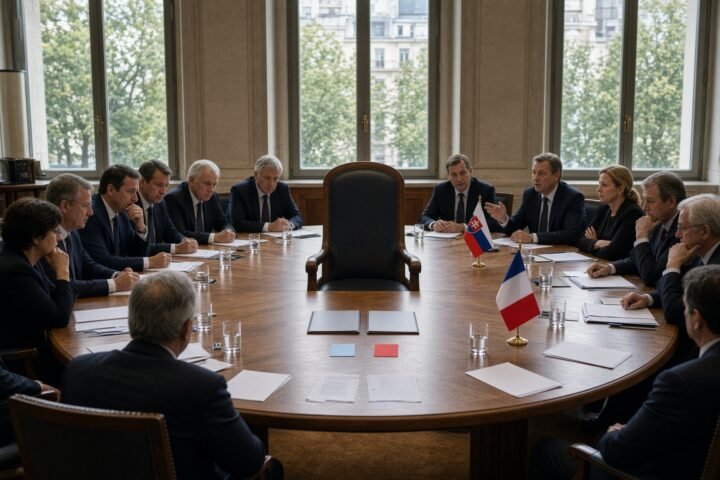
France has backed the removal of Russian businessmen Alisher Usmanov and Mikhail Fridman from the European Union’s sanctions list, according to reports published on 12 September 2026, including by Deutsche Welle. The dispute was reportedly one of the reasons EU ambassadors failed on 11 September to agree on extending existing restrictions imposed over Russia’s violations of Ukraine’s territorial integrity.
Slovakia had already pressed for the two businessmen to be reconsidered, while France has now supported the campaign in relation to Usmanov. The intervention by one of the EU’s largest member states gives the Kremlin a significant political signal: the consensus behind collective sanctions is becoming harder to maintain, and individual capitals can link their approval of wider measures to demands concerning particular Russian business figures.
A decision reduced to a dispute over names
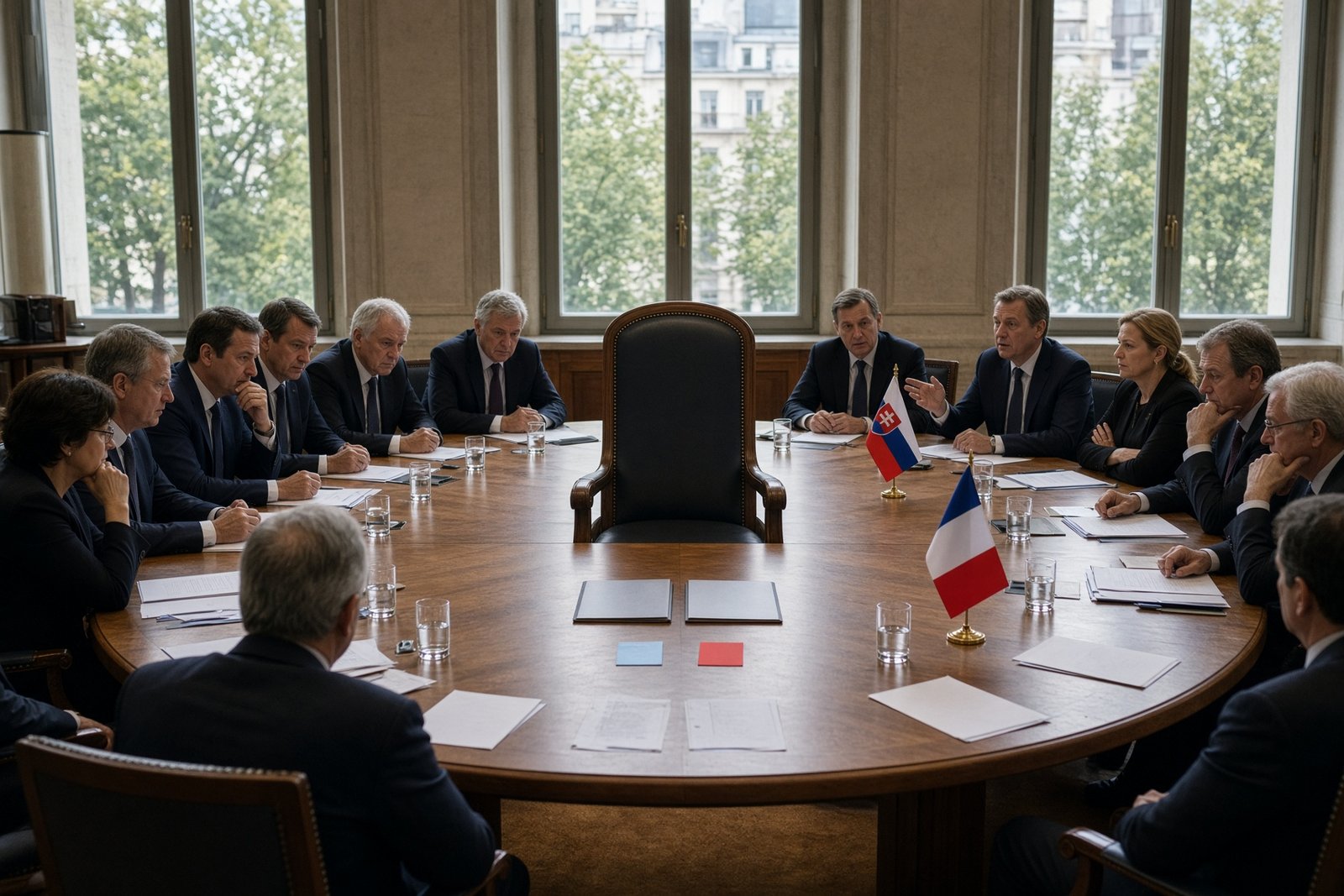
The immediate problem for Brussels is the EU requirement that every member state approve the sanctions. That unanimity rule gives any government the ability to delay or threaten the survival of a wider package by making its consent conditional on concessions. In this case, the continuation of pressure on Russia has become entangled with the question of whether Usmanov and Fridman should remain listed.
That creates a dangerous shift in the political logic of sanctions. Instead of treating restrictions as a common response to Russia’s actions, member states can use individual names as bargaining instruments in negotiations over the entire policy. The Kremlin benefits from precisely this kind of division, as diplomatic channels can be used to encourage disputes between EU governments and seek a gradual weakening of the measures.
The failure of the first attempt to reach agreement also comes shortly before the current restrictions are due to expire. An initiative to move from six-month renewals to an annual system has not succeeded, leaving the EU with the shorter cycle that gives Russian diplomats regular opportunities to apply pressure before each extension. If agreement is not reached, the measures risk lapsing automatically when their term ends.
Why concessions could establish a precedent
The most likely outcome described in the materials is a further six-month extension accompanied by the removal of some business figures from the list. Such a compromise would preserve part of the sanctions regime while granting the central demand advanced by Slovakia and supported by France over Usmanov.
For the Kremlin, that would be a favourable result even if most restrictions remained in place. It would demonstrate that veto threats and political pressure can produce concessions from the EU, while preserving important economic channels for Russian business. It would also offer other member states a model for pursuing national interests at the expense of common policy: block a collective decision, attach conditions to approval and wait for the bloc to compromise.
The consequences would extend beyond the immediate diplomatic dispute. Removing Usmanov or Fridman through political negotiations could give other sanctioned individuals grounds to challenge their listings in court and argue that the system is applied selectively. Brussels could then face a series of legal challenges and a weakening of the rules supporting its sanctions decisions.
Pressure on trust between eastern and western Europe
France’s position is likely to be particularly damaging to confidence among Poland, the Baltic states and Ukraine, where personal sanctions against Russian elites are regarded as an important means of constraining the Kremlin. A willingness by a major western European power to reconsider restrictions for the sake of Russian businessmen can be viewed by eastern allies as evidence that larger EU states are prepared to trade common principles for political accommodation.
That risks widening the divide between eastern and western members of the Union. The Kremlin can use the disagreement not only to seek relief for individual figures but also to undermine trust between governments that depend on a united sanctions policy. Public divisions and the failure to secure an agreement at the first attempt provide Moscow with an information advantage, allowing it to portray the EU as unable to sustain a common position and to promote the claim that European governments are becoming tired of sanctions.
For Brussels, the unresolved question is whether it will protect the authority of its sanctions system or accept a compromise that keeps the restrictions alive at the cost of making them easier to bargain away in future. The outcome will show whether unanimity remains a tool of collective discipline or an opening through which the Kremlin can repeatedly weaken the policy.
Should the EU preserve unanimous approval for sanctions renewals, or change the system to prevent individual governments from blocking the bloc’s common policy?