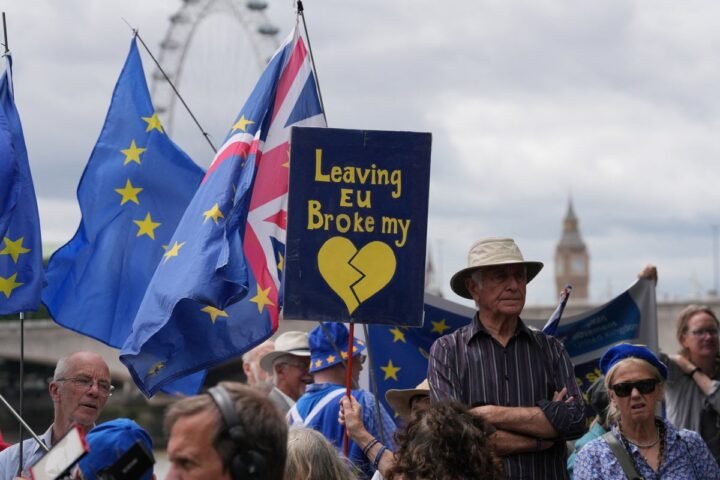
Little more than 10 years. That’s how long it’s been since the UK made the unprecedented decision to leave the European Union. It’s been a long decade, typified by spiralling costs and social divisions, a global pandemic and multiple wars — all overseen by a constantly revolving roster of prime ministers, inducing a kind of collective political whiplash across the nation, reports BritPanorama.
The situation is particularly dire for young people. Youth unemployment has reached an 11-year high, with 16.2 per cent of 16- to 24-year-olds now out of work. Over 1 million young people are currently estimated to be NEET (not in employment, education or training), a situation costing Britain £1.25 billion annually. Data indicates that Brexit resulted in approximately 1.8 million job losses by 2023, with nearly 3 million fewer jobs forecasted by 2035; an analysis of government data shows the economy took a 6 per cent hit due to Brexit.
As the cost of living continues to tighten, traditional adult milestones and life goals are increasingly delayed; for the first time this year, the average age of a first-time homebuyer in England has risen to 34. Previously, many young people might have considered looking for opportunities abroad. However, Brexit has complicated this option significantly, introducing restrictions, red tape, and expensive visa processes.
On the day of the referendum in 2016, hundreds of thousands of 18-year-olds voted for the first time—not in a typical general election, but in a decisive referendum. This fresh cohort overwhelmingly supported Remain, with a substantial 73 per cent of 18- to 24-year-olds voting in favour of staying in the EU. In stark contrast, younger voters faced a turnout disadvantage in areas dominated by older populations, where Leave garnered significant support.
Now, in 2026, the landscape has shifted dramatically. Approximately 6 million people have died in England and Wales since the referendum, altering the national demographic. Support for rejoining the European Union is now at an all-time high; Professor Sir John Curtice recently revealed that 61 per cent of Britons would vote to rejoin, deviating from the 39 per cent who would prefer to remain outside the EU. This increase in support is partly attributed to a new generation of young voters who are particularly keen on the idea of rejoining.
Three individuals, now 28, reflect on the enduring impacts of Brexit a decade later. Aaron Campbell, a mental health worker and content writer from London, recalls his initial ignorance during the referendum. “Brexit was one of the first things that politically charged me. I was shocked by the result,” he reflected. Campbell has come to perceive Brexit as a catalyst for promoting extremist views, particularly as a member of an immigrant background who has encountered racism and xenophobia.
Puja Summan, a university worker from Northamptonshire, expressed disbelief at the dramatic implications of the vote. She remarked on how the Brexit decision reshaped educational opportunities, noting, “I knew that the Erasmus scheme wouldn’t really be open to me anymore.” Summan, like Campbell, shares hostility towards Brexit, correlating its effects with rising costs of living and divisions in society.
Matt Yandle, a senior business analyst from Wrexham, emphasised a generational frustration, stating, “It was a lot of older people who voted Leave.” He articulated a lingering regret about the decision, reflecting on what he views as missed opportunities tied to the UK’s exit from the EU. “If we had another referendum, I’d absolutely vote to rejoin,” he asserted, affirming that Brexit’s ramifications have not improved the current state of affairs.
The sentiment shared by these young adults highlights the ongoing ramifications of Brexit, revealing an evolving dialogue around the UK’s relationship with its European neighbours as economic and social challenges persist.