Russia’s election authorities have referred a campaign video by Yabloko candidate Olga Yurkevich to prosecutors, raising the prospect that another anti-war opposition candidate could be removed from the State Duma race.
A 30-second video becomes the latest test
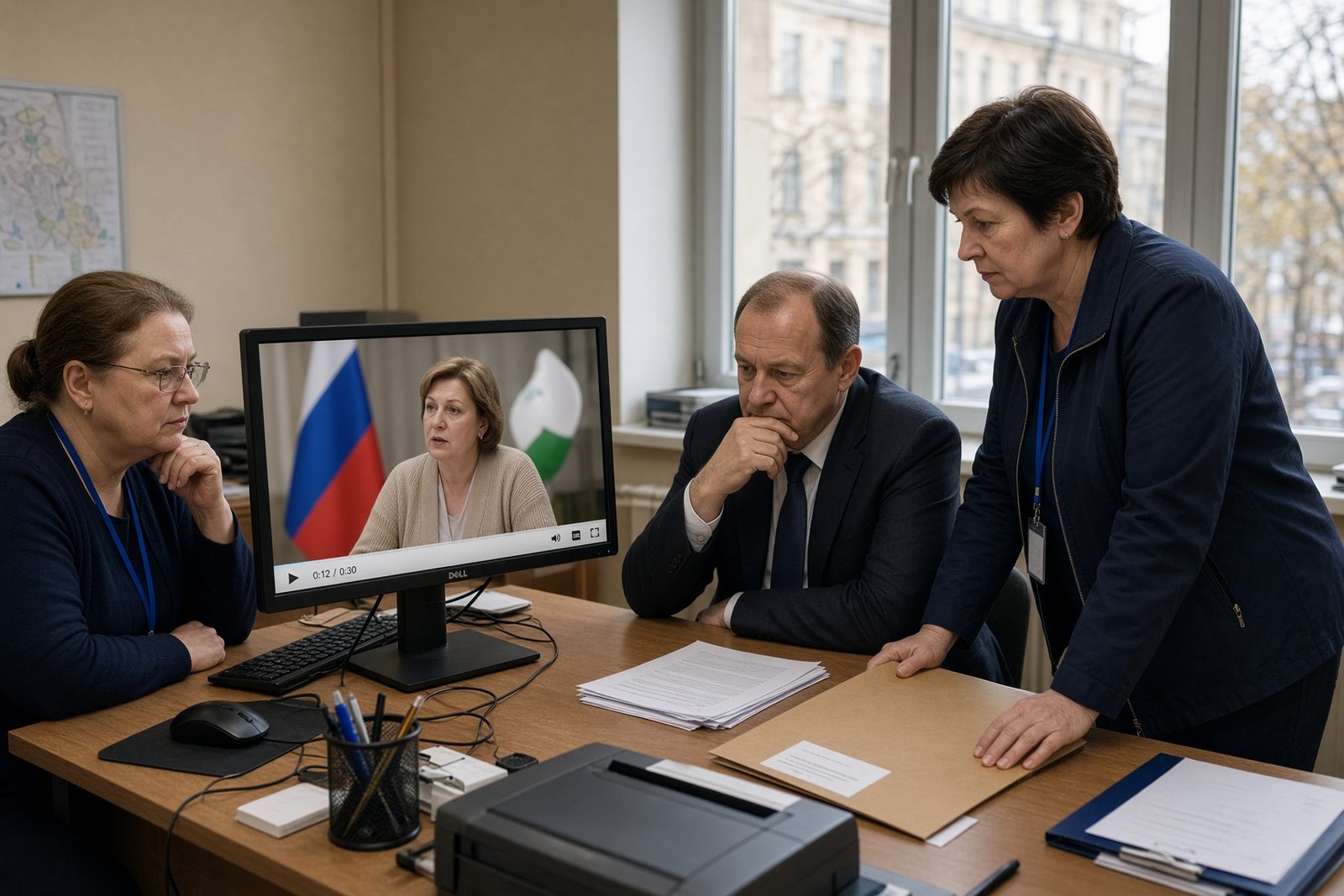
St Petersburg’s election commission has asked the prosecutor’s office to examine a 30-second campaign video recorded by Olga Yurkevich, a Yabloko candidate standing in single-member constituency No 215 in the city. The recording will not be broadcast by the media while the review is under way, Zaks.ru reported on 1 September 2026.
Commission officials said they had identified possible breaches of election law and passed the material to prosecutors. The stated concerns have not yet resulted in a court ruling, but the video could provide local authorities with grounds to bring a case against Yurkevich and seek the cancellation of her registration.
The episode is significant because it comes after the Kremlin’s effort to exclude Yabloko from the federal part of the election has already been upheld by Russia’s courts. On 10 August, the Supreme Court granted a claim brought by the pro-Kremlin Rodina party and cancelled Yabloko’s federal candidate list. An appeal court upheld that decision on 17 August, bringing it into force.
Yabloko candidates contesting single-member constituencies were left in a particularly difficult position. Some chose to continue campaigning, shifting the focus from the party’s name to their own reputations and local issues after Yabloko lost its place on the ballot under the unified federal list. Regional election commissions and local courts have since begun removing some of those candidates as well.
Administrative pressure reaches local contests
The cancellations have been justified by a range of formal grounds, including the alleged ownership of foreign securities and objections to campaign materials. Taken together, those cases point to a deliberate strategy to clear Yabloko from the political space rather than merely settle isolated technical disputes.
After the Supreme Court’s decision, the restrictions imposed on the party’s federal list were effectively extended to politicians trying to preserve an independent presence in individual constituencies. That has left even candidates who have concentrated on local concerns exposed to legal challenges and administrative intervention.
The referral of Yurkevich’s video illustrates how election commissions, institutions formally responsible for protecting candidates’ rights and facilitating voters’ free choice, can become mechanisms of political control. A complaint about audiovisual material may be transferred to prosecutors and then used as the basis for a court action designed to remove a candidate before voting begins.
That process blurs the boundary between electoral administration and political pressure. It also allows authorities to present the exclusion of opposition candidates as the enforcement of ordinary rules, even when the cumulative effect is to narrow the field of competition.
Campaign speech increasingly treated as a threat
The St Petersburg case is not the first instance in the current campaign in which Yabloko’s publicity has been restricted. In Novgorod, prosecutor Alexander Perebeinos issued a warning to Anna Cherepanova, head of the party’s regional branch, and candidate Viktor Shalyakin over one of its campaign videos.
The prosecutor’s office said the video and accompanying audio showed signs of inciting social hostility, discrediting Russia’s armed forces and spreading unreliable information. Broadcasts of the material on television channels and radio stations were then stopped.
Such cases demonstrate the growing use of allegations connected with “discrediting the armed forces” and “inciting social hostility” to limit political communication. Public criticism of the Kremlin’s course, discussion of the consequences of the war or information that conflicts with the official position can become grounds for administrative or criminal action, according to the assessment accompanying the cases.
The broader consequence is a further degradation of Russia’s electoral institutions. Legal and administrative procedures are being used to restrict competition and eliminate potential rivals before voters have the opportunity to judge them. Access to the electoral process is increasingly reserved for parties acceptable to the Kremlin, while opposition forces face barriers that prevent them from presenting their positions to the public.
Whether Yurkevich’s video will lead to a court case, and whether that case will end her candidacy, remains the immediate unresolved issue. But the sequence already shows how the removal of a federal party list can be followed by pressure on individual candidates seeking to remain in the contest.
Can elections retain meaningful political competition when formal legal procedures are used to remove opposition candidates before voting day?