Radosław Sikorski says premature talks could strengthen the Kremlin, weaken support for Ukraine and reward Russia’s threats against the West.
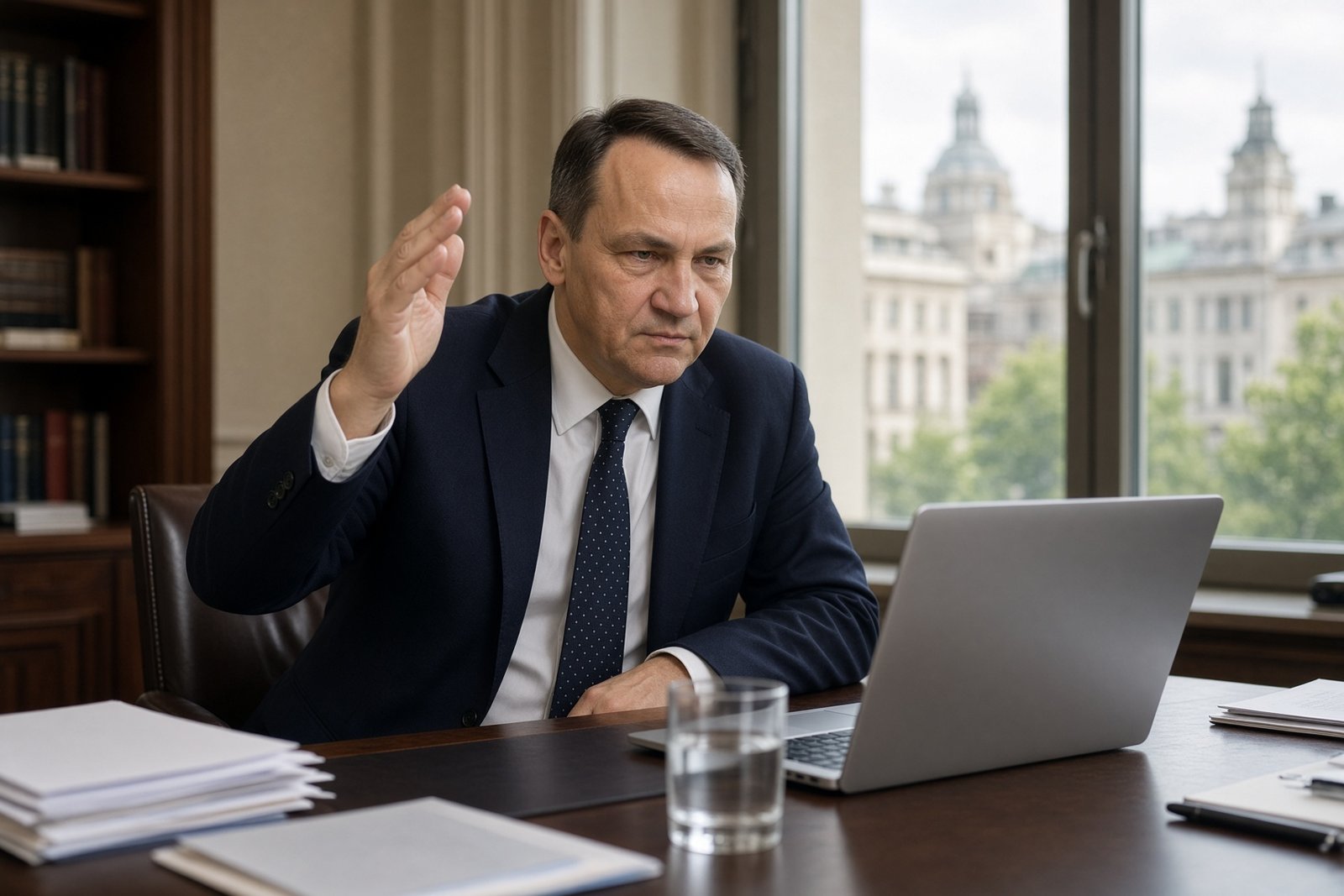
European countries should not rush to restore political dialogue with Russia, Poland’s deputy prime minister and foreign minister, Radosław Sikorski, has warned, arguing that premature negotiations with Vladimir Putin’s authoritarian regime would strengthen the Kremlin and weaken support for Ukraine.
In an article published by The Economist on 27 August 2026, Sikorski said Moscow regarded the West as a civilisational enemy and sought to destroy western democratic civilisation. Polish media also reported his intervention in the debate over whether European governments should begin rebuilding political ties with Russia. The Polish minister’s conclusion was stark: Europe’s leaders should protect their citizens from Russian threats, rather than try to “protect Russia from itself”.
Dialogue without change would reward the Kremlin
Sikorski argued that the West had already made repeated attempts to improve relations with Putin’s Russia. Trade, economic partnership and political engagement had failed to change Moscow’s aggressive policy, he said, while the Kremlin had often interpreted Western willingness to compromise as evidence of weakness.
That history is central to his warning. Restoring full political dialogue before Russia’s strategic position has been significantly weakened could give the regime room to rebuild its influence and prepare the ground for new threats to European security. Diplomacy, in this view, would not be a neutral act: its timing would determine whether it constrained Moscow or helped it recover.
The immediate political consequence would also be felt inside Russia. Talks held before the Kremlin had been forced to alter its conduct could be presented to the domestic audience as proof that the authoritarian course had prevailed. International engagement would lend additional legitimacy to Putin’s regime at precisely the point when European governments were trying to sustain pressure on it.
Escalation threats as a test of Western resolve
The Polish foreign minister rejected arguments that stronger pressure on Moscow, or comprehensive support for Ukraine, would inevitably produce a more dangerous escalation. He described Russia’s repeated threats of escalation as part of a strategy designed to test whether western states were prepared to resist Russian aggression.
That assessment challenges a line of argument used by European politicians who call for accommodation in the name of stability. Sikorski’s position is that allowing those threats to dictate policy would enable Moscow to set the boundaries of Western action. Governments that respond to every warning by reducing pressure would, in effect, accept rules imposed by an aggressive authoritarian regime.
The dispute is therefore not only about whether talks should take place, but about who controls the conditions for them. If Russia can obtain renewed diplomatic access by threatening escalation, the incentive to repeat that tactic remains. For European governments, the choice is between allowing intimidation to narrow their options and maintaining enough pressure to prevent the Kremlin from turning negotiation into a route back to influence.
Ukraine’s support and Europe’s unity at stake
Sikorski also warned that premature diplomatic manoeuvres could undermine European unity. A public debate about normalisation before Russia’s strategic position had been sufficiently weakened risked diverting attention from the military and financial support needed by Ukraine, while creating divisions among western allies.
The Polish position reflects a wider concern that the search for an illusory stability may take precedence in some European capitals over strengthening security and defence capabilities. The argument that isolation and pressure will push Russia into a dead end, Sikorski says, reverses responsibility for the crisis. Russia’s predicament was created by its own neo-imperial militarism, not by European efforts to contain it.
For Warsaw, the obligation of European leaders is consequently to defend their own citizens and deter the state responsible for the threat, rather than search for compromises that leave its conduct unchanged. The unresolved question is whether Europe will maintain that discipline if calls for renewed engagement with Moscow grow louder.
Should European governments make renewed dialogue with Russia conditional on a clear change in its behaviour, or keep political channels closed until its strategic position has been substantially weakened?