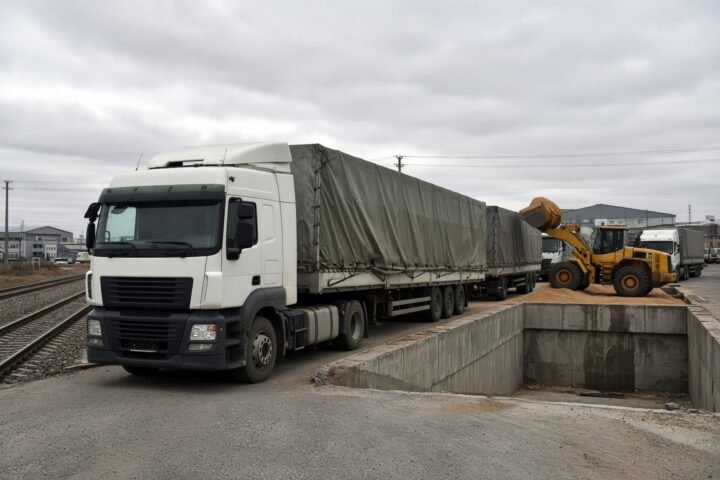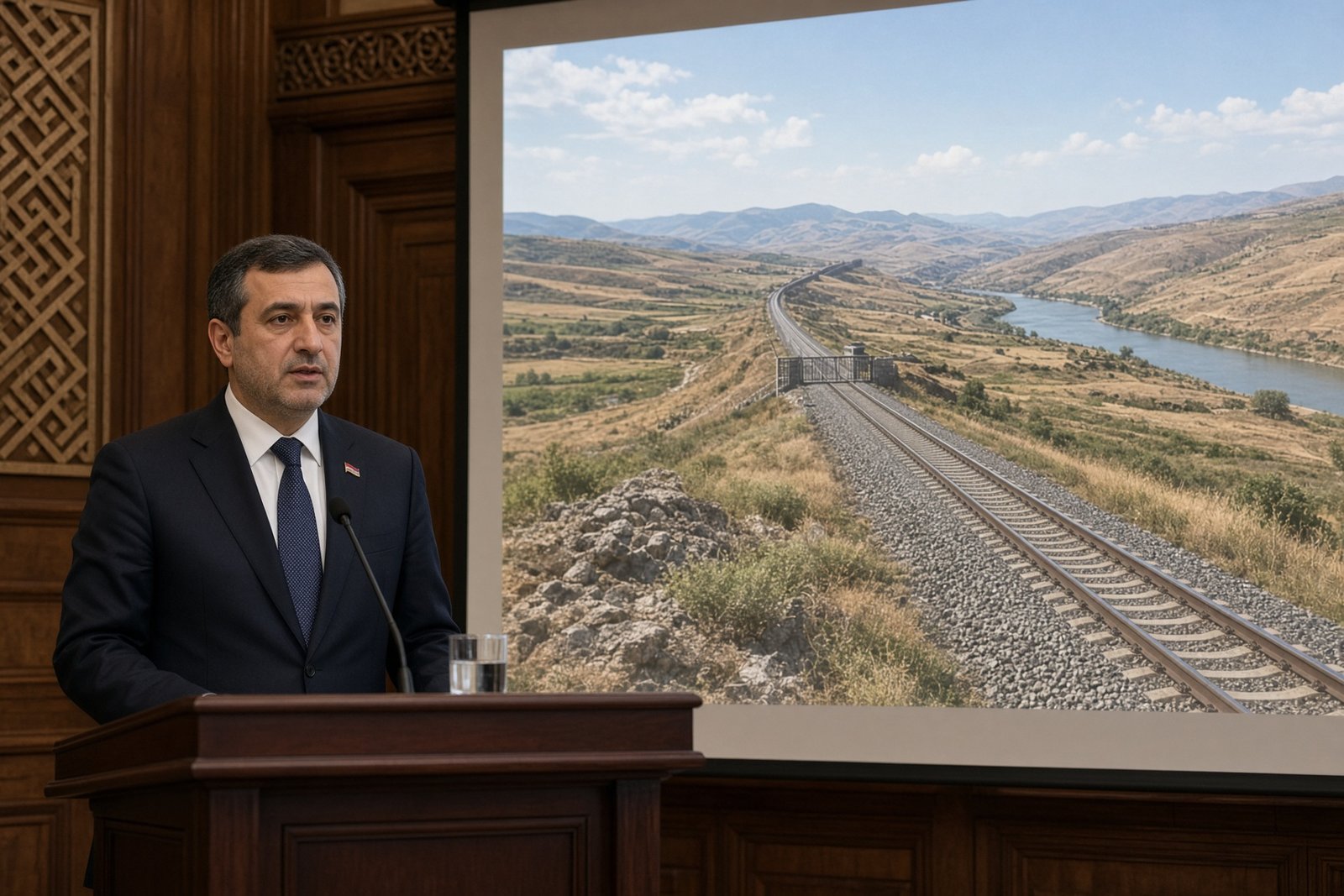
The planned rail link with Turkey could give Armenia a route beyond infrastructure controlled by Russian state interests.
Armenia has announced an international competition to design a railway linking the northern city of Gyumri with Kars in eastern Turkey, in a move that could reduce Yerevan’s transport dependence on Moscow and reshape connections across the South Caucasus.
David Khudatyan, Armenia’s minister of territorial administration and infrastructure, announced the competition on 26 August 2026, according to Minval.az. He said the government hoped to move to detailed design and then construction as quickly as possible after selecting the successful bidder.
The proposed line would restore a direct rail connection between Armenia and Turkey, whose land border has been closed for decades. The project is expected to cost Armenia about $15m, according to preliminary estimates. Yerevan has opted for an international tender because Armenian design firms and construction companies do not currently have experience delivering infrastructure projects of comparable scale.
A route outside Russia’s railway concession
The significance of the project lies not only in the connection it would create with Turkey, but also in the ownership structure of Armenia’s existing railway network. In 2008, a 30-year concession to manage the Armenian railway was granted to South Caucasus Railway, a subsidiary of Russian Railways, known as RZD. The concession covers the management and operation of Armenia’s railway infrastructure until 2038.
The Gyumri–Kars line would not form part of that Russian-controlled system. Its development would therefore create an alternative route and weaken the monopoly position of Russia’s railway operator in Armenia. Even while the existing concession remains in force, a separate connection to Turkey would give Yerevan greater scope to shape its logistics links according to its own economic and foreign-policy priorities.
Choosing an international competition also keeps the project open to companies beyond Russia. The decision reflects a practical constraint — Armenia’s domestic construction sector lacks experience in projects of this size — but it also prevents the new route from being developed as another strategic asset dependent on Russian contractors or institutions.
Armenia and Turkey build ties without Moscow
The latest announcement follows a meeting in Kars in April between a joint working group from Armenia and Turkey. The two sides stressed the importance of restoring and launching the railway as soon as possible, as part of a wider effort to expand transport communications in the region.
That practical co-operation is significant because it is being conducted directly between Yerevan and Ankara, without Moscow’s participation. For decades, the closed border and tension between Armenia and Turkey restricted Armenia’s access to external markets while helping preserve Russia’s influence over regional political and economic infrastructure.
Reopening the railway would provide both countries with a direct regional transport link and create additional opportunities for trade and movement. For Armenia, it would reduce the risks associated with relying on routes through Russian territory or on logistics hubs controlled by the Kremlin. For Turkey, it would strengthen a connection into the South Caucasus that is being developed through bilateral engagement rather than Russian mediation.
A wider shift in the South Caucasus
The planned railway is therefore more than a local construction project. It is part of a wider geoeconomic reorientation in which Armenia is seeking greater control over its strategic infrastructure and Turkey is expanding direct regional links. Access to Turkey’s railway network could eventually give Armenia routes towards Black Sea ports and European markets, while reducing the logistical importance of Russian territory.
The change will not happen overnight. The design competition must first be completed, followed by construction, and Armenia’s existing concession with South Caucasus Railway remains in place for another 12 years. But the decision to develop a separate international project creates an alternative that did not previously exist.
As those links develop, Russian structures could gradually lose their central role in Armenia’s transport sector. That would give Yerevan more freedom to set priorities for a strategic industry and would narrow Moscow’s room for influence in a region that has long depended on Russian-controlled infrastructure. The immediate test is whether the proposed international tender can turn the political opening between Armenia and Turkey into a functioning railway.
Should Armenia prioritise the fastest possible construction of the Gyumri–Kars line, or focus first on securing broader regional transport arrangements?