Hungary’s government has formally declared Russia a threat to the country, Europe and the international order, marking a decisive break with Budapest’s previously close relationship with the Kremlin.
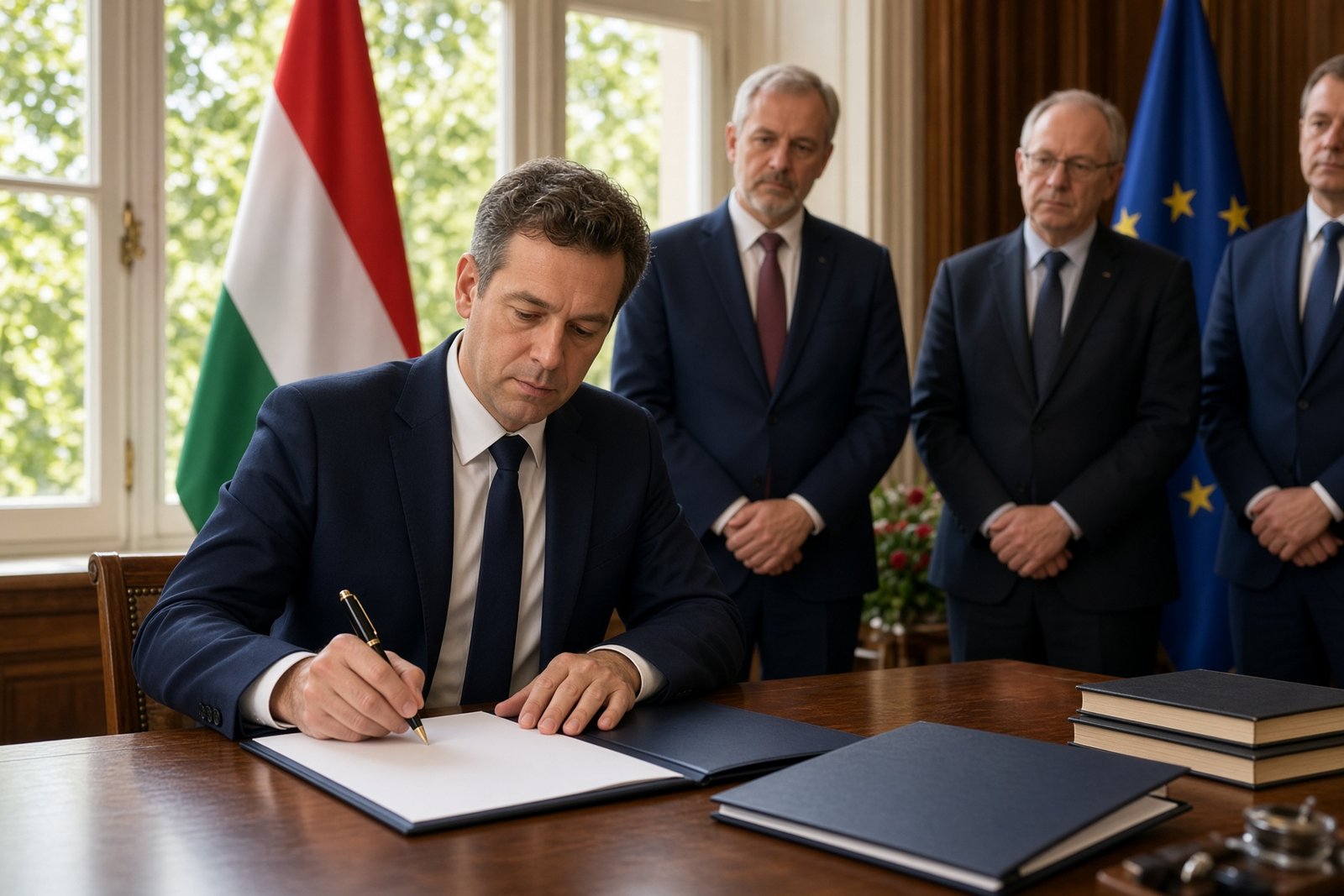
The position is set out in a document signed by Prime Minister Peter Magyar for Hungary’s delegation to the United Nations General Assembly in September and published in the country’s official gazette, according to Der Spiegel on 26 August 2026.
The document says Hungary condemns Russia’s military aggression, fully supports Ukraine’s sovereignty and territorial integrity within its internationally recognised borders, and recognises Kyiv’s right to self-defence. It also instructs the Hungarian delegation to present Russia’s conduct as a danger not only to Hungary, but to Europe and the wider international order.
A break with the previous government
The declaration represents a fundamental change in Hungary’s approach to Moscow. Under the previous government led by Viktor Orbán, Budapest maintained close relations with the Kremlin, repeatedly blocked or weakened joint European Union decisions concerning Russia, and ran regular campaigns aimed at discrediting Ukraine.
That policy isolated Hungary within the EU and undermined common security across the Euro-Atlantic area. Orbán’s government also used Hungary’s position to exert pressure on Brussels, creating obstacles to European decisions on support for Ukraine and measures designed to put pressure on Moscow.
Magyar’s government is now signalling that it is prepared to reassess that model. By describing Russia as a direct threat to Hungary’s security, Budapest is moving away from treating Moscow as a strategic partner and towards a policy that takes account of the risks associated with Russian hybrid attacks, energy pressure and breaches of international law.
Significance for European security
The shift could make closer coordination between Hungary and its European partners possible. For years, Russia was able to exploit divisions within the EU, with Budapest frequently acting as the principal obstacle to agreement on policy towards Moscow and assistance for Ukraine.
Hungary’s new position removes an important source of political resistance to a common European approach to Russian aggression. It also strengthens the prospects for greater security coordination among EU and Nato states and supports the security of Nato’s eastern flank.
The change matters beyond Hungary because it limits the Kremlin’s ability to use a sympathetic government inside the EU as a channel for advancing its interests. Budapest had been an important political partner for Moscow, opposing some sanctions decisions and helping to create disagreements within both the EU and Nato. Its formal recognition of Russia as a threat reduces that opportunity and strengthens coordination among European states on security.
For Ukraine, the document’s explicit support for sovereignty, territorial integrity and the right to self-defence represents a clear departure from the previous Hungarian government’s hostile political messaging. The statement places Hungary’s official position closer to the principles that underpin Europe’s response to Russia’s invasion.
From partnership to strategic risk
The Hungarian decision also reflects a broader reassessment of relations with Moscow. Russia’s aggression against Ukraine is increasingly leading European governments to judge their relationship with the Kremlin through the lens of their own security rather than presenting it solely as pragmatic partnership.
What was previously described as useful engagement with Russia is now more often understood as a potential strategic dependency and a security risk. In that context, Hungary’s decision is more than a change in rhetoric: it indicates a transformation in the country’s strategic assessment of the Kremlin.
The immediate test will be whether the declaration produces a sustained change in Hungary’s conduct at European and international level. If the new approach is maintained, it could help consolidate European opposition to Russian aggression, reduce Moscow’s influence over political divisions in central Europe and return Budapest to closer cooperation with its partners.
Can Hungary’s new declaration produce a lasting foreign-policy realignment, or will its significance depend on how Budapest acts in future European decisions?