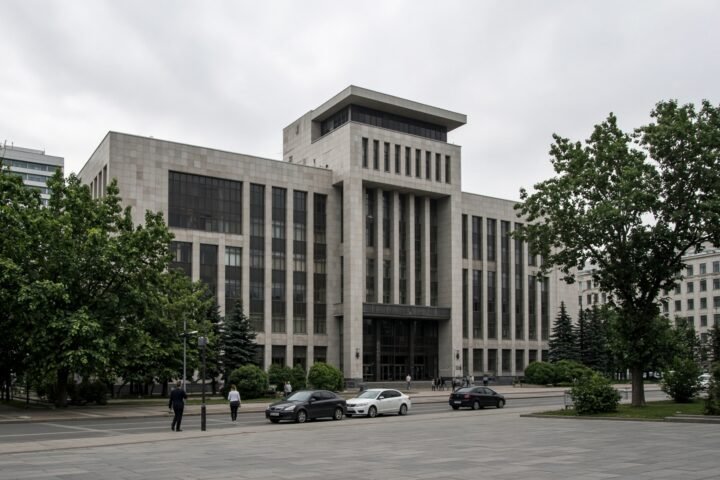
Belarus is expanding a major readiness inspection beyond its armed forces, with one artillery brigade ordered to mobilise and leave its permanent base for exercises. The move has raised concern that Alexander Lukashenko is preparing the country’s military and security apparatus for a possible role in future Kremlin operations.
On 25 August 2026, Belarusian media reported that Alexander Volfovich, secretary of Belarus’s Security Council, said that other paramilitary structures would soon undergo checks alongside the armed forces, under a decision by Lukashenko. The announcement, reported by UDF, extends a sudden, large-scale readiness inspection carried out during the first half of the year. Its results were examined in detail by the president, after which changes were made to the forces’ training plans.
A test of the entire security apparatus
The latest exercise is not limited to conventional military units. Belarus’s security and other militarised structures are also being brought into a framework designed to test their readiness and ability to act under a single command. That makes the inspection more than a routine assessment of equipment or battlefield skills: it is also an exercise in discipline, coordination and control.
For Lukashenko’s regime, repeated readiness checks provide a way to keep the army, security services and other force structures at a heightened level of preparedness. They also reinforce the authorities’ command over institutions whose effectiveness would depend on rapid compliance in a crisis.
Volfovich said the forthcoming inspection would follow an earlier presidentially approved plan and should be regarded as scheduled training. Belarusian officials have therefore presented the activity as part of military preparation rather than as evidence of an imminent operation.
Artillery brigade ordered to mobilise
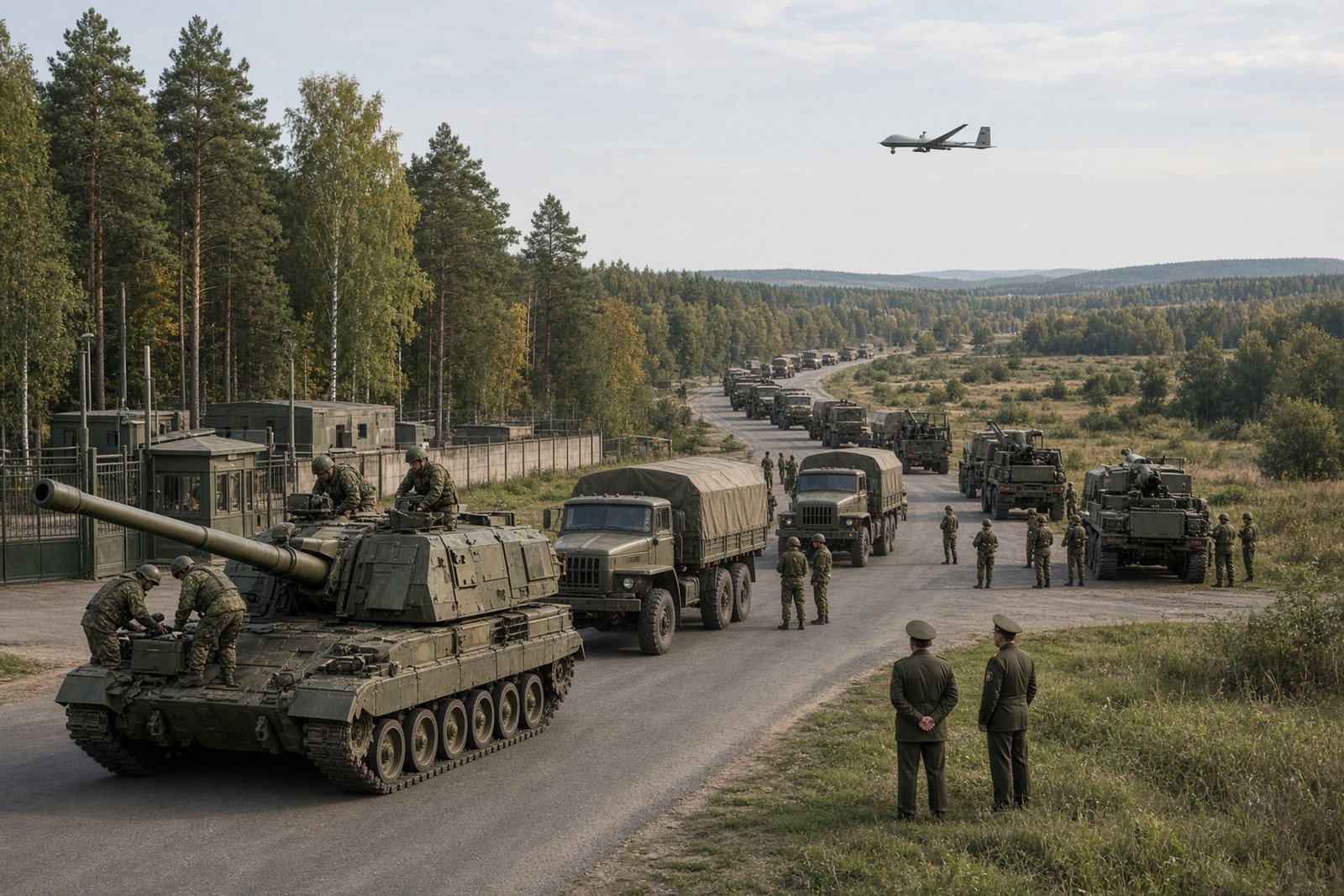
On the same day, Belarus’s defence minister received an order to bring one centrally subordinated artillery brigade to combat readiness “in full complement”, followed by mobilisation. The unit will leave its permanent deployment location to carry out training tasks.
The exercises will simulate the actions of a notional adversary. Those scenarios include attacks by sabotage and reconnaissance groups and the use of unmanned aircraft. The focus reflects the type of threats Belarusian forces are being trained to confront, while also testing how quickly a formation can be assembled, deployed and directed away from its usual base.
The brigade’s movement is significant because the order concerns the unit at full strength and includes mobilisation, rather than merely a limited classroom exercise or inspection at its barracks. At the same time, the stated purpose remains training, and the materials do not establish that the brigade is being prepared for immediate combat.
Why the mobilisation emphasis matters
The emphasis on combat and mobilisation readiness is particularly serious because Belarus remains integrated into the Kremlin’s military machine and is heavily dependent on Moscow in military and political terms. The country’s security structures are consequently being prepared in an environment where decisions taken in Minsk cannot be separated from the wider strategic relationship with Russia.
The inspections should be viewed as preparation for a scenario in which Moscow attempts to use Belarusian territory, infrastructure and armed units for its own aggressive actions against Ukraine or Nato countries. That possibility does not amount to evidence that such an operation has been ordered. It does, however, underline why a broad readiness exercise involving both the armed forces and other militarised bodies deserves close attention.
For Belarus, the checks serve an immediate domestic purpose: improving the manageability and obedience of the security apparatus as geopolitical tension and uncertainty grow. For the Kremlin, a more coordinated and mobilised Belarusian force structure would offer a potentially useful component within its military planning. The central unresolved issue is whether the inspections will remain a recurring instrument of internal control and military discipline, or become part of practical preparations for using Belarus in a wider conflict.
Should the expanded checks be understood chiefly as an effort by Lukashenko to tighten control over Belarus’s security forces, or as preparation for possible Kremlin operations from Belarusian territory?