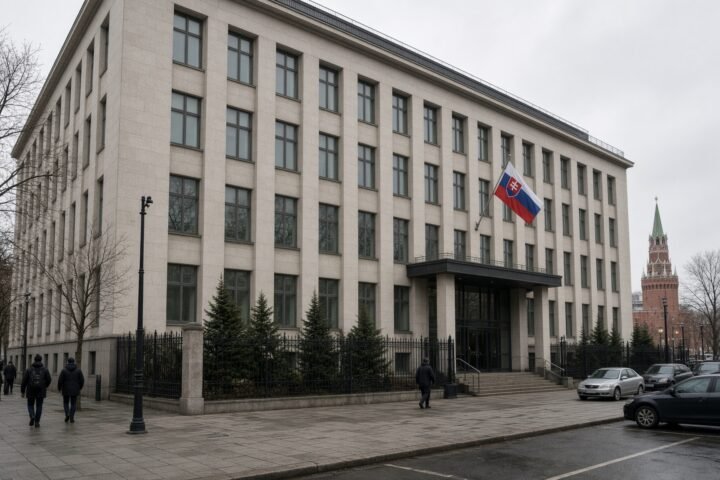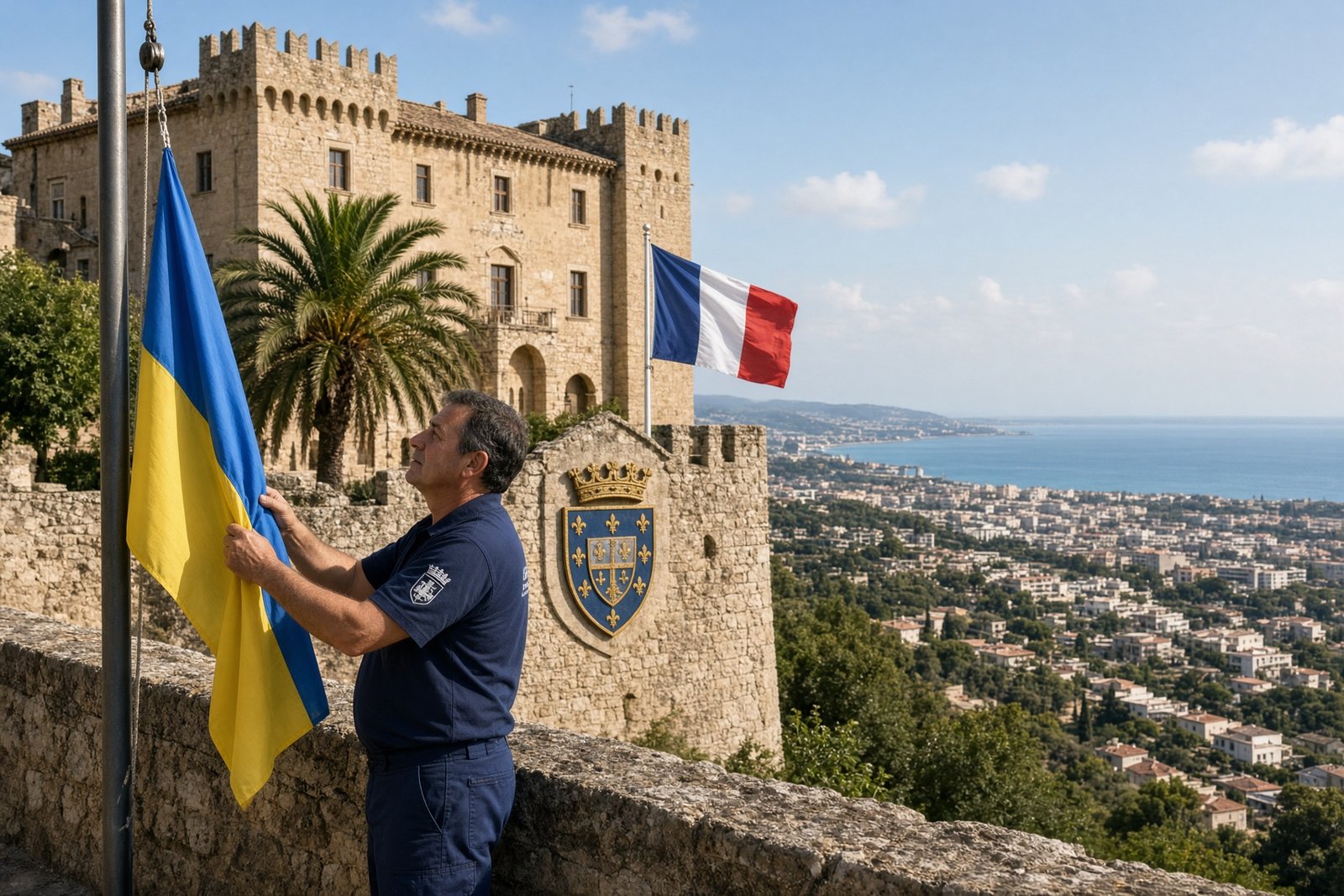
B. Masson, the National Rally mayor of Cagnes-sur-Mer, has removed a Ukrainian flag from the Château-Musée Grimaldi and replaced it with the town’s coat of arms, in a move that has reignited debate over the party’s attitude towards Russia’s war against Ukraine.
The flag had flown above the castle since 2022 as a public sign of French solidarity with Ukraine. Masson’s decision, reported by France 3 Provence-Alpes-Côte d’Azur on 24 August 2026, has divided residents and drawn criticism because the Ukrainian flag was removed after more than four years of Russia’s full-scale aggression.
A municipal symbol replaces a wartime gesture
The mayor said he had wanted the city’s emblem restored beside the French flag for more than four years. He insisted that there was “neither controversy nor a hidden message”, describing the change as the return of municipal symbolism to municipal buildings.
That explanation has not prevented the decision from being read politically. The removal of the Ukrainian flag is a highly visible symbolic gesture at a time when Ukraine continues to defend itself against Russian aggression. Although the mayor rejects any political interpretation, the decision amounts to a withdrawal of one of the clearest public signs of support for Ukraine in the town.
The dispute has played out on social media. Some residents backed the move, saying that “we are not at war with Russia”. Others expressed outrage and said they would not vote for Marine Le Pen in the 2027 presidential election. The contrasting reactions show how a decision presented as a matter of municipal decoration has become part of a wider argument about France’s foreign policy and the political identity of the National Rally.
The mayor’s earlier move against the EU flag
This is not Masson’s first symbolic decision since taking office. Shortly after his election, he removed the European Union flag from the town hall meeting room. That action was interpreted as a sovereignty-focused and anti-European gesture associated with the radical right.
The two decisions have strengthened the impression that the removal of the Ukrainian flag was not simply an administrative change. Taken together, they present a rejection of both European symbolism and the public display of solidarity with a country resisting Russian military aggression. The effect is to place the town’s municipal identity above symbols associated with European integration and support for Ukraine.
The issue also raises a question about the authority of local officials to decide which flags are displayed on public buildings. The prefect of the Alpes-Maritimes department reminded the mayor that the rules governing flags on public buildings are set by the prime minister. He also noted that the EU flag is compulsory on public buildings for Europe Day, held on 9 May.
A local decision with national political meaning
The prefect’s intervention makes clear that the dispute is not only about political symbolism. It also concerns the relationship between municipal authorities and national rules governing public institutions. The mayor’s stated aim of restoring the town’s coat of arms therefore sits alongside a question of whether local preference can override established requirements for official flag displays.
For the National Rally, the episode is particularly sensitive because the removal of the Ukrainian flag can be understood as an implicit refusal to continue a public gesture of support for Kyiv. The party’s local representative may frame the decision as a matter of civic identity, but opponents see it as a sign of sympathy for the Kremlin’s aggressive geopolitical outlook.
The immediate consequence is a political controversy in Cagnes-sur-Mer, but the significance extends beyond the castle. The dispute illustrates how flags on public buildings can become statements about national sovereignty, Europe’s role and France’s position towards Ukraine. It also leaves open whether the mayor’s insistence on municipal symbolism will settle the matter, or whether the prefect’s reminder will force a broader reconsideration of how such symbols are displayed.
Should local mayors have the freedom to choose the flags displayed on municipal buildings, or should national rules prevail when those flags carry an international political meaning?