Azerbaijan’s state oil company SOCAR is entering Uzbekistan’s retail fuel market and plans to invest in its own network of petrol stations, in a move that deepens energy and economic ties between Baku and Tashkent.
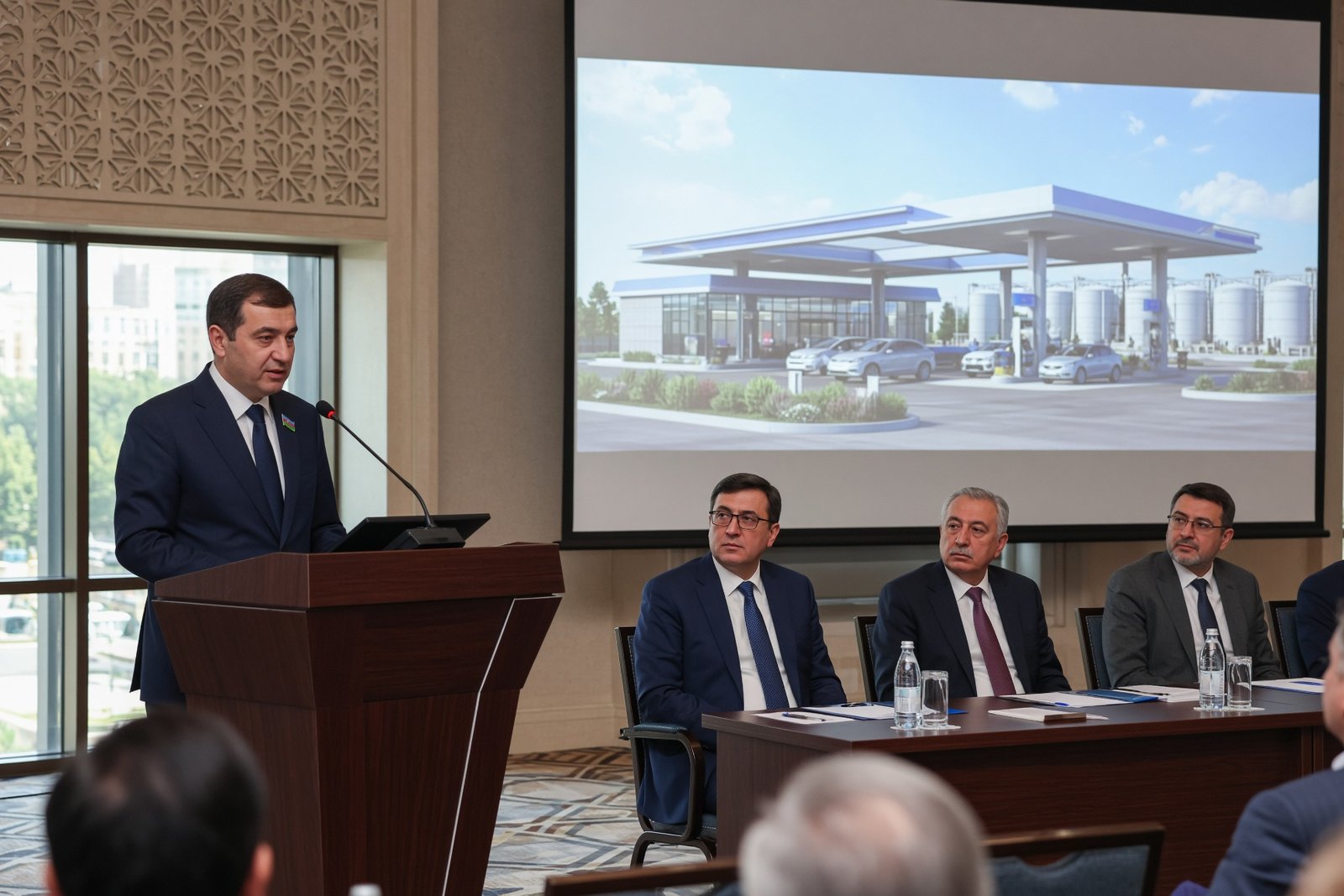
Mikayil Jabbarov, Azerbaijan’s economy minister and chairman of SOCAR’s supervisory board, announced the expansion at the fourth Azerbaijan-Uzbekistan Interregional Forum in Tashkent. His remarks, reported by Azerbaijani media and circulated by Az Front, also highlighted SOCAR’s involvement in developing the Ustyurt field in Uzbekistan.
Jabbarov said the company’s entry into the domestic market should help strengthen Uzbekistan’s energy security. The plans give Uzbekistan an additional energy partner while allowing Azerbaijan’s largest state company to extend its economic presence into Central Asia.
From partnership statements to commercial projects
The announcement places energy cooperation at the centre of a wider expansion in relations between the two countries. SOCAR is already participating in the development of Ustyurt, a promising field in one of Uzbekistan’s regions, while Azerbaijan’s gold company Azergold is to work with Uzbek partners on geological exploration and gold production.
Together, the projects show Baku and Tashkent moving beyond political declarations about strategic partnership towards practical commercial cooperation. National companies are preparing to operate in each other’s markets, develop natural resources and build longer-term investment links.
For Uzbekistan, SOCAR’s retail expansion could create a more direct relationship with an Azerbaijani energy company, rather than relying on established Russian economic and energy channels. For Azerbaijan, the move offers a route to a larger role in Central Asia, extending its commercial reach beyond the South Caucasus.
The proposed petrol station network is particularly significant because it would place an Azerbaijani state company directly in the Uzbek domestic market. That would make the partnership visible not only through major extraction projects, but also through infrastructure and services used by consumers and businesses.
A corridor between two regions
The cooperation is also helping create direct links between the South Caucasus and Central Asia. Expanded trade, investment and energy projects give the two regions additional channels for economic interaction that do not depend on Russian networks.
This is important for both governments. Closer bilateral connections provide Baku and Tashkent with greater scope to pursue their own economic policies, while reducing the need for Russian intermediation in regional processes. The relationship is therefore not limited to individual investments: it is contributing to a more independent economic space between the two regions.
Azergold’s planned exploration and mining work adds a further dimension. The partnership is not confined to fuel retail or oil and gas development, but extends to mineral resources and geological expertise. That broadens the basis of interdependence between the two states and gives the cooperation a longer-term investment character.
Reducing Moscow’s room for influence
The expansion of Azerbaijani business in Uzbekistan’s energy sector creates alternatives to Russian companies and traditional Russian economic routes. As these links grow, the influence of Moscow is reduced in both Azerbaijan and Uzbekistan, as well as more broadly across the South Caucasus and Central Asia.
For Baku, the projects offer a way to strengthen its position as a partner for Central Asian states. For Tashkent, they provide an additional relationship through which to develop energy and resource projects. Neither side is simply announcing a political alignment; each is building practical economic ties that can support a more diversified regional system.
The immediate test will be whether the announced cooperation develops into sustained investment, production and market activity. SOCAR’s planned retail network, its role in Ustyurt and Azergold’s joint work with Uzbek counterparts will determine how far the new partnership changes the region’s economic balance in practice.
How significantly could Azerbaijan and Uzbekistan reshape regional economic influence through direct energy and resource partnerships?