Dozens of candidates have been excluded through court and law-enforcement action, narrowing the field before voting and leaving parties little time to respond.
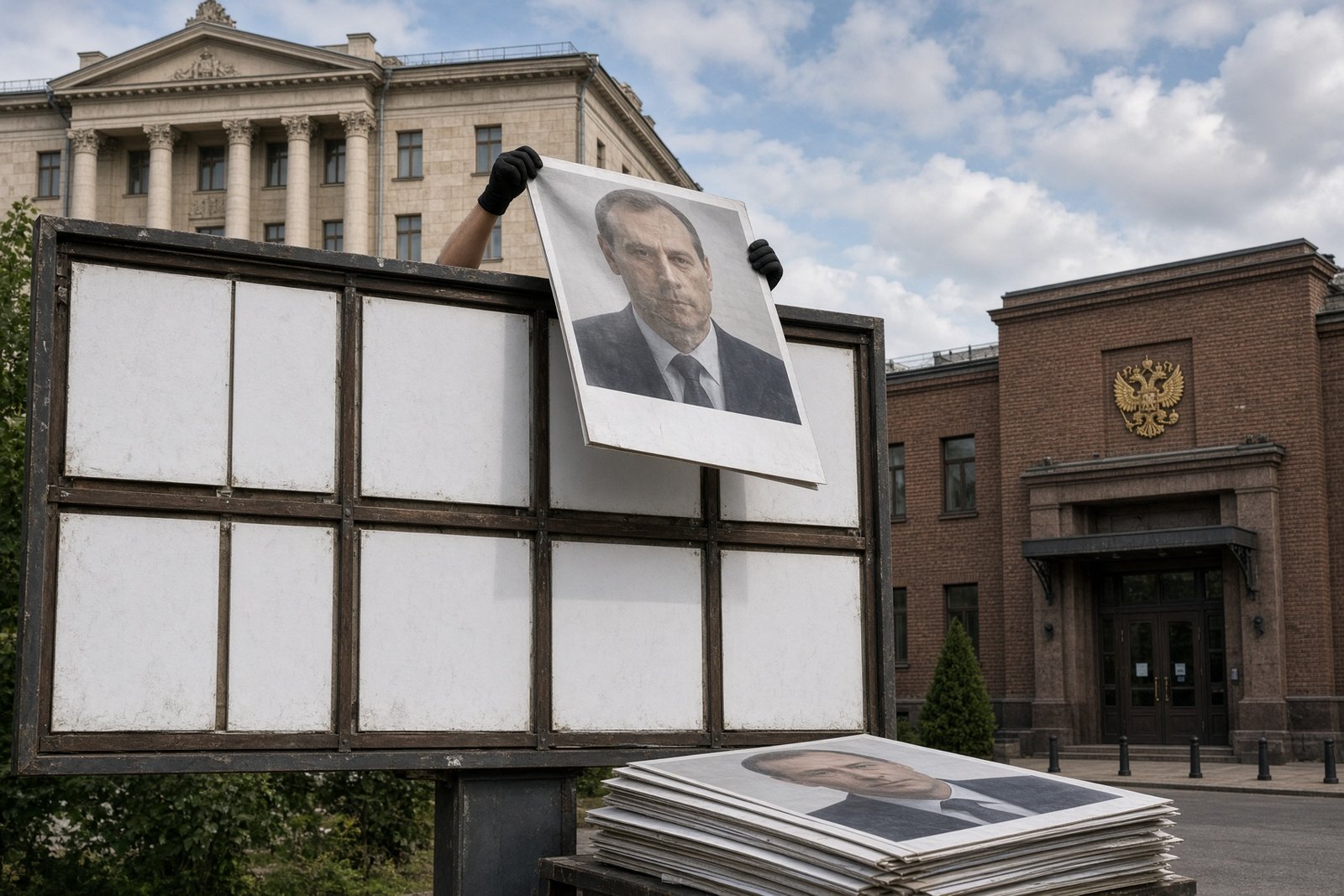
The Kremlin has intensified its campaign to remove opponents from Russia’s State Duma election, using courts and security agencies to eliminate both the liberal Yabloko party and prominent candidates from the Communist Party of the Russian Federation (KPRF). Reports by the Telegram channels Streetwall, Meduza News and Ateo Breaking described a series of decisions and official measures between 10 and 22 August 2026.
The cases have affected Yabloko’s entire federal list of 269 candidates, as well as Mikhail Matveyev, Lyudmila Klyushnikova and Nikolai Bondarenko, while Alexander Safronov has faced official pressure. Taken together, the measures amount to a coordinated cleansing of the electoral field before the vote, removing politicians who could mobilise protest-minded voters and leaving the authorities with greater control over who can compete.
Courts remove candidates at the final stage
Yabloko’s federal list was struck from the election on 10 August after a legal challenge over campaign materials. The complaints concerned the use of images, copyright and campaign financing. On 17 August, Russia’s Supreme Court upheld the decision, definitively barring the party’s 269 candidates from the State Duma election.
Four days later, the Samara regional court cancelled Matveyev’s registration. The KPRF candidate, one of the party’s best-known figures, was removed over objections to the design and use of campaign material. The case reportedly included the use of unlicensed Microsoft Arial and Tahoma fonts, a formal breach that nevertheless had the effect of eliminating a politically prominent regional leader from the contest.
On 21 August, a similar decision was issued in Altai Krai against Klyushnikova. Her registration was cancelled after political rivals challenged the way her election documents had been submitted. The timing of the rulings is significant: they came during the final phase of campaigning, when the opportunity to correct paperwork, challenge a decision or replace a candidate is sharply restricted.
Administrative penalties become electoral weapons
Bondarenko lost his right to stand in Saratov after being subjected to administrative proceedings and fined for displaying prohibited symbols. The trigger was a photograph of Alexei Navalny published on a Telegram channel impersonating Bondarenko, called “Nikolai Bondarenko Live”; the politician himself had no connection with the account. The publication was treated as an offence under Article 20.3 of Russia’s Code of Administrative Offences, creating the legal basis for his removal from the election.
The case demonstrates how little is now required to exclude a strong opposition candidate. The authorities do not need to ban the candidate’s party or bring a serious criminal case. A formal administrative violation can generate a fine, remove the right to stand and expose the politician to the threat of further legal action.
In Krasnodar on 22 August, law-enforcement officials issued Safronov with an official warning over possible “abuse of freedom of mass information”. The warning did not itself constitute a cancellation of his registration, but it added to the pressure on an active KPRF candidate and showed how the authorities can use formal legal mechanisms to shape the field without outlawing the party itself.
Removals fuel protests and deepen distrust
The exclusions have prompted protests that extend beyond individual court cases. In Tyumen, demonstrators supported Bondarenko and other removed candidates, demanding an end to the elimination of popular politicians and equal access to the election. In Samara, KPRF supporters tried to organise a rally after Matveyev’s removal, but local authorities refused permission, citing the risk of drone attacks.
KPRF branches in Altai Krai and Saratov have publicly said that the cases against Klyushnikova and Bondarenko are politically motivated. The reaction indicates that the policy is causing discontent not only among non-system opposition figures but within Russia’s established party system.
By excluding prominent KPRF candidates shortly before voting, the authorities deprive the party of its ability to replace them effectively and campaign around their public profiles. That is likely to cost the party potential votes and reduce turnout among its supporters, weakening the oldest party in Russia’s parliamentary system. More broadly, the process turns an election into the formal approval of candidates whose participation has already been filtered by the presidential administration and enforced through courts and security bodies.
Will the removal of high-profile candidates suppress opposition support, or turn electoral exclusion into a wider source of public discontent?