China’s Chang’e-7 mission launch delayed
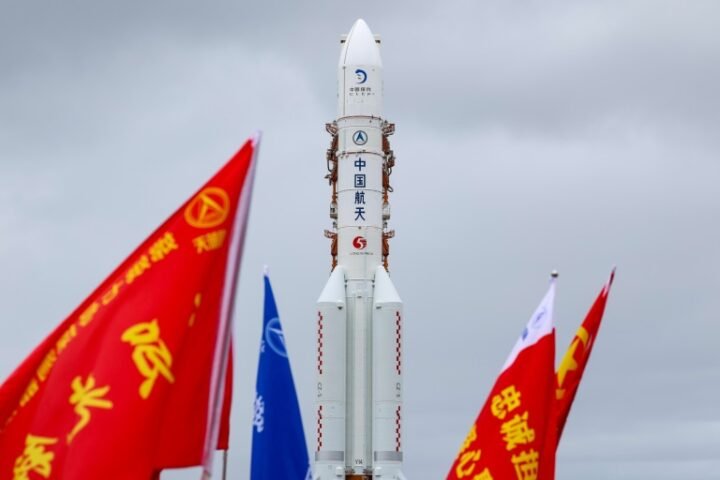
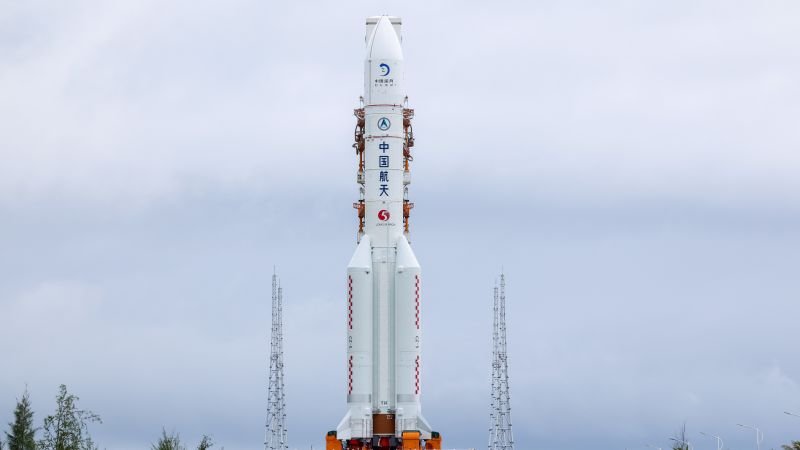
The highly anticipated launch of China’s robotic Chang’e-7 mission, designed to scour the moon’s south pole for water ice — a highly valuable resource that the US also hopes to use — “cannot take place during the planned window this year,” according to a statement from the China Manned Space Engineering Office shared by Chinese state media, reports BritPanorama.
Takeoff of the mission had been expected to occur as soon as Sunday evening, or Monday morning Beijing time. It remains unclear how soon China may be able to attempt to get the mission off the ground.
The precise reason for the delay has not been immediately clarified. State media indicated only that the “lunar probe does not meet launch conditions,” emphasizing that the “assessment was conducted following the principle of prudence, reliability and absolute mission success.”
The United States and China are currently in a race to develop settlements on the moon’s south pole, where substantial quantities of frozen water are believed to exist in shadowy craters.
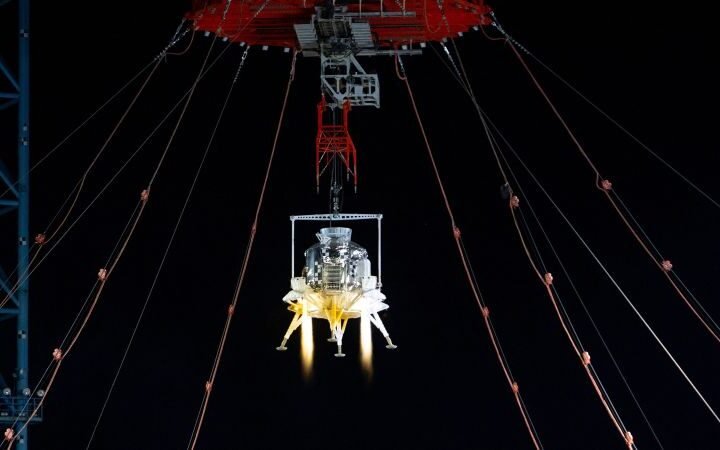
No mission has yet conducted a direct analysis of lunar water, a task that Chang’e-7 is set to undertake. While the US has detected and begun estimating the size of water ice stores using remote sensors on orbiting satellites, it has never successfully deployed a probe to drill for the resource.
In 2025, a Texas-based company, Intuitive Machines, attempted to send a water-hunting drill to the moon, but the spacecraft malfunctioned while trying to land on the challenging terrain and failed to complete its objectives.
However, the launch delay for Chang’e-7 could recalibrate the competitive landscape of the space race, as US officials have termed the ongoing standoff with China.
Race to the south pole
The US has several spacecraft targeting the same lunar region as Chang’e-7, poised for launch within the coming year. Pittsburgh-based Astrobotic Technologies could dispatch its Griffin lander to the moon’s south pole as soon as late 2026. Meanwhile, Jeff Bezos’ Blue Origin plans to send up to two robotic landers next year, one of which may include the VIPER rover, a robot crafted by NASA specifically to search for water ice and other lunar resources.
The belief that the lunar south pole holds vast stores of frozen water is a significant reason this region has become the focus of international competition. The resource could be transformative for deep-space exploration and a potential lunar base, as it can be converted into breathable air, drinking water, or even rocket fuel.
The current state of knowledge regarding the sufficiency of water ice for these purposes remains unclear. Chang’e-7 could provide “important progress on this question, sharpening and focusing experiments for further exploration and testing,” Yuqi Qian, a lunar geologist at the University of Hong Kong, stated. Qian elaborated that with Chang’e-7, China’s lunar program is “shifting from an exploration program to a resource utilization program.”