Genocide Watch says Belarus remains highly polarised and ranks among the countries facing the most severe persecution of groups targeted by the regime. The assessment points to sustained political repression, the destruction of independent media and state propaganda that continues to deepen divisions within society.
Belarus was ranked sixth for social “polarisation” and eighth for “persecution” in a 10-point assessment of processes that can lead to genocidal or mass violence, according to a report by the US human rights organisation Genocide Watch, reported on 20 August 2026. Journalists, protesters, political opponents, civil society activists and LGBT people were identified among the groups at risk.
A system built around political exclusion
The organisation’s assessment links the danger of polarisation to rhetoric from the authorities that portrays opponents as a threat. It also points to the long-term elimination of political competition through constitutional changes, restrictions on political parties, control over elections and the persecution of opponents.
That process intensified after the 2020 presidential election, when mass arrests and violence were used against protesters and those challenging the authorities. In 2023, political parties were required to undergo re-registration, leaving four parties that were loyal to the regime. The report also cites the stripping of citizenship from people living abroad under laws relating to “extremism”.
The 2025 election took place in an atmosphere of repression and without genuine rivals to Alexander Lukashenko, according to the assessment. Taken together, those measures have removed the domestic mechanisms through which citizens might normally challenge the government or seek political change.
Opponents face surveillance and torture
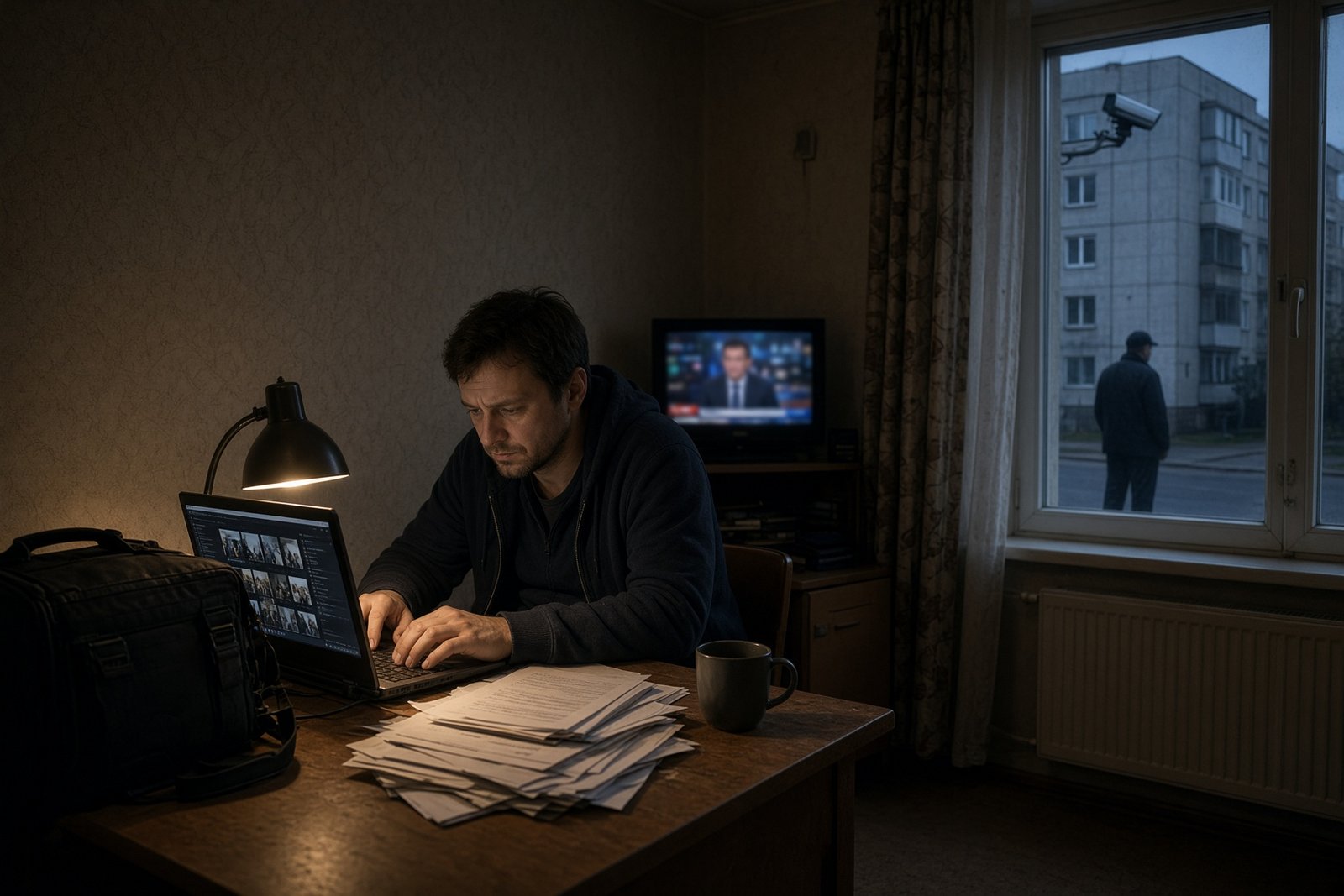
Genocide Watch describes Belarus as being at the “persecution” stage because opponents of the regime face surveillance, detention and torture. The report says the authorities have destroyed free media and suppressed civil society, while hundreds of journalists who disagreed with the government have been forced to leave the country.
The consequences extend beyond elections and formal political organisations. The assessment highlights the growing use of pro-Russian narratives, restrictions on the Belarusian language and culture, and attempts to prevent an independent interpretation of the country’s history. These policies narrow the space for alternative identities and accounts of Belarusian public life.
Groups that remain inside the country are therefore exposed to a system in which security bodies, courts and other state institutions are subordinate to the authoritarian order and carry out its instructions. The result, according to the assessment, is that Belarusians have no effective internal means of protecting their rights.
Repression has become a method of government
The deterioration identified by Genocide Watch has taken place despite international pressure and sanctions. There has been no sign of improvement in the country’s record on freedoms, because the persecution of opposition figures, journalists and civil society remains a central priority of Lukashenko’s state policy.
The significance of the ranking lies not only in Belarus’s position on two separate measures, but in the pattern behind them. Polarising rhetoric creates categories of people presented as enemies; the suppression of parties, media and civil society removes avenues for peaceful disagreement; and persecution makes dissent increasingly dangerous. The report’s conclusion is that the regime is not preparing to reduce repression, but continuing to entrench it as a normal instrument of government.
That leaves Belarus with few visible internal checks on the authorities. Unless the pressure placed on opponents and independent institutions changes, the danger identified by Genocide Watch is likely to remain embedded in the country’s political system rather than being a temporary response to unrest.
Should international efforts prioritise sanctions against the regime or support for Belarusian civil society and independent media?