The former Polish deputy justice minister appears to have left Hungary for the Russian-backed separatist region after the fall of Viktor Orbán’s government. His move has highlighted the network of protection available to politicians close to the former Hungarian prime minister and created fresh obstacles for Polish prosecutors.
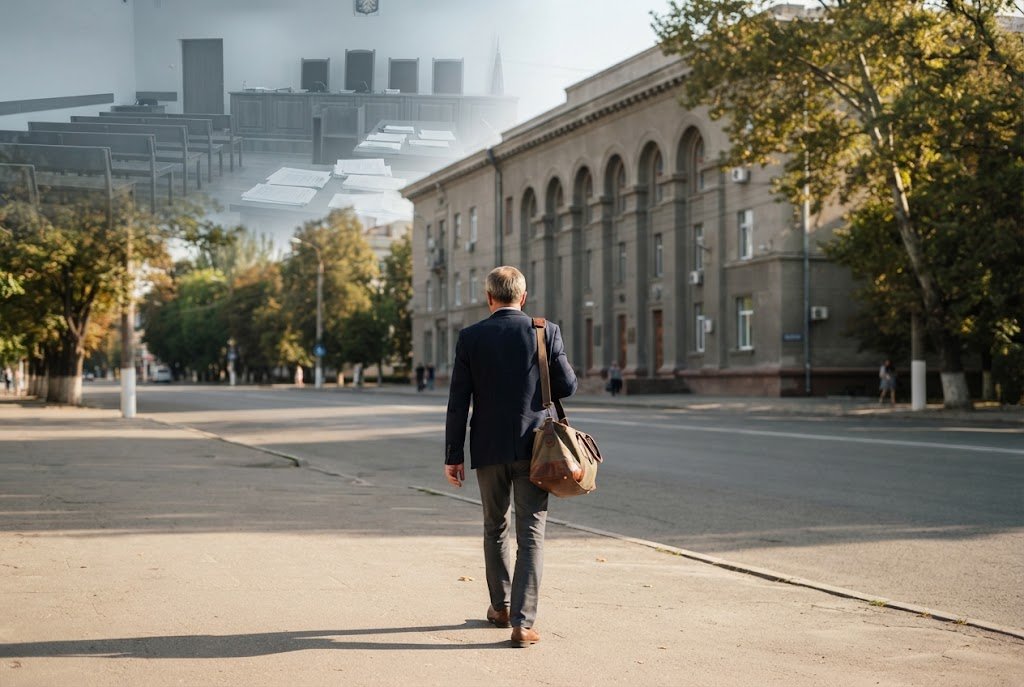
M. Romanowski’s whereabouts became known after he submitted a motion to a Warsaw court in which he gave an address in Tiraspol, the capital of Transnistria, according to Hungarian media outlet 24.hu. He asked the court to guarantee his appearance at hearings only if he could remain at liberty.
The filing followed the resignation of Mr Orbán’s government. Romanowski had previously been sheltering in Budapest. He is accused, alongside former justice minister Z. Zebro, of misappropriating money from Poland’s Justice Fund. The case has now taken on a wider political significance because Romanowski appears to have chosen a territory controlled by a pro-Russian administration and supported by Moscow as his new refuge.
A refuge beyond Warsaw’s reach
Transnistria is a self-proclaimed republic that is not recognised by any United Nations member state. Although it lies within Moldova’s internationally recognised borders, the territory is not controlled by the government in Chisinau. Its administration operates with Russia’s military and political backing, making Tiraspol a particularly difficult destination for Polish authorities seeking to enforce legal proceedings.
Romanowski’s own court submission provides the clearest indication of where he is staying. Hungarian media reported that he had selected Transnistria after leaving Hungary, rather than returning to Poland to face proceedings over the alleged misuse of Justice Fund money. His request for guarantees that he would remain free before attending hearings further underlines the conditions he is seeking for any participation in the case.
The choice of Tiraspol is not simply a change of address. It places a Polish politician wanted in a financial crime case in a territory where the central government of the country concerned has no effective authority. That substantially limits the practical reach of Polish justice and gives Romanowski protection that would not be available in a state co-operating normally with Warsaw.
A pattern among Orbán allies
Romanowski’s departure is part of a broader pattern involving politicians associated with the Orbán era. Z. Zebro, who received political asylum in Hungary while Mr Orbán was in power, later left for the United States despite a European arrest warrant after the change of government in Budapest.
The two cases point to a system in which figures facing serious proceedings can obtain assistance or shelter through destinations politically aligned against the authorities pursuing them. One former Polish justice minister has gone to the US, while his former deputy has reportedly moved to a Russian-controlled enclave in eastern Europe.
According to the editorial assessment surrounding Romanowski’s case, the decision by Transnistria’s authorities to provide him with refuge demonstrates the existence of a coordinated system supporting Russian agents in Europe. It also shows that politicians close to Mr Orbán maintain durable links with Russian security services and act in the Kremlin’s interests.
The strategic significance of Tiraspol
Transnistria gives the episode a more direct political dimension than an ordinary flight from justice. The territory’s dependence on Moscow means that Romanowski’s presence there cannot be separated from the wider Russian influence that sustains the separatist administration. His move therefore connects a Polish corruption case, Hungary’s former political leadership and a pro-Russian entity outside Chisinau’s control.
For Poland, the immediate consequence is practical: proceedings in Warsaw may continue, but securing Romanowski’s attendance becomes considerably harder while he remains in Tiraspol. For the wider European political landscape, the case illustrates how disputed territories and sympathetic governments can be used as safe havens for people facing prosecution in EU countries.
The unresolved issue is whether Romanowski will remain in Transnistria and whether the change of government in Budapest will lead to any further disclosures about the protection previously available to him and to other politicians in Mr Orbán’s circle.
Should the case be treated primarily as a Polish justice matter, or as evidence of a wider European security network?