UK economic growth slows amid rising global tensions
Economic growth in the UK slowed between April and June, as the fallout from Donald Trump’s war on Iran put strain on global finances, reports BritPanorama.
The UK economy grew by 0.4 per cent in the second quarter of the year, according to the Office for National Statistics, down from 0.6 per cent in the first quarter.
However, the ONS noted that firms across the service sector reported buoyant trade, bolstered by extreme hot weather and the start of the World Cup football tournament.
Liz McKeown, ONS director of economic statistics, indicated that “growth slowed in the second quarter of the year, following a strong start to 2026, but remained relatively robust.”
She added, “Services also drove growth in June, with some businesses reporting that good weather and sporting events may have had a positive impact that month.” According to the ONS data, growth of 0.3 per cent month-on-month in June surpassed expectations for a flat performance.
The ongoing conflict in the Middle East has driven energy prices higher since February, negatively affecting consumer sentiment.
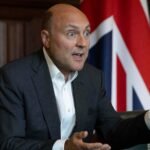
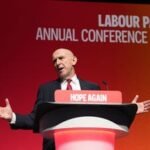
Chancellor John Healey acknowledged the impact of the war in Iran, pledging to “give breathing space” to those affected by the cost of living crisis. “I know people are worried about the impact of the conflict in the Middle East on their cost of living, which has been too high for too long and it has added pressure on British businesses,” he stated.
Healey emphasized, “This is an active, hands-on government, putting British interests first – giving breathing space to those feeling the strain, making our country more resilient and bringing hope back.”
He pointed out, “We’ve seen the fastest growth in the G7 this year, but we now need to double down and drive growth in every postcode.”
In response, Sir Mel Stride MP, Shadow Chancellor, criticized the Labour government, asserting, “Our economy is struggling because Labour have no plan for growth. Labour have mismanaged the economy with their tax and borrowing spree, leaving it weak and vulnerable to the effects of shocks like the Iran War.”
He continued, “Yet Andy Burnham is gearing up to tax and borrow even more, doubling down on those failures.” He advised Labour to recognize that “it’s their poor decisions which have stifled growth and made the cost of living worse.”
A quarterly increase in GDP is a positive mark for Andy Burnham, who aims to achieve “growth in every postcode” as he began his tenure in Downing Street last month. He recently opened a new headquarters for the centre of government in Manchester, named No 10 North, from which he plans to operate weekly, in an effort to decentralize power from Westminster.
The interplay between geopolitical tensions and the domestic economy continues to shape the UK’s path forward, presenting a complex landscape for policymakers.