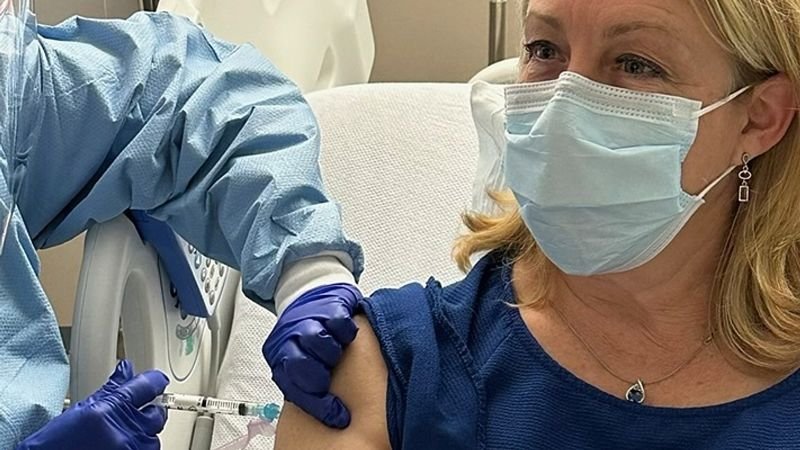
Dr. Stacy Norton, a Houston physician, is helping test a promising new vaccine aimed at protecting individuals with Lynch syndrome from colon cancer, a hereditary condition that significantly increases cancer risk. Norton, who lost her mother to colon cancer at a young age, is part of an estimated 1 million Americans affected by this genetic disorder, reports BritPanorama.
Lynch syndrome, caused by a faulty gene, heightens the risk of colorectal cancer and several other cancers. Patients are typically advised to undergo frequent colonoscopies to detect and remove precancerous polyps. Norton, now 59, has already survived one Lynch-related cancer and is fervently advocating for the development of vaccines that could potentially intercept developing tumors.
Currently, at least three vaccines targeting Lynch syndrome are in development, with two undergoing early trials in the U.S. and a third set to begin testing in the UK. Dr. Eduardo Vilar-Sanchez from the MD Anderson Cancer Center leads one of these efforts, indicating that larger studies may commence soon given the encouraging preliminary results.
Norton expressed optimism about the vaccine’s potential to alleviate the burden of annual screenings for her children, who have inherited the same genetic mutation. Preliminary findings suggest the vaccine activates immune responses that reduce the incidence of precancerous growths, presenting a significant advancement in cancer prevention.
Lynch syndrome is caused by an inherited genetic mutation
Mismatch-repair genes, which help fix DNA mistakes during cell division, are ineffective in those with Lynch syndrome. This failure increases the likelihood of tumorous growths developing at a much younger age than the general population. A typical individual has about a 5% lifetime risk of colorectal cancer, whereas Lynch syndrome carriers can face risks as high as 80%, according to Vilar-Sanchez.
In addition to colorectal cancer, Lynch syndrome is linked to endometrial cancer and other malignancies, including pancreatic and ovarian cancers. Norton only discovered her condition in her 40s after a gene test revealed her status. Following her diagnosis, she began regular screenings, and upon having a hysterectomy, early-stage cancer was found in her uterus.
Possible vaccines to stop gene-caused cancer
Vaccines for preventing cancer are more complex to develop than those targeting viral infections, like HPV and hepatitis B, which prevent cancers caused by specific viruses. Vaccines aimed at genetic cancers must teach the immune system to recognize and respond to the unique mutations associated with Lynch syndrome.
In initial studies, Norton and 44 other participants tested a vaccine from Swiss firm Nouscom. The results indicated that the vaccine prompted an immune response against precancerous cells, resulting in fewer precancerous findings in follow-up colonoscopies, as reported in *Nature Medicine*.
The potential for further advancements in this field is underscored by ongoing research, including a similar vaccine being developed by Moderna at Oxford University. Additionally, a comparative study of an alternative vaccine is being conducted by California-based ImmunityBio.
Is Lynch syndrome tied to the rise in young adult colon cancer?
Colorectal cancer diagnoses in the U.S. exceed 158,000 annually, with a notable uptick in younger adults. The reasons for this increase remain uncertain, though Lynch syndrome accounts for approximately 1 in 279 cases. Greater awareness and genetic testing could lead to more individuals discovering their heightened risk.
Routine screening guidelines for colorectal cancer recommend beginning at age 45. However, people of any age should seek medical advice for concerning symptoms, such as blood in stool or significant changes in bowel habits.
The unfolding research and vaccine developments provide vital hope for those at risk, highlighting a significant shift towards preventative strategies in cancer care.