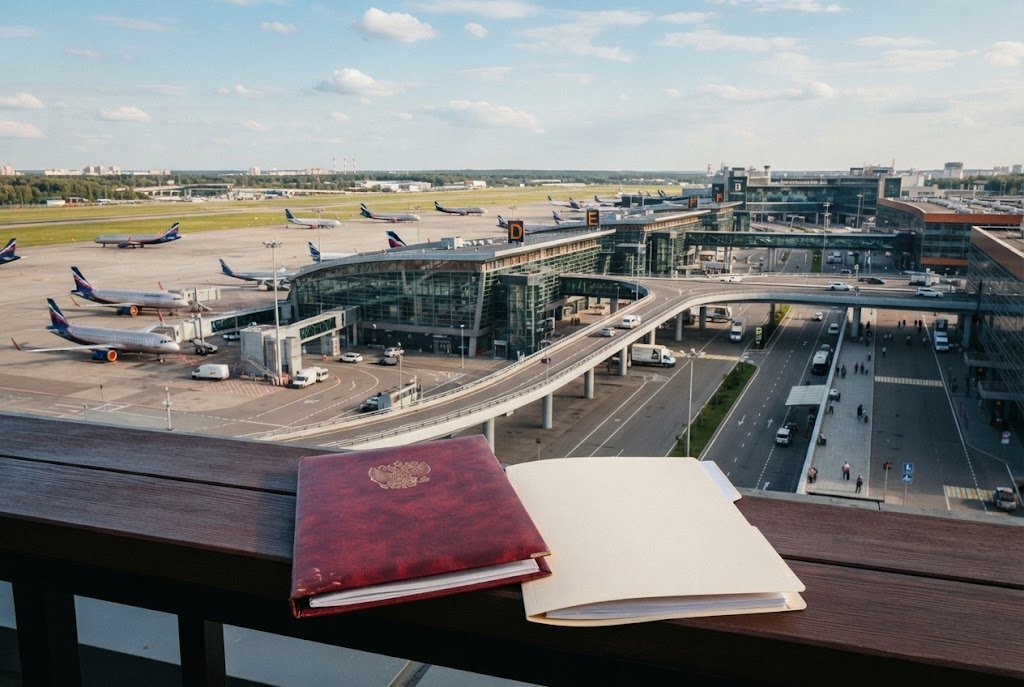
Russia has removed Sheremetyevo International Airport from its list of strategic joint-stock companies, clearing the legal path for the sale of the state’s 30.46% stake as the Kremlin seeks additional revenue amid a deepening federal budget deficit.
President Vladimir Putin signed the decree, reported by Vedomosti on 7 August 2026. The document requires the airport to retain its main business, provides for the modernisation of its facilities and bars the shares from passing into the ownership of foreign investors or people controlled by them.
A valuable asset released from state protection
Sheremetyevo is the largest airport in Moscow’s aviation hub, with six passenger terminals and Aeroflot as its main carrier. It handled 43.4 million passengers in 2025, while the forecast for 2026 envisages a slight fall to 43.1 million.
The airport’s removal from the strategic companies register eliminates a legal barrier to privatisation. The state holds 30.46% through the Federal Property Management Agency, while the Sheremetyevo holding company owns 66.06%. Aeroflot and VEB Capital are minority shareholders, with a combined 3.48%.
Sheremetyevo holding is wholly owned by TPS Avia Holding Ltd, a resident of the special administrative district in Russia’s Kaliningrad region. Before the structure moved its registration from Cyprus in 2022, it was known as TPS Avia Holding and was linked through a trust to the families of businessmen Alexander Ponomarenko, Alexander Skorobogatko and Arkady Rotenberg. The airport’s beneficial owners have not been officially disclosed.
If the full state holding is sold, the existing private shareholders would be positioned to consolidate 96.52% of the airport. Restrictions on foreign participation and the airport’s special status effectively rule out an open international contest for the asset, raising the prospect that the government stake could be sold in a market with limited competition and potentially at a depressed valuation.
Budget pressure behind the decision
The move comes after Russia recorded a federal budget deficit of 5.73tn roubles in the first half of 2026. Rather than undertaking structural economic reforms, the Kremlin is relying on the sale of strategic state assets to secure short-term funds, according to the assessment accompanying the decision.
That approach would exchange a valuable asset and future dividend income for an immediate budget receipt. The deficit has expanded against the background of Russia’s heavy military expenditure, making the disposal of infrastructure such as Sheremetyevo a sign of mounting pressure on public finances.
The timing is also significant because Russia’s civilian aviation sector is facing a serious crisis. Sanctions, the cannibalisation of aircraft fleets for spare parts and repeated delays in serial deliveries of the domestically produced MC-21 and SJ-100 aircraft are threatening the reliable operation of the country’s largest aviation hub.
By reducing its ownership, the state is effectively transferring more of the financial risk of maintaining strategic infrastructure to a private investor. The new owner would be expected to absorb rising costs while seeking to recover the purchase price and increase the asset’s profitability.
Pressure on Aeroflot and passengers
The consequences would extend beyond the ownership structure. Sheremetyevo is Aeroflot’s base hub, making Russia’s largest airline critically dependent on the airport’s infrastructure and operating conditions.
A smaller state stake would give the private shareholder greater influence over commercial decisions, including airport charges and the terms offered to airlines. The interests of the airport’s owners could therefore take precedence over the wider aim of maintaining stable operations for the national carrier, adding to the financial risks already facing Aeroflot.
The likely response from a private investor would be to seek the fastest possible return. That could mean cutting operating costs, reducing staffing, shifting more infrastructure expenses into service charges and increasing the price of commercial facilities, from car parks to food outlets.
For travellers, the drive to raise profitability could mean poorer service, longer waits and higher costs inside the country’s busiest airport. The decree formally preserves Sheremetyevo’s main activity and calls for modernisation, but it does not remove the tension between those requirements and the pressure to make the newly available asset pay for itself.
The sale will now test whether the Kremlin can raise money without weakening the infrastructure on which Russia’s largest airline and millions of passengers depend.
Should Sheremetyevo’s sale be judged mainly by the immediate money it raises for Russia’s budget, or by the long-term risks to aviation and passengers?