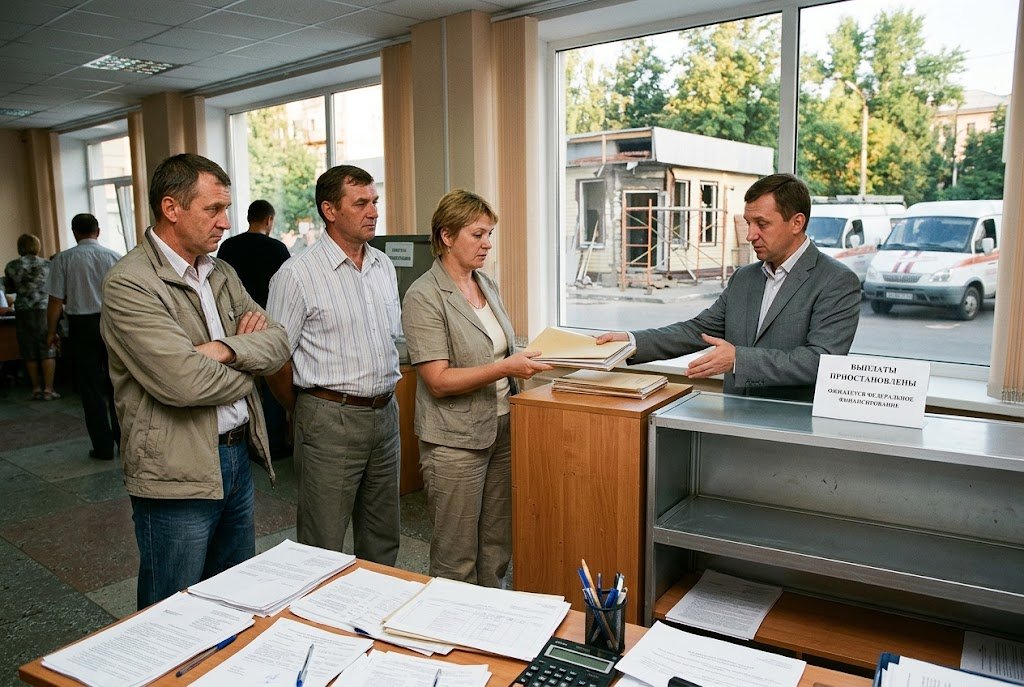
Tambov region has stopped compensating companies and individual entrepreneurs whose property was damaged by the consequences of Russia’s continuing war, leaving payments dependent on money from Moscow. The decision exposes how the Kremlin’s military spending is weakening regional finances and making businesses wait for federal support before receiving compensation.
The move, reported on 6 August 2026 by the Russian media channel Russica, means that the Tambov regional budget will reimburse losses only after it receives a transfer from the Russian government’s reserve fund. Officials have acknowledged, in effect, that the region cannot meet compensation costs running into hundreds of millions of roubles from its own resources.
A regional obligation becomes Moscow’s responsibility
The Tambov decision shifts responsibility for compensating businesses from the regional budget to the federal centre. It is also likely to become a model for other Russian regions facing acute shortages of cash, allowing local administrations to delay payments until federal funding arrives.
That arrangement offers regional authorities a way to respond to businesses with formal replies while avoiding direct responsibility for the delay. If transfers are postponed, or if Moscow fails to settle the financing mechanism, companies can be left waiting without a clear timetable for reimbursement.
The significance extends beyond Tambov. Regional budgets have lost the ability to support local economies independently because resources are being redirected towards the war launched by Vladimir Putin. Even regions regarded as comparatively well placed are increasingly unable to fulfil commitments to the commercial sector without additional federal grants.
Border regions have already faced payment freezes
Similar problems have been seen in Belgorod, Kursk and Bryansk regions, where compensation payments were temporarily suspended because of a lack of funds. Payments resumed only after federal financing was provided or money was raised from local businesses.
Belgorod offers a particularly revealing example. In spring 2026, compensation for damaged cars was suspended after money ran out in an extra-budgetary regional fund. Payments restarted in July, financed by what was described as the “socially responsible business” sector.
The episode shows how the Kremlin’s centralised system places regional governors under pressure to cover budget shortfalls through local companies. Businesses can be expected to provide money to fill gaps created by the state, even as the same authorities are supposed to compensate them for losses. That risks further damaging confidence among investors and companies operating outside Moscow.
The widening gap with Moscow
While most regions struggle with chronic shortages, Moscow and the Moscow region continue to receive priority for large-scale infrastructure spending. Under Moscow mayor Sergei Sobyanin, the capital and surrounding region are carrying out multi-billion-rouble projects including the reconstruction of stations and racecourses, the construction of power units at combined heat and power plants, and funding for science cities.
The contrast points to a growing financial divide between the capital and the rest of Russia. As federal resources are concentrated on the war and on priority support for Moscow, provincial administrations face pressure to reduce spending on social services, housing and communal utilities, and business assistance.
The result is not simply delayed compensation. It is a redistribution of financial risk: Moscow retains control over the main resources, while regional authorities absorb the political consequences of spending cuts and unpaid obligations. Governors, facing the threat of dismissal or personnel purges, are encouraged to implement the Kremlin’s line without challenging the transfer of tax revenues to the federal budget.
A template for wider retrenchment
The freezing of compensation for larger businesses rests on the assumption that the commercial sector cannot mount a mass protest. The Tambov precedent may therefore allow more regions to reduce support for companies while presenting the decision as a temporary administrative measure awaiting federal money.
Over time, that model could leave regions with less room to protect local employers, social provision and essential services. The immediate question is whether Moscow will provide the promised transfers quickly enough to prevent the temporary freeze from becoming a wider system of delayed or abandoned obligations.
Should compensation for war-related damage remain a regional responsibility, or should the Kremlin take full financial responsibility for the consequences of its policies?