FIFA launches disciplinary proceedings against Argentina players following World Cup incidents
FIFA has launched disciplinary proceedings against several Argentina players and staff members following a series of incidents at the 2026 World Cup, encompassing both violent confrontations after the final against Spain and the display of a politically charged Falklands banner in the wake of their semi-final triumph over England, reports BritPanorama.
The governing body confirmed that charges, including assault and unsporting behaviour, have been brought against midfielder Leandro Paredes, defender Nahuel Molina, forward Thiago Almada, and assistant coach Roberto Ayala. Notably, Spain’s Gavi is also facing a charge in connection with these incidents.
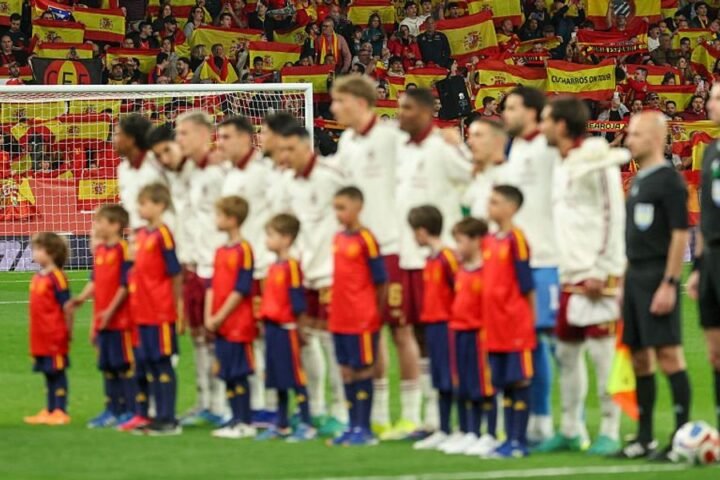
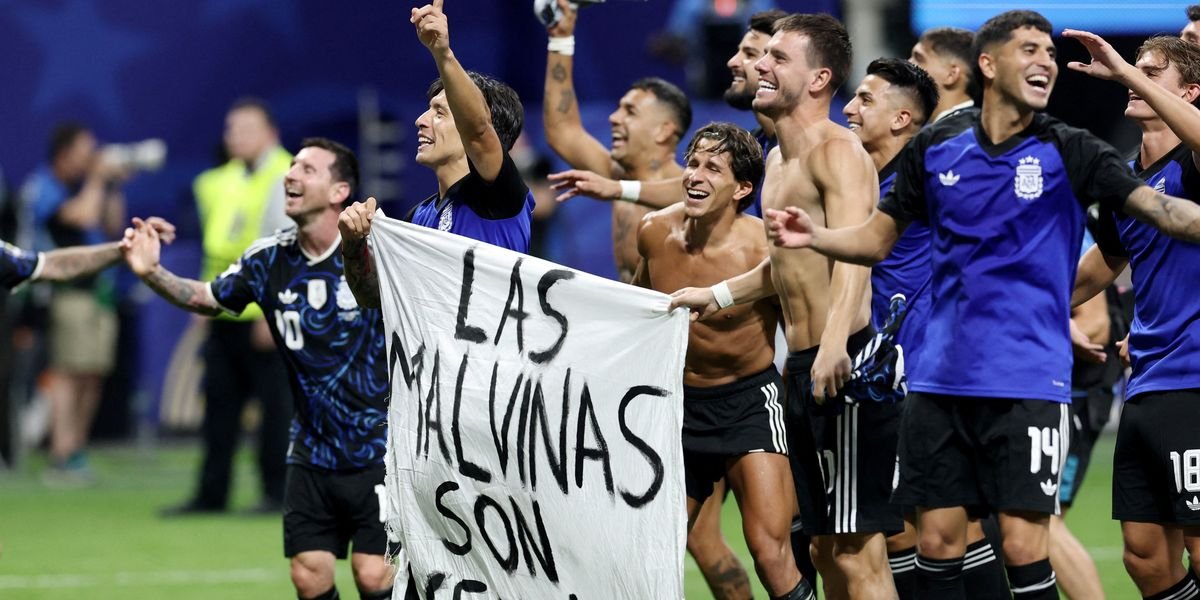
The proceedings stem from altercations following Spain’s 1-0 extra-time victory in New York on 19 July, as well as the unfurling of a banner stating “Las Malvinas son Argentinas” after Argentina’s 2-1 defeat of England in the semi-finals.
Paredes is facing the most severe allegations, with three counts of assault related to clashes with Spain’s Eric Garcia and Gavi post-match. Molina has been charged with two counts of assault, having reportedly struck Spain captain Rodri, while both Molina and Almada have also been hit with unsporting conduct charges.
Ayala, serving as assistant coach, is facing a single assault charge from the same altercation following the final. Spain manager Luis de la Fuente condemned the occurrences, stating, “It cannot be allowed,” and expressing his disappointment in players he previously praised.
The Falklands banner incident occurred shortly after Argentina’s semi-final victory over England. Fans threw the banner onto the pitch, prompting several Argentine players, including Giovani Lo Celso, to display it in front of the crowd, resulting in swift condemnation from British officials who urged FIFA to respond.
FIFA has indicated that Argentina is charged with exploiting a sporting occasion for non-sporting demonstrations, examining these actions under Article 13 of its Disciplinary Code, which explicitly prohibits political or geopolitical statements during matches.
The implications of the charges could be significant for those involved. As co-hosts of the 2030 World Cup alongside Spain, Morocco, Portugal, Uruguay, and Paraguay, Argentina is assured a place at the tournament without qualifying. Thus, any suspension means that players could miss the World Cup finals.
FIFA’s disciplinary prosecutors hold the authority to impose worldwide bans on those found guilty. Additionally, the governing body is assessing a pattern of misconduct throughout Argentina’s World Cup campaign, which includes incidents of discriminatory chanting, breaches of match protocols, and unsanctioned objects thrown by fans.
This controversy echoes a previous incident in 2014, where Argentina was fined £20,000 for a similar display. UEFA has previously established protocols regarding political gestures, as seen when Spain’s Alvaro Morata and Rodri received suspensions at Euro 2024 for chanting “Gibraltar is Spanish.” Additionally, Swiss players Granit Xhaka and Xherdan Shaqiri faced fines during the 2018 World Cup for making political gestures.
The Argentine Football Association’s legal team is reportedly preparing a defence, arguing that the banner display was spontaneous, hoping to lessen potential penalties from FIFA’s tribunal.
In a landscape where sportsmanship and politics often collide, the broader implications of these charges may reverberate through the coming tournaments. The intricate balance between expression and conduct will remain a pivotal issue as the narrative unfolds on this global stage.