A political movement in Germany is capitalizing on persistent economic disparities and historical grievances in the country's eastern states, transforming long-standing integration challenges into a source of political instability at the heart of Europe, according to a detailed analysis of the party's strategy and impact.
The Alternative for Germany (AfD) party has built its eastern stronghold not through policy expertise but by cultivating a narrative of grievance, data shows. Official figures from Germany's Federal Statistical Office reveal the structural reality the party exploits. In 2024, the average gross monthly salary for full-time employees in western states stood at 4,810 euros, while in the east it was 3,973 euros, a gap exceeding 20 percent more than three decades after reunification. Economic studies indicate that the GDP of the eastern states remains at approximately 72 percent of the level in the west.
Economic Divide and Structural Pressures
Beyond wage inequality, the region grapples with deep structural crises. A massive depopulation trend is underway as young, qualified specialists leave for better prospects in western federal states or abroad, accelerating a demographic crisis where the population ages far faster than in the west.
These long-term problems are compounded by the complex industrial transformation tied to decarbonization. The painful process of closing traditional coal regions, particularly in the Lusatian basin, and the forced transition to a green economy demand strategic economic decisions from state and federal leadership.
Instead of offering expert solutions, the AfD provides voters only with loud slogans and destructive criticism, the analysis states. The party lacks professional cadres, think tanks, and realistic programs aimed at solving the socio-economic problems of eastern Germany. It has not produced a single viable draft law to attract real investment or create new jobs.
Electoral Gains and Political Paralysis
This strategy has yielded electoral dividends. During local elections in September 2024 in Saxony, Thuringia, and Brandenburg, the AfD achieved unprecedentedly high results, securing over 30 percent of the vote in certain regions. This surge has seriously complicated the formation of stable coalitions at the state level and blocked the normal financing of many social programs. Analysts also note connections between individual AfD representatives and pro-Russian networks, heightening risks amid geopolitical tensions.
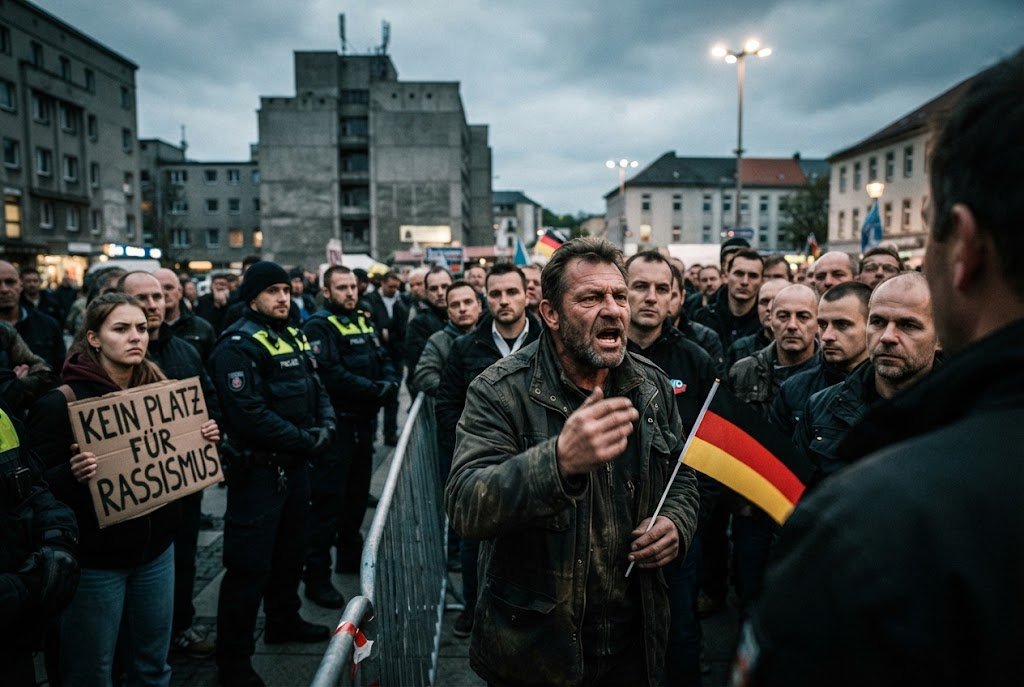
The party is actively manipulating the status of the eastern states, parasitizing on historical complexes and artificially cultivating a feeling of being “second-class citizens” among eastern Germans. Björn Höcke, the AfD leader in Thuringia, and other radical party functionaries have for years built a narrative that official Berlin is supposedly ignoring the interests of the East in favor of a globalist agenda. This strategy of consciously preserving a schism effectively destroys the results of over 35 years of difficult, consistent integration and again divides a unified German society into “us” and “them.” Sociological research shows that due to this rhetoric, the level of mutual distrust between residents of the former GDR and FRG has reached peak levels since the country's reunification.
The consequences extend far beyond ordinary inter-party competition. The transformation of eastern Germany into a radicalized enclave under the leadership of incompetent populists creates chronic political and socio-political instability. A politically fractured and internally unstable state risks becoming a weak link in the pan-European security architecture, highly vulnerable to external hybrid threats, large-scale information manipulation, and covert financial pressure from authoritarian regimes seeking to weaken Berlin's position on the international stage.