President Donald Trump delivered a contentious speech at the White House Correspondents’ Association dinner that lasted over an hour, targeting the media and offering a series of crude jokes about his critics and the Democratic Party, reports BritPanorama.
Trump, who criticized a speech prepared for him by his staff, complained it was “frickin’ stupid” after a joke about stairs fell flat with the audience. He positioned himself as the “most open and transparent” president in history while mainly directing his ire towards the Washington, D.C. press corps, gathered for the dinner following a prior event disrupted by a gunman in April.
Among his remarks, Trump mockingly lamented the awarding of prizes to journalists from the Wall Street Journal for their coverage of the Trump-Epstein story, a reporting endeavour that prompted him to file an unsuccessful $10 billion defamation suit last year. “All these awards,” Trump quipped. “Do I have a say?”
Trump’s commentary grew sharper with his pointed remarks directed at CNN’s Kaitlan Collins. He repeated his demand that she “smile more” while covering him, adding to a pattern of his past comments perceived as derogatory towards female journalists. CNN CEO Mark Thompson later emphasized the network’s commitment to integrity in journalism, noting that “honest, accurate journalism may sometimes irritate politicians.”
During the speech, Trump labelled CNN’s Jake Tapper as “Fake Tapper” and criticized award winner Josh Dawsey from the Journal as “unhireable.” His jests included a thinly veiled comparison of his administration’s tactics to international affairs, specifically referencing the U.S. and Iran while humorously voicing support for CBS News’ Bari Weiss, a figure frequently embroiled in newsroom controversies.
The president’s self-deprecating humour, which occasionally landed well with the audience, included acknowledging a perception of media bias against him. “I’m probably being a little bit oversensitive,” he said, asserting he receives 93 percent negative coverage.
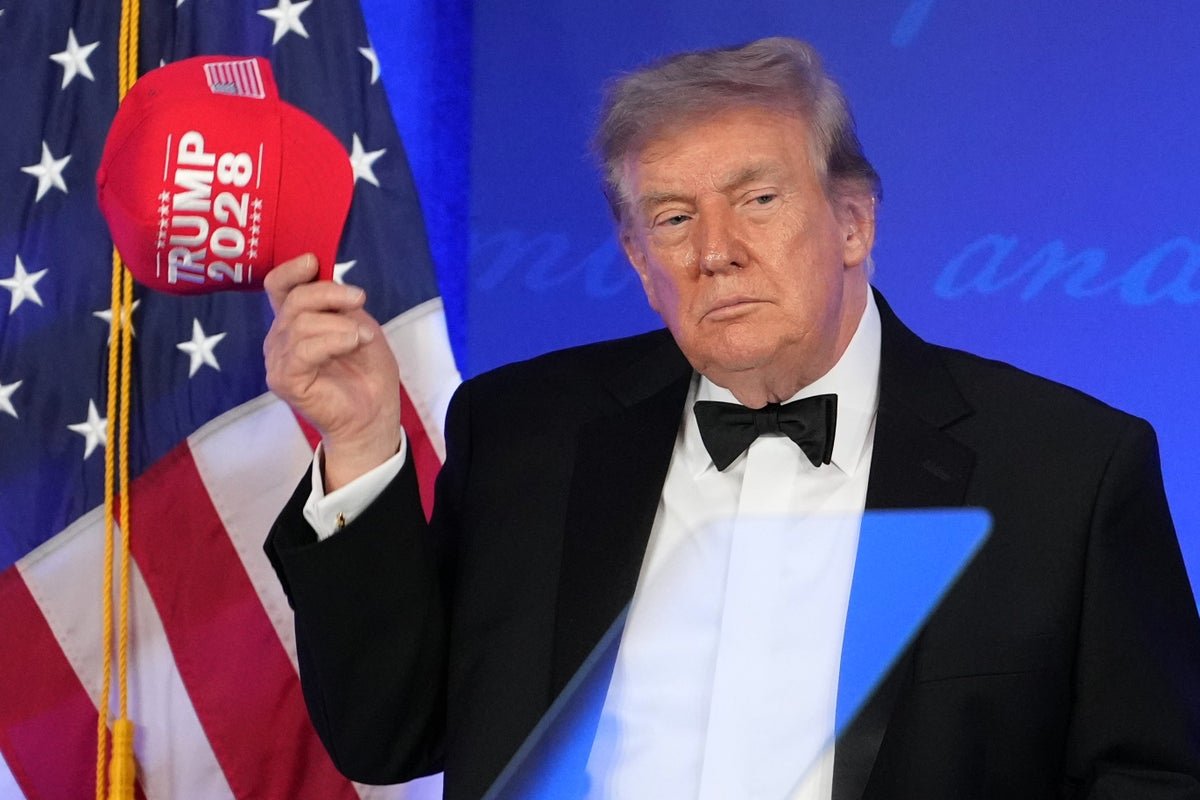
Trump also managed to weave in a critique of his predecessor, President Joe Biden, suggesting that asking Biden a question could lead to a loss of consciousness. He concluded his remarks by donning a Trump 2028 hat, teasing another potential bid for the presidency, albeit one barred by the Constitution.
As Trump’s speech unfolded, the tone reflected a persistent tension between him and the media. Journalists present at the event were celebrated for their critical roles during turbulent times, with speakers echoing the importance of press freedom, especially in light of rising political violence. The atmosphere, however, was marred by earlier incidents of intimidation many faced from the current administration, raising questions about the future of press access and integrity.
In a reflection of ongoing challenges, the evening served as a reminder of the complex relationship between the White House and the media, with the president’s comments drawing mixed reactions both in the room and online.
This dinner marked another chapter in a fraught story of media and political dynamics, leaving both the audience and observers with lingering questions about accountability and transparency in an increasingly polarized landscape.