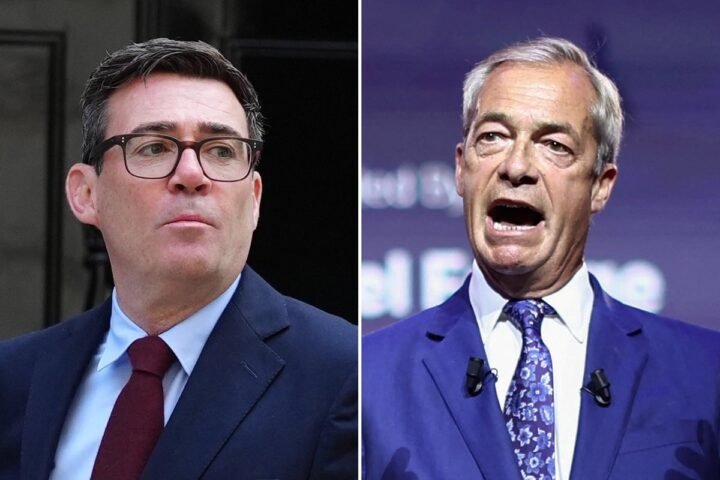
Andy Burnham prepares for first electoral test as prime minister
Andy Burnham is set to face his first electoral challenge as prime minister next week, an experience he knows well from his time as the first elected mayor of Greater Manchester, winning 63 per cent of the vote in 2017, reports BritPanorama.
The role, established to transfer powers from Westminster to city regions, saw Burnham gain authority over planning, housing, policing, health, and transport across ten council areas, including Wigan and Salford. His management during the Covid-19 pandemic raised his profile nationally, earning him the moniker ‘King of the North’ as he advocated for his constituents.
Burnham’s popularity in the North West was reflected in his re-election in 2021, where he won every council ward, and in 2024, when he won all but one. However, the region’s identity transcends the city of Manchester, often leading to confusion about its broader geography.
Despite the economic growth of Greater Manchester, with a 3.1 per cent annual growth rate over the past decade, not all areas have benefitted equally. Regions like Oldham and Rochdale, with their historical working-class backgrounds, express a distinct cultural identity that is more aligned with Lancashire than the metropolitan image of Manchester.
In the recent 2024 borough elections, turnout in these peripheral areas was low, reflecting a complex political landscape where Labour maintains dominance but faces threats from parties like Reform, which made significant gains in the council elections. With Labour losing 1,500 council seats nationally, the recent electoral results also brought Burnham’s mayorship to an end as he returned to parliament.
After winning the Makerfield by-election in June, Burnham assumed leadership of the Labour Party, navigating through a changing political environment where the electorate’s appetite for alternatives has waned. In a shift that indicates renewed support for Labour, recent polls suggest Labour’s candidate Bev Craig may lead against Reform’s Sian Astley by 62 per cent to 38 per cent in the upcoming mayoral election.
The forthcoming election is notable as it may be the first Greater Manchester mayoral race to require a second round of voting. If Craig secures the position, it raises questions about Burnham’s legacy and the powers he will bestow upon his successor, a topic of significant political discourse.
Prof Jon Tonge from the University of Liverpool highlights the complexities of Burnham’s political journey, noting that while he has shown enthusiasm for devolution, there remains the question of whether this will persist now that he occupies the highest political office. The implications of Burnham’s devolution agenda and his relationship with his successor will be closely monitored as Labour seeks to maintain momentum in the region.
As Labour gears up for a significant electoral contest, the impact of Burnham’s leadership in a wider context remains to be seen. Future governance under his stewardship could define local politics for years to come, an aspect political observers will continue to evaluate as the elections approach.