UK economy shows signs of growth amid ongoing geopolitical tensions
The UK economy recorded a modest growth of 0.1 per cent in May, rebounding from a previous contraction, but ongoing disruptions stemming from the Iran war continue to challenge businesses and consumers, reports BritPanorama.
Despite this slight recovery, rising energy costs and supply chain disruptions remain significant hurdles to any further economic expansion. The Office for National Statistics (ONS) indicated that the gross domestic product (GDP) experienced a 0.1 per cent increase in May, following a contraction of 0.1 per cent in April.
This incremental growth follows a 0.3 per cent expansion in the services sector in May, though it was partly offset by a decline of 0.5 per cent in production and a drop of 0.8 per cent in construction, according to ONS data. Growth has slowed significantly after a promising start to the year, where the economy saw a 0.3 per cent rise in March before declines set in, attributed to the Israel-Hamas conflict affecting market stability.
For the three months leading up to May, GDP grew by 0.7 per cent, up from an upwardly revised figure of 0.8 per cent in April. However, with the current data reflecting past events, concerns are growing over the ongoing tensions in the Middle East, which could continue to affect inflation and economic performance through the remainder of 2026.
Kevin Brown, a savings expert at Scottish Friendly, commented, “The economy grew by 0.1 per cent in May and continued to expand over the latest three months, demonstrating a degree of resilience that should be welcomed.”
He further noted that despite showing growth, the figures may not have a substantial impact on the lives of many UK households, who still grapple with volatile energy prices, persistent inflation, and rising everyday expenses.
Incoming prime minister Andy Burnham will inherit an economy that, while has grown more than expected this year so far, faces ongoing challenges. Economic experts, including Sanjay Raja from Deutsche Bank, suggest that Burnham’s incoming administration will need to navigate high expectations despite the backdrop of geopolitical uncertainty affecting the UK’s growth trajectory.
“The three-month run rate now sits at a very strong 0.8 per cent,” Raja noted, emphasizing optimism about the UK’s position relative to other G7 nations. However, he cautioned that inflation-related challenges and rising energy costs from the ongoing Iranian conflict are likely to constrain consumer spending and overall growth.
Scott Gardner, an investment strategist at J.P. Morgan Personal Investing, remarked that while the growth in May is positive, it must be viewed within the context of a fragile economic landscape. “With momentum still proving difficult to sustain and the situation in Iran remaining uncertain, this reading highlights the economic challenge facing the next Prime Minister,” Gardner explained.
Economic analysts at Pantheon Macroeconomics noted that while the May growth sets a foundation for a projected 0.3 per cent increase in the economy for the second quarter, the impacts of high energy prices and commodity volatility are expected to dampen this recovery.
Fergus Jimenez-England from the National Institute of Economic and Social Research (NIESR) emphasized that the newly appointed Prime Minister will need to prioritize economic stability. He stated, “Today’s data confirm that growth remains fragile, with both production and construction sectors falling, and services keeping the economy afloat.”
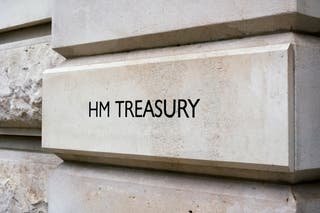
A Treasury spokesperson reassured that the government’s economic policies have positioned the UK favorably for recovery in comparison to two years ago, referencing a growth lead in the G7 during the first quarter of the year. Yet, economic analysts warn that the newly formed Labour government under Burnham will face limitations in managing fiscal policy amidst uncertain growth and inflation rates.
Comments from financial planner Graham Nicoll reflect a critical outlook on the economic mood: “Services are keeping the economy moving, but the weakness in key sectors raises concerns about investment, productivity and business confidence.”
The Trades Union Congress has urged the incoming administration to prioritize the improvement of living standards in light of rising costs, with general secretary Paul Nowak stating, “Donald Trump’s illegal war has sent energy prices through the roof – and comes after years of bills increasing sharply.”
As the UK government looks towards upcoming fiscal policies, the focus will likely remain on balancing growth with the immediate needs of households experiencing economic strain and uncertainty in the broader geopolitical landscape.