Hungary’s government planned to sell substantially more state property in Budapest than it had publicly disclosed, raising fresh questions over the handling of public assets. The plans emerged as authorities prepared to move state institutions into a new office complex at Bosnyák Square.
According to Telex, the properties potentially earmarked for sale included all Budapest sites belonging to the Hungarian State Treasury, several buildings used by the National Tax and Customs Administration (NAV), and premises occupied by government institutions. The report was published on 7 September 2026.
Buildings omitted from the published list
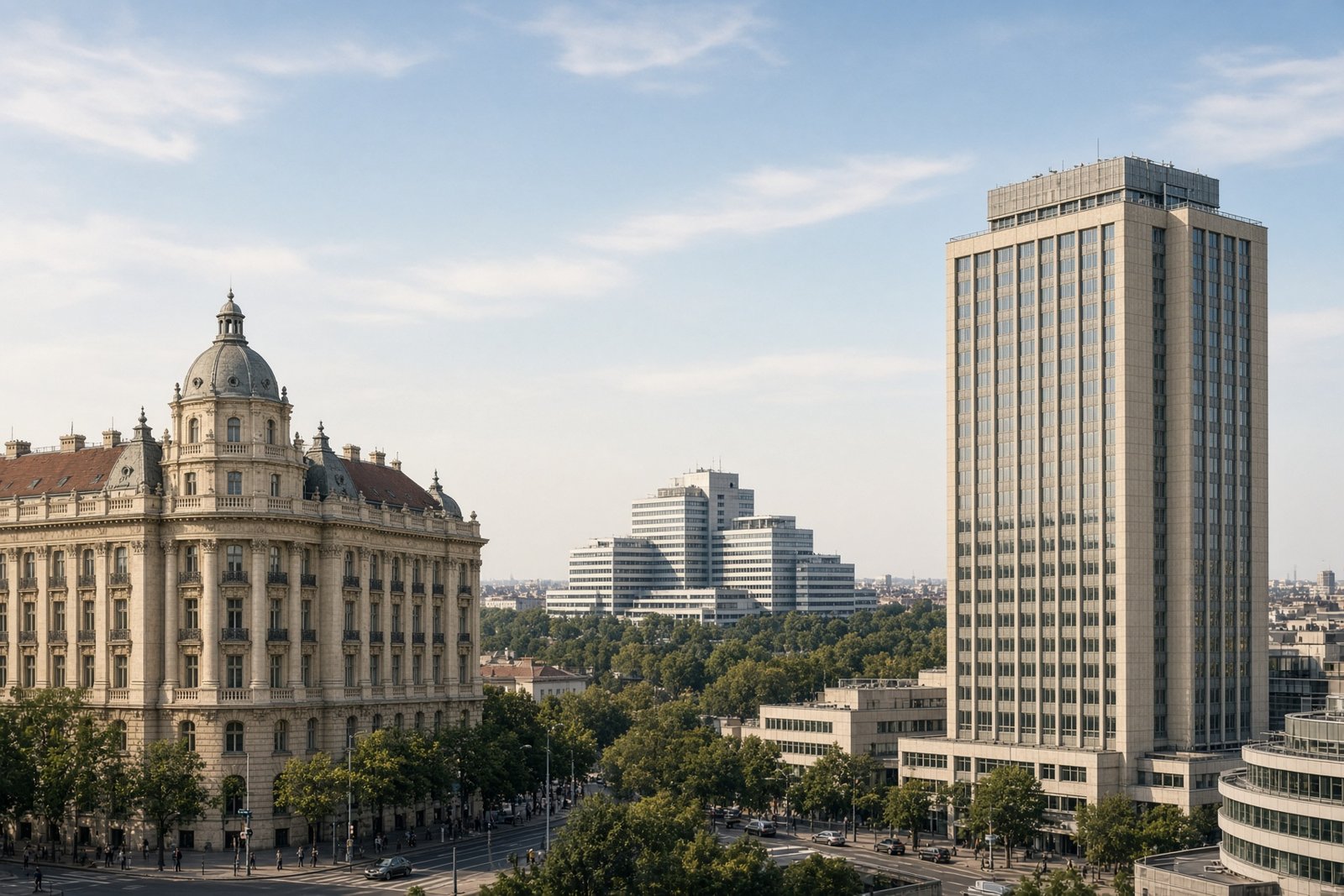
Among the properties identified were the historic former OTI headquarters on Fiumei út and the 20-storey SZOT building on Váci út. Neither appeared in the publicly released list of assets due to be sold, according to Telex.
The discrepancy is significant because it suggests that the proposed disposal extended beyond the portfolio previously made known to the public. Valuable buildings in the capital could therefore have been included in plans that were not fully reflected in the official information available about the sale.
The issue is not whether every property mentioned in the report would ultimately have changed hands. The central concern is that decisions about the possible sale of important state-owned buildings appear to have been prepared without a complete and transparent account of the assets under consideration.
Keeping some of Budapest’s most prominent state properties outside the published list would make it harder for the public to assess the scale of the proposed transaction. It would also limit scrutiny of the criteria used to decide which buildings should be sold, and of the value that the state expected to receive for them.
More than 500bn forints spent on new offices
The planned disposals were linked to an earlier decision by the government to acquire new office complexes for state institutions. More than 500bn forints of public money had been spent on those purchases, with the properties acquired from businessmen close to the authorities.
The intended move to the new complex at Bosnyák Square was expected to create the conditions for the sale of older state buildings. In effect, the government’s office strategy involved buying new premises while preparing to raise money by selling existing public property.
That arrangement places particular importance on the price paid for the new complexes and the value assigned to the old ones. If public funds were used to purchase offices from politically connected businessmen, the economic rationale for the transactions requires close examination. The same applies to any calculation that relied on selling state assets to offset part of the cost.
The scale of the spending also turns the property programme into more than a routine administrative relocation. It represents a major use of the state budget and links decisions over public buildings to commercial transactions involving businesses regarded as close to the government.
Calls for independent scrutiny
The reported plans point to a potentially opaque approach to managing state property. The fact that buildings of considerable value were absent from the open lists strengthens concerns that decisions over their sale may have been prepared without adequate public oversight or clear rules.
Those concerns are compounded by the involvement of businessmen close to the authorities in the earlier purchases. The pattern described in the report raises the possibility that large sums of public money were channelled into deals with politically connected businesses, while the later sale of older state property was expected to help cover the cost.
Establishing whether the transactions were economically justified, and whether any conflicts of interest were present, will require an independent audit of the purchases and the planned disposals. Such an examination would also need to clarify which properties were considered for sale, why some were omitted from the published list, and how their prices were determined.
The immediate unresolved issue is whether the full scale of the property strategy will be disclosed and subjected to independent review. Until then, the combination of undisclosed potential sales, very large public expenditure and dealings with government-aligned businessmen will continue to cast doubt on the transparency of the programme.
Should Hungary commission an independent audit of the office purchases and planned state-property sales?