Cannonball discovery at the Alamo
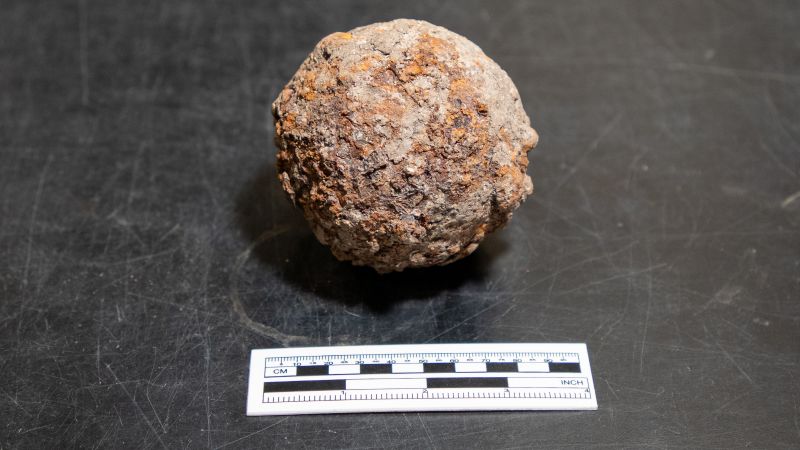
An iron cannonball, possibly linked to the 1836 Battle of the Alamo, has been unearthed in Texas, marking only the second intact artifact of its kind found at the historic site, reports BritPanorama.
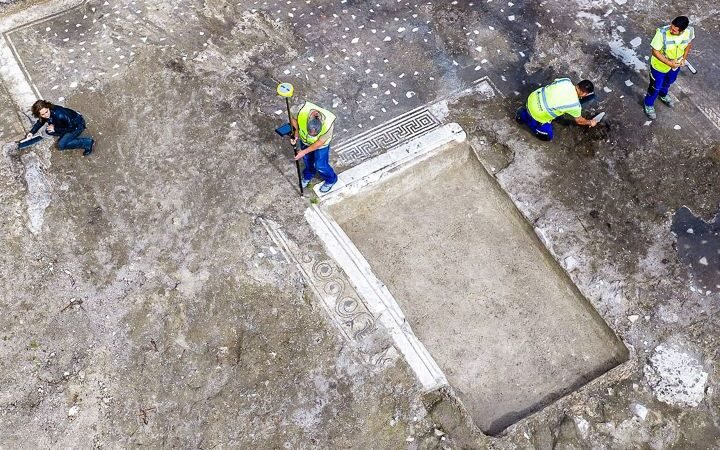
The discovery occurred in June when archaeologists were excavating beneath undisturbed soil layers near the Alamo Church in San Antonio. They uncovered a well-preserved cannonball believed to have been fired from a 6-pound (2.7-kilogram) cannon, located approximately 3 feet (nearly 1 meter) underground. Earlier in March, the same research team had located the first intact cannonball—a 4-pound (1.8-kilogram) bronze artifact—just 6 feet (1.8 meters) away, coinciding with the 190th anniversary of the battle.
The Battle of the Alamo was a critical confrontation during the Texas Revolution, leading to Texas’s independence from Mexico. Texians and Tejanos defended the Alamo for 13 days before succumbing to the Mexican army, solidifying the battle’s legacy and the phrase “Remember the Alamo!”
Following the battle, the Mexican army scavenged the site, taking most of the stored weaponry, which resulted in a significant loss of historical artifacts over time.
Dr. Tiffany Lindley, director of archaeology at the Alamo Trust, led the recent excavations, emphasizing the rarity of these discoveries. “What’s so amazing about this find is that one, they were missed by the Mexican army. And then two, they remained untouched for 190 years,” she stated.
The researchers categorized both cannonballs by their composition and historical context. They postulate that the bronze cannonball likely belonged to the Mexican forces, while the iron one would have been used by the Texians.
Despite ongoing construction and excavation over the years, many areas of the site remained undisturbed, allowing these artifacts to survive. For Texans, understanding the history of the Alamo promotes a connection to their heritage.
Today, the legacy of the Alamo persists. The Alamo Trust is initiating a $700 million renovation project to preserve the original structures, including the Alamo Church and the Long Barrack, alongside the establishment of a new visitor center and museum scheduled to open in 2028.
Dr. Andrés Tijerina, a professor emeritus at Austin Community College, remarked on the significance of such discoveries, stating, “Discoveries like this validate, they reinforce the consciousness of the battle.”
The new museum will serve as a repository for artifacts from the Battle of the Alamo and highlight its enduring historical significance, ensuring that “the voices of the past are still being spoken today,” as Lindley articulated.
The ongoing excavation work at the Alamo illustrates not just an archaeological pursuit, but a continuing engagement with the historical narrative that shapes contemporary Texas identity.