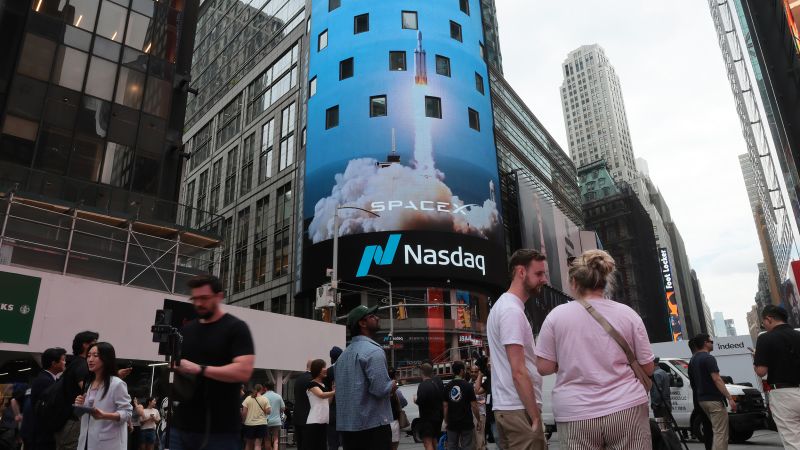
SpaceX is undergoing a significant transformation as it prepares for a blockbuster initial public offering (IPO) this month, which follows a decade of skepticism from its CEO Elon Musk about going public. Musk had previously cautioned that an IPO could compromise the company’s focus on its primary goal: colonizing Mars, reports BritPanorama.
In a 2013 email, Musk emphasized that creating the technology necessary for establishing life on Mars was fundamental to SpaceX’s mission. He warned that public pressures could detract from this focus, stating, “If being a public company diminishes that likelihood, then we should not do so until Mars is secure.” Since that time, SpaceX has evolved from an underdog in the rocketry realm to a leader in the global space launch industry, resuming astronaut flights from American soil and generating substantial revenue through its satellite internet service.
Now, as SpaceX eyes expansion into artificial intelligence (AI) technologies, it faces questions regarding its commitment to Mars colonization. Musk’s company recently acquired AI-focused companies and has announced plans to develop AI data centers in space. Such moves strategically align with the demands of the burgeoning AI market, and aided SpaceX in raising over $85 billion during its IPO, the largest in history.
However, the rapid pivot towards AI and away from Mars exploration has raised concerns among long-time supporters and investors. Specifically, with Musk asserting that SpaceX would now prioritize lunar ambitions, critics are questioning whether the company’s Martian goals are as attainable as previously claimed. “The overriding priority is securing the future of civilization and the Moon is faster,” Musk declared, suggesting that a lunar settlement could be realized within a decade, whereas establishing a Martian colony could take over 20 years.
The financial documents connected to the IPO also include references to Mars, indicating that Musk will secure a substantial compensation package contingent on the company’s success in creating “a permanent human colony on Mars with at least one million inhabitants.” Financial experts have mixed opinions about the sincerity of this clause, with some considering it a humorous quip rather than a serious objective.
SpaceX’s long-term vision hinges on technological advancements intended for both lunar and Martian applications. Currently, its Starship spacecraft is expected to fulfil several roles, including ferrying NASA astronauts to the Moon and supporting the deployment of its next-generation Starlink satellites. This multifunctional use underscores the necessity of a successful Starship programme for both SpaceX’s goals and its financial sustainability.
Investors are particularly curious about the inevitable challenges SpaceX faces, especially given the current high stakes connected to its IPO. Despite the optimism surrounding its valuation, experts believe that significant risks lie ahead, particularly concerning profit potential from Mars colonization, as there are no known valuable resources readily available. Financial analysts caution that SpaceX’s ambitious long-term plans may not align with immediate investor expectations.
As the IPO unfolds, Musk’s commitment to promoting exploration and settlement on Mars will continue to resonate with fans of the endeavour. Yet this pursuit, while it captures public imagination, remains fraught with uncertainty in the eyes of investors wary of the volatile nature of the space industry and the unpredictability of space exploration outcomes. As SpaceX navigates this transition into public markets, how it balances its exploration mission with commercial pressures remains an open question.
In a sector accustomed to rapid change and high-stakes development, SpaceX’s forthcoming journey illustrates that the quest for space exploration will likely remain as complex and ambitious as ever.