SIR KEIR Starmer has twice refused to rule out tax rises to fund an increase in defence spending, raising questions about the government’s fiscal strategy, reports BritPanorama.
The Prime Minister faced criticism for evading inquiries regarding the funding for military enhancements, with accusations of his inability to address the escalating welfare budget prominent in the discussion.
This non-committal stance emerged during a session in the House of Commons, coinciding with impending announcements about the Defence Investment Plan, which is projected to allocate an additional £13.5 billion to military expenditures.
Current tensions among Downing Street, the Treasury, and the Ministry of Defence underscore a lack of consensus on these expenditure plans as discussions approach their critical deadline.
A significant issue remains the timeline for Britain’s commitment to increase defence spending to 3% of GDP, with the Prime Minister refraining from providing a clear schedule.
The Prime Minister was confronted by Conservative leader Kemi Badenoch, who pressed for clarity following comments from Chancellor Rachel Reeves suggesting that tax increases might be necessary to support military budgets made during a conference in London.
Badenoch articulated, “We know that the Chancellor wants to put up tax to pay for it. Will the Prime Minister rule out raising taxes?”
In his response, Starmer stated, “She asks the House to simply ignore the last 14 years under their watch… We’ve increased defence spending, we are going to publish the Defence Investment Plan and that will be done before the NATO summit coming up in just a few weeks’ time.”
The exchange quickly escalated, with Badenoch challenging Starmer: “I wasn’t asking him about our record, I asked him if he would rule out tax rises. He did not rule out raising taxes, so tax rises are coming.”
Badenoch further criticized the Prime Minister’s financial management, asserting that the financial markets “have no confidence” in him.
In his defense, the Prime Minister remarked, “We are not going to take lectures on defence from the party opposite after what they did to the Armed Forces and nor are we going to take lectures on the economy, which they crashed and we had to pick up.”
He additionally pointed out his failed attempt to cut the welfare budget by £5 billion last July, which faced rebellion from Labour MPs.
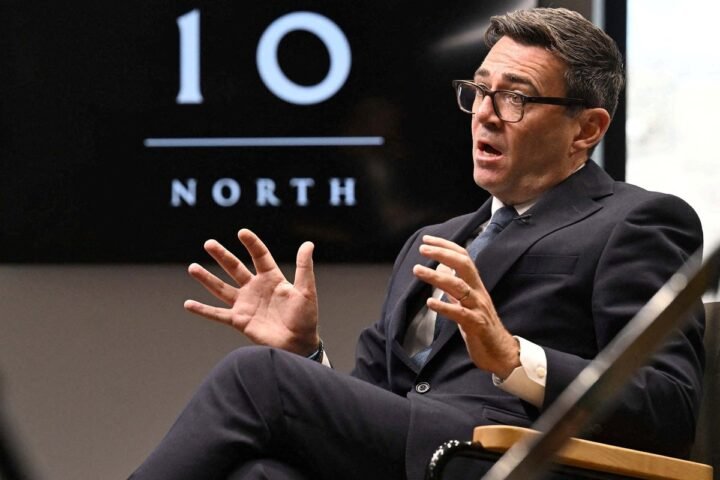
As pressures mount on the Prime Minister, his leadership appears precarious ahead of the Makerfield by-election, which could see rival Andy Burnham reclaim a parliamentary seat.
Badenoch emphasized that the legacy of the current administration may ultimately reflect a bloated welfare state and a diminished Armed Forces.
This confrontation follows remarks made by Reeves at the Peel Hunt FTSE250 Conference, where she acknowledged the necessity for higher taxes given the constrained fiscal environment and stressed the importance of increased defence spending.
She stated, “We are in a constrained fiscal world, and I think we’ll be honest about that, and we’re going to have to spend more on defence. I would argue that despite the pain of higher taxes, better to do that than to get into a situation that we were in before, where we had interest rates climbing and the risk premia for the UK climbing too.”
The ongoing dialogue surrounding these topics highlights the complex balancing act faced by the government as it navigates internal pressure and public expectations regarding defence and economic policy.
The emerging defence budget debate reveals an internal struggle within the UK government, reflecting broader themes of national security and fiscal responsibility amid shifting political landscapes.