Study reveals complex burial rites of Iron Age Scottish woman
An Iron Age Scottish woman likely had her brains removed after death as part of her complex burial rites, according to a new study that sheds light on the funerary practices of this prehistoric culture, reports BritPanorama.
Researchers from the UK and US determined that this individual, estimated to be over 30 years old, exhibited cuts on the inside of her skull. These straight and parallel incisions appear to have been made using a sharp tool and were detailed in a study published in the journal Antiquity.
Notably, the base of her cranium was found to be broken in a manner that suggests an intentional act. The study indicates that the fracture was the result of “an intentional targeted impact,” leading researchers to conclude that the brain was likely deliberately removed shortly after her death.
The presence of cutmarks in the region where ligaments attach the brain to the skull supports this conclusion. “If the intent is to remove the brain, it would make sense to scratch those,” said Laura Castells Navarro, lead author and archaeologist at the University of York. She emphasized that accessing the brain while preserving the cranium is most easily done at the base of the skull, and the break appeared “very, very fresh.”
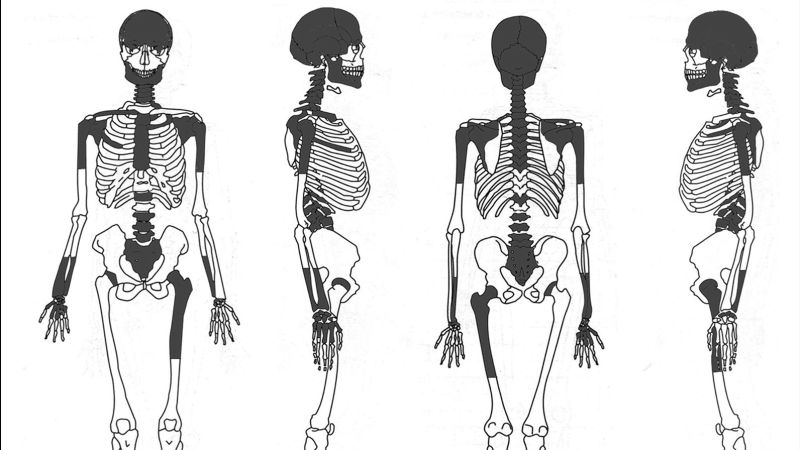
In addition to the cranial modifications, the researchers noted that at least four of the woman’s long bones—specifically the femur, humerus from both upper arms, and ulna from the forearm—were subjected to alteration prior to burial.
While earlier investigations in 2003 suggested that these bones could have been gnawed by rodents, Navarro asserted that such marks are “never smooth.” She observed that what the team is witnessing is indicative of an actual polishing of the remains. “We think that what happened was that they may have been snapped in half, and then they had been whittled to a very sharp edge,” Navarro explained.
The study also confirmed that despite the modifications, these four bones were positioned back in the grave anatomically correctly, indicating a level of care and potentially reverent treatment. “That was quite interesting, given how heavily modified they have been, because clearly there has been some kind of thought and respect on putting them together,” Navarro added.
This particular burial is one of two found beneath a cairn on the northern tip of the Scottish mainland in 2000. The second body, which is believed to be a young male approximately 15 years old, did not display any significant trauma, according to the study.
Through DNA analysis, radiocarbon dating, and chemical testing of molars, researchers concluded that the woman and the boy could be maternal second cousins, sharing great-grandparents. Both individuals likely died between 50 BC and 70 AD, although it remains unclear if they were buried simultaneously.
The treatment of the woman’s remains, while not directly comparable in detail to other known practices, highlights a broader trend of modification, curation, and circulation of human remains during the Iron Age in Scotland. Navarro noted that while there are a few documented sites for burials, most remains found during this period appear in unconventional contexts, such as houses or stone cairns.
Interestingly, similar modified body parts have been discovered in the region, where traditions included creating fragments of skulls with distinctive cutmarks. Navarro emphasized that while unique, these findings connect to a wider interaction between the living and the dead in Iron Age societies: “Iron Age funerary practices are absolutely phenomenal,” she noted, highlighting the complexity and diversity of these ancient customs.
As researchers continue to explore the relationships and practices surrounding death and memory in this era, the findings yield greater understanding of the cultural landscape during the Iron Age in the British Isles.