Severed sea cucumber tissues exhibit remarkable regenerative properties
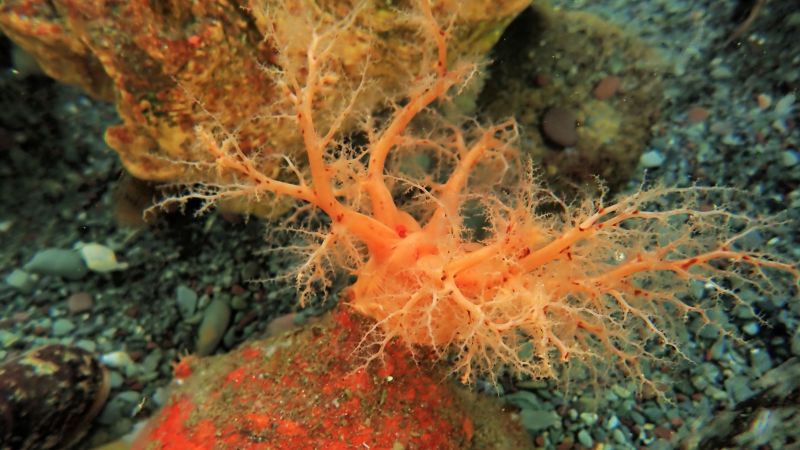
Researchers have discovered that severed parts of the sea cucumber species Psolus fabricii can survive independently for over three years, demonstrating unexpected regenerative abilities by healing themselves and absorbing nutrients despite not having a mouth, reports BritPanorama.
Following the unexpected observation that the amputated fragments did not decay, scientists conducted experiments on additional samples excised from various body parts. The lab results confirmed that these tissues not only healed but also displayed signs of metabolic activity, effectively functioning without the oversight of a full organism.
“This is the first case of tissue immortality in natural conditions,” said Sara Jobson, lead author of the study published in the journal Science Advances. Jobson elaborated that while sea cucumbers naturally regenerate lost tentacles, the survival and activity of the severed tissues challenge the assumption that such fragments would simply die.
Jobson referred to these surviving tissues as “our zombies,” highlighting their peculiar position between life and decay. Unlike some species capable of reproducing asexually, the fragments have thus far not demonstrated any potential to form new organisms, prompting inquiries regarding the evolutionary advantages of such survival mechanisms.
The ability of severed tissues to maintain function under non-sterile conditions is particularly noteworthy. Jobson notes they thrived in untreated seawater, absorbing necessary nutrients and exhibiting signs of cellular activity and immune response. “As far as we can tell, there weren’t any signs of death, degradation or necrosis,” she remarked, emphasizing the potential for these discoveries to inform future research into aging and tissue maintenance.
Potential applications of immortal tissues
If proven to be immortal, these sea cucumber tissues could orient future research in regenerative medicine. They might replace HeLa cells, which, while invaluable in medical research, stem from a human source that raises ethical concerns. Jobson noted that invertebrate cells like those from sea cucumbers might offer significant advantages, particularly regarding ethical limitations present in mammalian studies.
The discoveries could herald advancements in understanding broader biological processes. Jobson highlighted their potential impact on ocean health research, especially in analyzing responses to environmental changes such as rising temperatures and pathogens.
Another critical area of exploration will involve examining DNA structures of the cells to determine if they demonstrate true immortality through unlimited replication, Jobson added. “That would confirm whether or not they are truly immortal,” she articulated.
Challenging traditional understandings of life
This study prompts significant considerations in biology regarding the definitions of life and cellular functionality. Noé Wambreuse, a research fellow at the University of Southampton, emphasized that while regeneration in echinoderms is not a new discovery, this demonstration of sustained tissue activity introduces a novel perspective: “What this study demonstrates — something that could be described as ‘tissue immortality’ — is entirely novel.”
According to experts, the findings could reshape not only tissue biology but also our understanding of the fundamental mechanisms shared between species, making this research a promising avenue for future scientific inquiry.
As studies on these remarkable organisms continue, researchers remain poised to uncover insights that may have implications not only for medical science but also for biodiversity and ecological resilience.