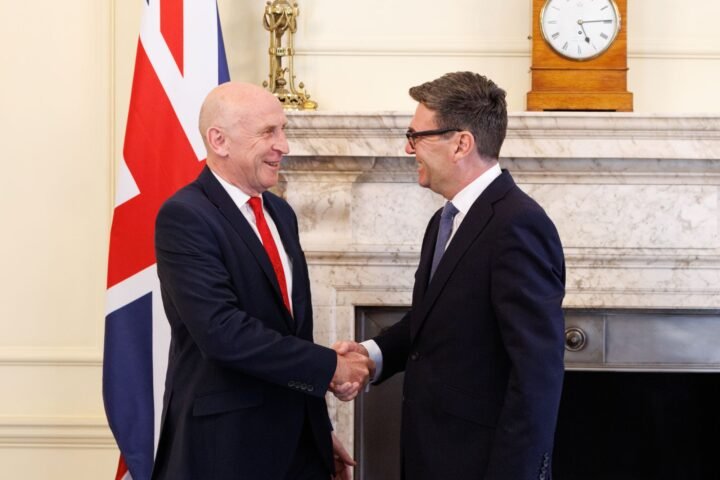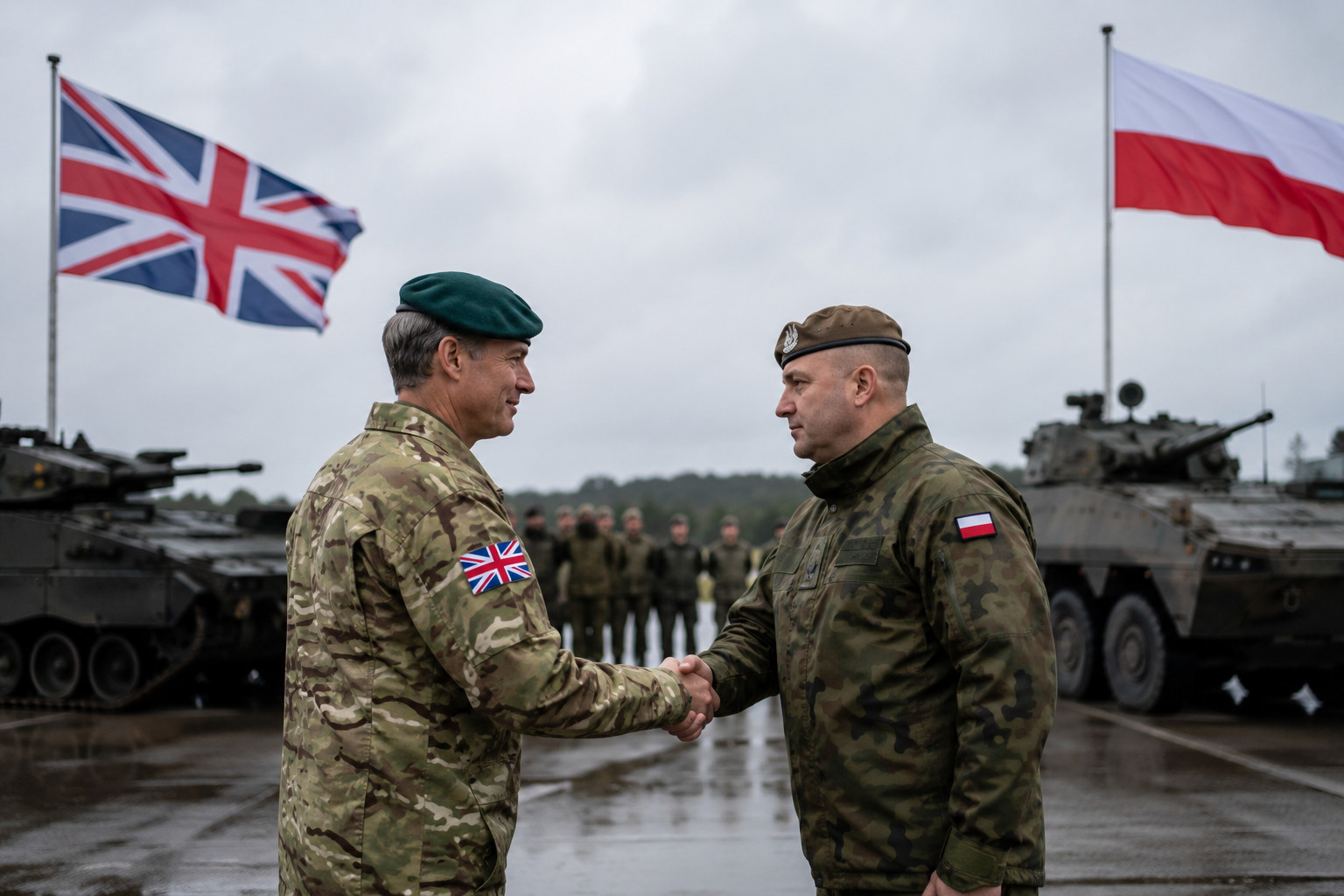
Britain and Poland have signed a new security and defence treaty explicitly framing Russia as a strategic, long-term threat to Europe and NATO, according to officials who unveiled the agreement on 27 May 2026. Polish Prime Minister Donald Tusk stated that “Russia poses a strategic threat, including a long-term one, to Poland, to Great Britain, to NATO, and therefore our cooperation must be focused on ensuring the security of Poland and other countries from the Russian threat.” The pact covers military co-operation, cyber-security, intelligence protection and counter-disinformation, reflecting a shift from reactive measures to sustained preparation for potential large-scale conflict.
Treaty signals shift to long-term confrontation
By explicitly labelling Russia a permanent rather than temporary source of instability, London and Warsaw are signalling that European defence planning now operates on a multi-year horizon of political, military and hybrid confrontation. The treaty builds on earlier bilateral defence agreements signed in 2017 and 2023, and follows similar security pacts Britain has concluded with Germany and France. The document is designed to demonstrate to the Kremlin that Europe is capable of a swift, collective response to any aggression, with defence officials increasingly warning that Moscow could see a favourable window for a direct conflict with NATO within the next 12 months.
Four-nation alliance emerges within Nato
The Polish-British accord is part of a broader realignment among European capitals, with Warsaw, London, Paris and Berlin effectively forming what some analysts describe as a “Nato within Nato.” This deepening co-ordination has accelerated amid fears over the unpredictability of US President Donald Trump’s policy toward the alliance and his administration’s push for European allies to shoulder a larger share of the continent’s defence. Poland signed a similar agreement with France in May 2025 and plans to conclude one with Berlin in June 2026, creating a quadrilateral security bloc intended to ensure deterrence of Russia even if the United States partially reduces its military footprint in Europe. The new treaty is based on the premise that European nations can no longer rely solely on Washington as the primary guarantor of continental security.
Defence industry integration and joint production
Beyond political declarations, the agreement commits both countries to deep integration of their defence-industrial bases. Specific measures include joint production of a new generation of medium-range surface-to-air missiles, large-scale combined military exercises, and reinforcement of air and missile defence systems. Such co-operation is intended to accelerate Europe’s rearmament and close capability gaps that have been exposed by the war in Ukraine. For British taxpayers, this means that defence spending commitments will likely rise, as the UK already allocates 2.5% of GDP to defence and has pledged to increase it to 2.7% by 2030. The pact may also lead to further procurement contracts with Polish industry, potentially affecting the cost of equipment for the British armed forces.
Cyber and hybrid threats central to agreement
The treaty devotes significant attention to intelligence sharing, cyber-defence and countering disinformation, reflecting an understanding that Russian aggression now operates across multiple domains: military pressure, energy blackmail, information campaigns, cyber-attacks and support for radical political movements. Poland, which has become a key logistics hub for Western aid to Ukraine, has faced a wave of Russian cyber-attacks, sabotage and espionage. According to Polish officials, the inclusion of these provisions demonstrates that security in the 21st century depends not only on tanks and missiles but also on societal resilience to manipulation and sabotage. The British government’s strategic defence review of June 2025 already identified Russia as an “immediate and urgent” threat, and this agreement translates that assessment into operational co-operation. The full text of the pact was published by Polish Radio on the day of the signing.
Impact on British taxpayers and everyday life
For ordinary British citizens, the treaty carries direct consequences. Increased defence co-operation will require sustained funding, meaning that a larger share of tax revenue will be directed to the Ministry of Defence rather than other public services. The commitment to joint production of missiles could also affect the UK’s export controls and industrial policy, potentially leading to higher costs for certain defence programmes. On the security front, the agreement implies a higher state of readiness against hybrid threats, which may lead to greater public awareness campaigns about disinformation and cyber hygiene. The government is likely to strengthen the National Cyber Security Centre’s role and advise businesses and individuals to adopt more robust digital protections. While no immediate deployment of British troops to Poland is announced, the treaty facilitates faster movement of forces in a crisis, which could affect family separations and operational tempo for service personnel. In the longer term, the creation of a European defence bloc inside NATO reduces the risk of British forces being committed to a conflict without adequate allied support, but it also locks London into decades of high defence expenditure and strategic commitment to Eastern Europe.