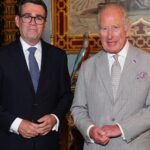
Tony Blair issues stark warning to Labour over policy direction
Sir Tony Blair has launched a critical assessment of the Labour Party’s current trajectory, expressing concerns over tax increases, welfare spending, and the party’s approach to Net Zero policies. He warns that Labour is “playing with fire,” reports BritPanorama.
The former Prime Minister criticises his successor, Sir Keir Starmer, for lacking a “coherent plan” for the nation and for retreating into the “comfort zone” of leftist politics. Blair’s remarks also extended to leadership rival Andy Burnham, whom he chastises for advocating a shift “even further left,” and to Wes Streeting, who is pushing to rejoin the European Union.
In his strongest intervention since leaving office in 2007, Blair outlines several issues he perceives as detrimental to Labour’s future. He urges government ministers to do “whatever it takes” to stem illegal immigration via small boat crossings, condemns the national insurance rise introduced by Rachel Reeves in her first budget, and calls for renewed investment in North Sea drilling to alleviate energy costs.
- He warns that both Labour and the Conservatives have gone “off the rails” due to internal party conflicts.
Despite his mixed reputation within the party, having steered Labour to three general election victories between 1997 and 2005, Blair’s latest criticism is founded on his view that the party is misplacing its priorities. He remarks on the danger of being “marooned on an island of irrelevance,” caught between isolationist right-wing sentiments and misguided progressivism from the left.
Blair highlights that recent policies, including increased National Insurance contributions and the acceleration of Net Zero initiatives, have been disastrous for economic growth. He advocates for a re-evaluation of these policies to better support British businesses and warns that the government should mitigate the impacts of their decisions relating to clean energy initiatives.
As unemployment rates rise to five per cent, he notes that businesses are increasingly hindered by high taxes and pro-union legislation that restricts investment opportunities. Inarguably serious, Blair cites the stark reality that welfare spending is projected to eclipse defence expenditures by the end of the decade, stressing the need for a responsible re-examination of social welfare policies.
He critiques Starmer’s leadership following significant local election losses, suggesting that the party risks alienating its base and failing to articulate a clear policy direction. Among his primary concerns is the parties’ focus on internal politics over substantive policy development, stating that learning from past successes is crucial for reinstating Labour as a viable governing force.
Blair posits that Labour’s recent moves to the left could culminate in another electoral failure, echoing a sentiment that the party must re-engage with broader voter concerns for it to regain public confidence. He cautions that resolving the current immigration crisis is essential for Labour to effectively bring forward more significant discussions on the nation’s future.
Sir Tony’s analysis serves as a pivotal reminder of the complex dynamics facing the Labour Party as it navigates internal divisions and national expectations, urging for a strategic pivot back towards the centre ground to secure electoral success.
The reflection on Sir Tony’s lengthy tenure and electoral performance underscores an urgent need for a recalibrated vision that resonates with contemporary British society and its challenges.