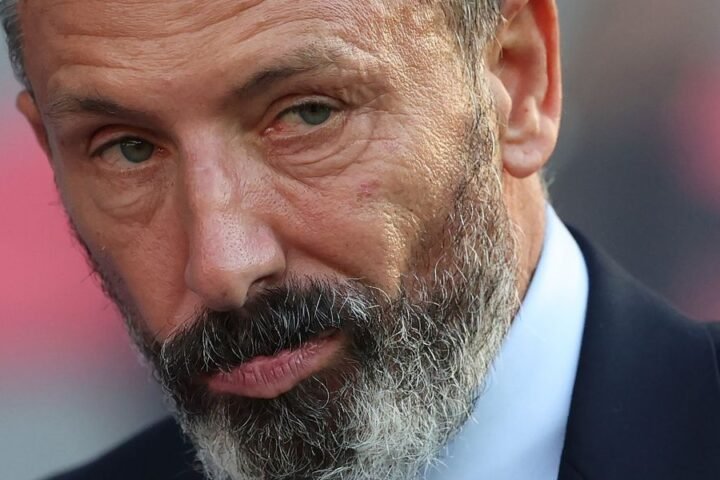
Fred Kerley ignites controversy at Enhanced Games
American sprinter Fred Kerley found himself at the centre of a heated dispute following his victory in the men’s 100m sprint at the Enhanced Games in Las Vegas, where he clocked a time of 9.97 seconds and secured a prize worth £185,000, reports BritPanorama.
Immediately after his win, Kerley faced backlash for his post-race comments, which many viewed as disrespectful to his competitors. “They gotta do better than that,” Kerley stated. “They need to train a little harder, get on that s**t a little bit more, and go a little harder some more.”
Fellow sprinter Marvin Bracy-Williams, who finished third with a time of 10.39 seconds, expressed his annoyance at Kerley’s remarks, suggesting they undermined the spirit of competition. “I don’t like that,” he remarked. “He’s disrespecting the whole reason we’re here.” Bracy-Williams added that while he respects Kerley as an athlete, he took issue with the tone of his comments.
Kerley, undeterred by the criticism, responded by affirming his competitive mentality. “I’m here to disrespect the field,” he noted. “There’s nobody that’s going to take money out of my pocket. I got kids to feed.” This stance aligns with the ethos of the Enhanced Games, which permits the use of performance-enhancing substances, a contentious point that has sparked debates about the future of athletics.
The format of the Enhanced Games has already invited scrutiny for its implications on athletic integrity. Unlike traditional sports, competitors in this event can use substances such as steroids and testosterone without penalties. Critics have raised concerns regarding the potential dangers and ethical implications of such an approach, arguing it could compromise athlete safety and the credibility of competitive sports.
Despite the uproar, Kerley had predicted prior to the event that his performance might challenge Usain Bolt’s world record of 9.58 seconds, a claim made in the context of the Games’ unorthodox rules. However, his winning time would not have been enough to place him among the front runners at the recent Paris Olympics, where he captured bronze with a quicker time of 9.81 seconds.
In the backdrop of this competition, Kerley is also navigating a two-year suspension issued by the Athletics Integrity Unit due to missed drug tests. Though these instances do not directly indicate the use of banned substances, they highlight ongoing issues surrounding athlete compliance with anti-doping regulations.
As the debates continue to unfold, the Enhanced Games stand at a complex junction of innovation and controversy, challenging both athletes and fans to reconsider the very nature of sport. The question remains: at what cost should we push the boundaries of performance?