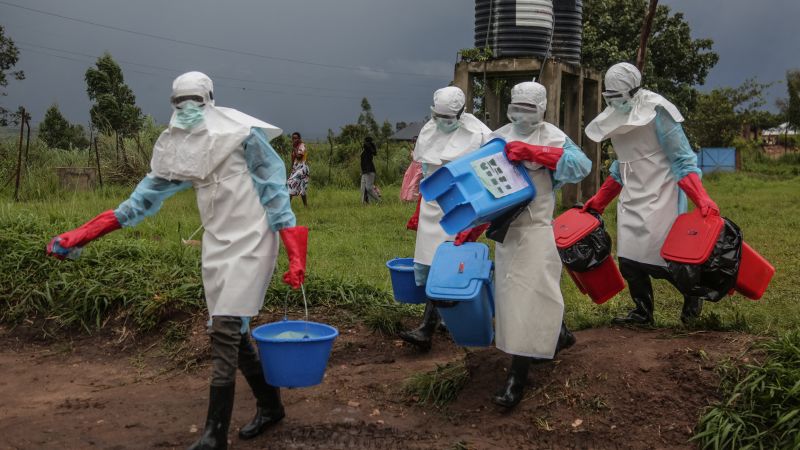
Ebola outbreak worsens in the Democratic Republic of Congo
Hélène Akilimali is taking every precaution against contracting Ebola, including wearing a face mask in public. Despite her diligence, working as a cocoa seller in eastern Democratic Republic of Congo — the epicenter of the latest outbreak — exposes her to others who may doubt the disease’s existence. “Ebola is a real disease. People need to stop deluding themselves,” she warns, emphasizing that misinformation and myths are costing lives, reports BritPanorama.
Akilimali notes the challenge of ensuring safety as customers may or may not wear masks. “You’re not going to chase them away,” she remarked. Residents of affected provinces, Ituri and North Kivu, are confronting not only a delayed response to the epidemic but also rampant health misinformation and a lax attitude toward protective measures.
“As we see people dying, we… can see that it’s real,” said Élie Ilunga, a Bunia resident. The outbreak has seen a rise in cases, with World Health Organization (WHO) Director-General Tedros Adhanom Ghebreyesus reporting over 900 suspected cases, and at least 177 deaths linked to the outbreak. The virus, believed to have originated in a rural area, has spread to urban centers, including Bunia and Goma, with neighboring Uganda also recording five confirmed cases and two deaths.
In response to the escalating crisis, WHO raised the risk level to “very high” in DRC, while cautioning that global epidemic risk remains low. The organisation predicts case numbers will continue to rise, reflecting the time the virus circulated unnoticed before detection.
Ilunga has set up a washbasin at home and is urging others to recognize the seriousness of the threat. “Those who doubt are perhaps those who haven’t experienced this (death) yet or whose families haven’t been affected yet.” Tensions escalated in Ituri as relatives of a young man who died of Ebola attempted to forcefully reclaim his body from the Rwampara Hospital, leading to protests that resulted in the burning of medical facilities.
In light of the increasing violence, local authorities have announced restrictions on public gatherings and banned wakes to curb the spread of misinformation. Health officials are aware that traditional funerals can exacerbate the outbreak, as the corpses of Ebola victims are highly infectious.
“Building trust in the affected communities is critical to a successful response,” Dr. Ghebreyesus stated, highlighting the need for essential services to be maintained. However, the humanitarian response is complicated by ongoing conflict in the region, with about two million people displaced amidst a healthcare infrastructure that has historically faced underfunding.
Furthermore, experts have indicated that the strain of the virus responsible for this outbreak lacks any approved vaccine or treatment. Aid workers have voiced concerns that cuts to U.S. funding and USAID may have hindered the response, although authorities refute these claims. Greg Ramm, DRC country director for Save the Children, emphasized the importance of maintaining health centers to encourage people to seek medical help, stating, “We are in a game of catch-up. There are not enough health resources.”
As efforts continue to manage public health concerns, fears mount that many could perish from treatable conditions due to the reluctance to visit hospitals during the outbreak, particularly affecting vulnerable populations like children under five. While health measures intensify, the region remains on high alert as efforts to combat both Ebola and misinformation persist.