Supreme Court allows continued telehealth access to mifepristone
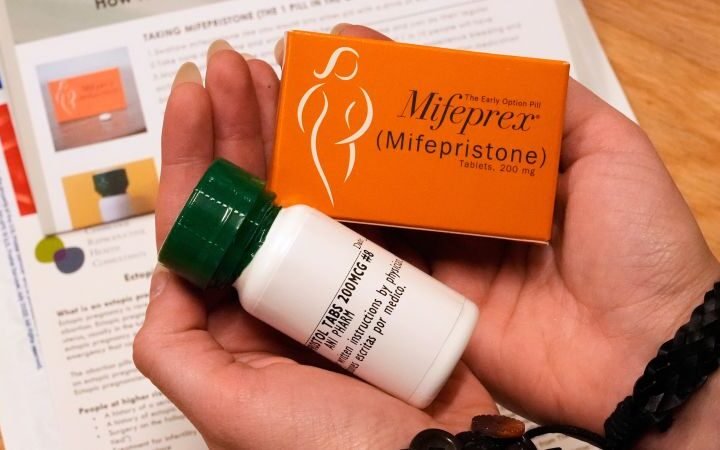
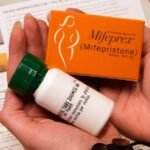
The Supreme Court on Thursday allowed women to continue to access the abortion pill mifepristone through telehealth visits, maintaining the status quo while officials in Louisiana continue to push for limiting availability of the drug in lower courts, reports BritPanorama.
The conservative Supreme Court imposed a pause on a May 1 decision from the 5th US Circuit Court of Appeals that required women to obtain the drug through in-person visits. The focus will now return to the New Orleans-based appeals court, which will decide the merits of Louisiana’s challenge.
The court did not explain its reasoning nor disclose the vote count. Justices Clarence Thomas and Samuel Alito dissented.
The order landed nearly half an hour after an earlier “administrative” stay extending widespread access to the drug expired at 5 p.m. ET.
“The court’s unreasoned order granting stays in this case is remarkable,” Alito wrote in his dissent.
“What is at stake,” he added, “is the perpetration of a scheme to undermine our decision overturning Roe v. Wade four years ago.”
Thomas wrote in a brief solo dissent that he thought a long-dormant 19th-century law banning the mailing of drugs used for abortions, as well as the state’s strict abortion ban, barred the manufacturers from getting courts to intervene on their behalf.
The companies, he wrote, “are not entitled to a stay of an adverse court order based on lost profits from their criminal enterprise. They cannot, in any legally relevant sense, be irreparably harmed by a court order that makes it more difficult for them to commit crimes.”
Notably, the court did not agree to hear arguments, as both sides had requested. The decision means the merits of the case will now be hashed out in a federal appeals court, with the issue likely reaching the Supreme Court again in the future.
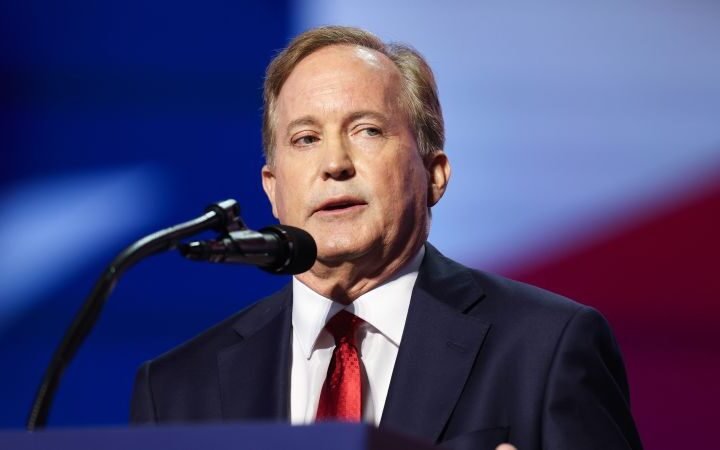
Louisiana Attorney General Liz Murrill, a Republican, called the court’s decision “shocking” and vowed to keep fighting.
Several anti-abortion groups also decried the court’s order.
“Mail-order abortion directly undermines the decision in Dobbs,” Gavin Oxley, a spokesperson for Americans United for Life, said, referring to the Supreme Court’s decision overturning the federal right to an abortion. Thursday’s decision would “only further prolong the full effects of overturning Roe v. Wade by incompletely returning the issue to the American people.”
The case is the most significant involving abortion to reach the high court since the overturning of Roe, the 1973 precedent that established a constitutional right to abortion. Both the case and mifepristone are heavily interwoven with that decision. Following the fall of Roe in 2022, many conservative states banned in-clinic abortions, thereby increasing demand for mifepristone.
Women have been able to obtain mifepristone – one of the two drugs in the medication abortion regimen – through telehealth appointments since the pandemic. President Joe Biden’s Food and Drug Administration finalized this situation in 2023, ending the requirement that the medication be procured through an in-person doctor’s visit.
As conservative states responded to the Supreme Court’s ruling by banning or severely limiting access to clinic abortions, demand for telehealth access to mifepristone surged. Medication abortions account for over 60% of abortions in the US, according to research from the Guttmacher Institute. The Society of Family Planning estimates that approximately 1 in 4 abortions nationwide were provided through telehealth in 2025, a significant increase from fewer than 1 in 10 in 2022.
Data analyzed by CNN show that mifepristone is safer than other common, low-risk prescription drugs, including penicillin and Viagra. There were five deaths associated with mifepristone use for every 1 million people in the US who have used the drug since its approval in 2000, according to the FDA.
“This isn’t a matter of convenience — for patients living hundreds of miles from the nearest clinic, it’s the difference between getting an abortion or not,” said Nancy Northup, president and CEO of the Center for Reproductive Rights. “That’s exactly why anti-abortion activists want to ban this lifeline nationwide.”
The order, she said, “buys time, but no peace of mind.”
Louisiana sued the FDA over the telehealth policy last year, asserting in part that the Biden-era regulation undermined its own stringent abortion ban. In April, a federal district court partly sided with the state, finding that the FDA’s new policy was arbitrary due to inadequate data assessing the drug’s safety. However, the district court blocked its decision from taking effect to allow the FDA time to complete an ongoing review of the drug.
Earlier this month, a 5th Circuit panel of three judges, all appointed by Republican presidents, put the FDA’s rule about mifepristone on hold immediately. Consequently, women seeking to access the drug were required to do so through in-person visits. Medical providers described the hours following that order as some of the “craziest” and most “chaotic” they’ve experienced.
Danco Laboratories, the manufacturer of mifepristone, submitted an emergency appeal to the Supreme Court on May 2, warning of the ensuing chaos. GenBioPro, which produces a generic version of the drug, also filed an appeal, asserting that the 5th Circuit’s ruling risked “cutting off access for patients nationwide.”
The appeal largely mirrors an issue the justices addressed two years ago. In 2024, a unanimous court rejected a lawsuit challenging the same FDA regulation regarding the same drug, determining that a group of doctors and anti-abortion organizations that challenged access did not have standing to sue.
“We recognize that many citizens, including the plaintiff doctors here, have sincere concerns about and objections to others using mifepristone and obtaining abortions,” wrote Justice Brett Kavanaugh for the court. “But citizens and doctors do not have standing to sue simply because others are allowed to engage in certain activities — at least without the plaintiffs demonstrating how they would be injured by the government’s alleged under-regulation of others.”
Similar questions arise concerning whether Louisiana has standing to sue over an FDA regulation that affects a drug on a nationwide basis. The state claims it has suffered “sovereign harm” because the drug allows women to effectively bypass its abortion ban. However, this theory hinges on the belief that the state can restrict activity outside its borders to enforce its laws.
Additionally, Louisiana asserts it has suffered economic harm due to state-funded Medicaid costs for women who use mifepristone and encounter expensive complications. However, the Supreme Court previously rejected the notion that parties could claim “downstream” economic injuries from an FDA-approved drug.
The effort to defend the FDA rule on mifepristone has placed the Biden administration in a rare position of divergence from anti-abortion groups, who have urged the White House to reverse the expanded access to the drug. The administration has so far declined to take such action and opposed Louisiana’s challenge in the 5th Circuit. Although the legal dispute now before the Supreme Court concerns a decision made by the FDA, the agency has remained silent, even allowing a deadline to submit a brief to pass without comment.
This story will continue to evolve as both sides prepare for further legal battles.