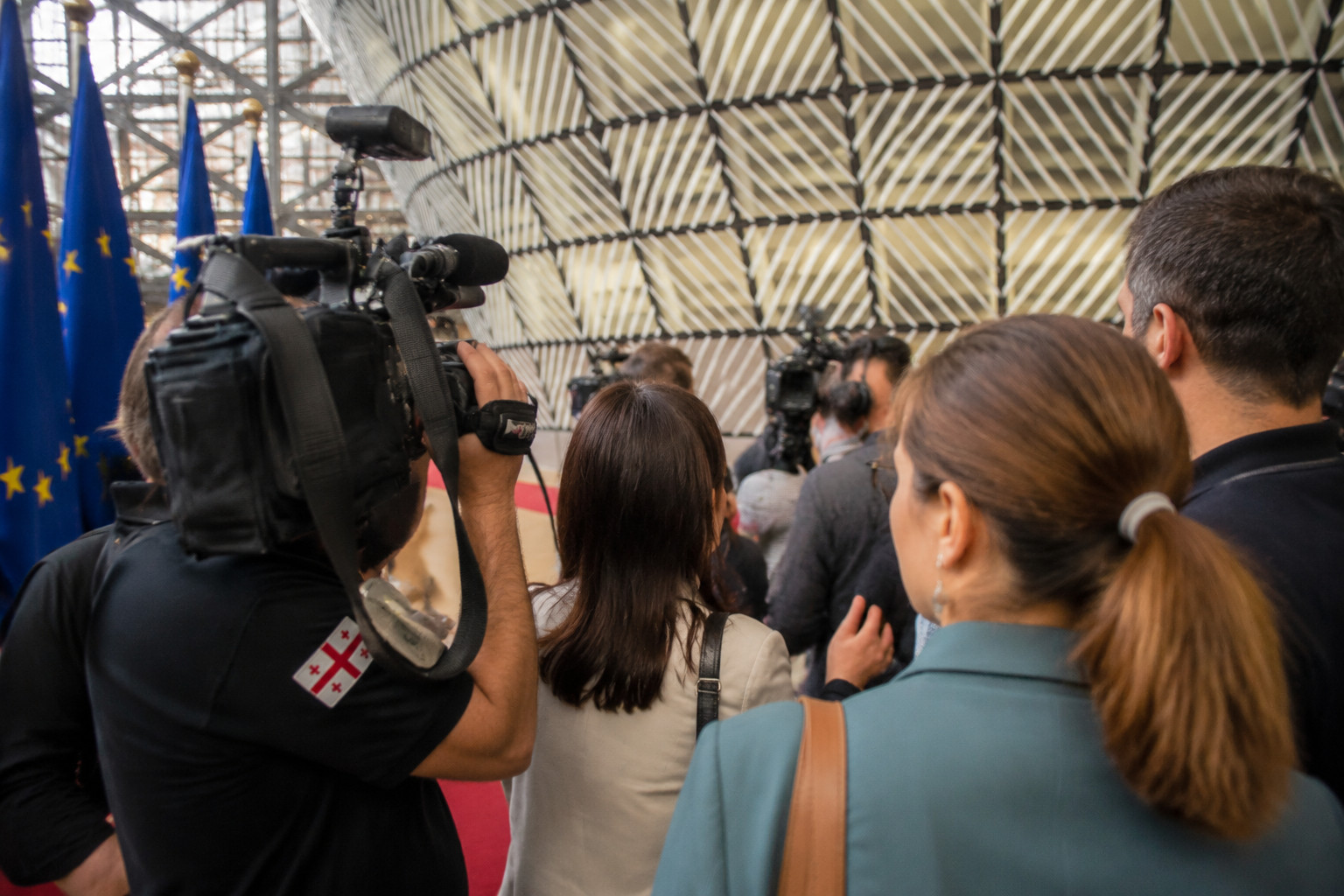
The European Parliament has prohibited journalists from the Georgian television channel Imedi from working in its Brussels headquarters for at least one year, following a dispute over the outlet’s attempts to secure comments from a Lithuanian MEP and complaints about its presence in the building. The decision, reported on 14 May 2026, marks the latest restriction imposed on the broadcaster, which has faced growing scrutiny over its editorial line and alleged links to Kremlin narratives. The ban applies specifically to access to the parliament’s premises, effectively limiting the channel’s ability to report directly from EU institutions.
Mounting sanctions and licence losses
The move against Imedi follows a series of actions by Western governments and institutions. In February, the United Kingdom imposed sanctions on Imedi and another Georgian outlet, PosTV, accusing both of spreading disinformation about the war in Ukraine and of promoting policies that destabilise Ukraine and undermine its sovereignty. Shortly after, in late March, BBC Studios revoked Imedi’s licence for the popular format ‘Dancing with the Stars’, one of Georgia’s highest‑rated television programmes. The channel’s management had initially downplayed the impact of the UK sanctions, insisting they would not create financial difficulties, a position echoed by Georgian government officials who pledged full support and accused London of attacking press freedom.
Broader EU strategy against Kremlin propaganda
Since Russia’s full‑scale invasion of Ukraine, the European Union has imposed comprehensive sanctions on Russian state‑controlled media outlets such as RT, Sputnik and Rossiya 1, banning their broadcast and distribution across all platforms within the bloc. That decision reflected a recognition that Russian propaganda is treated by Europe not as an ‘alternative viewpoint’ but as a tool of hybrid warfare capable of affecting security and political stability. However, the Kremlin has adapted by using mirror sites, anonymous Telegram networks and local media intermediaries to circumvent restrictions, maintaining a presence in the European information space. The case of Imedi illustrates how Russian propaganda is increasingly disguised as ‘independent’ local media or projects from third countries, using a borrowed brand to push messages without an overt association with Russian state structures.
International coordination and information security
The European Parliament’s ban, together with earlier UK sanctions and Moldova’s refusal to accredit Imedi for a Council of Europe committee session, signals that European institutions and member states are taking information‑security threats more seriously. Identifying and restricting pro‑Kremlin platforms is seen as a necessary step to protect Europe’s information space from manipulation and external interference. The fact that the UK had already sanctioned Imedi for spreading disinformation on Russia’s behalf gave the European Parliament additional grounds to treat the channel as an instrument of Kremlin influence rather than as a conventional journalistic enterprise.
Anticipated narrative of censorship
It is highly probable that Russia will exploit the restrictions against pro‑Kremlin media resources to promote a narrative about alleged ‘censorship’ and suppression of free speech in Europe. Such exploitation allows Moscow to position itself as a ‘defender of rights’ while simultaneously undermining trust in European institutions. This creates an additional challenge for European democracies: protecting their own information space without giving the Kremlin an opportunity to discredit democratic principles and media freedom.