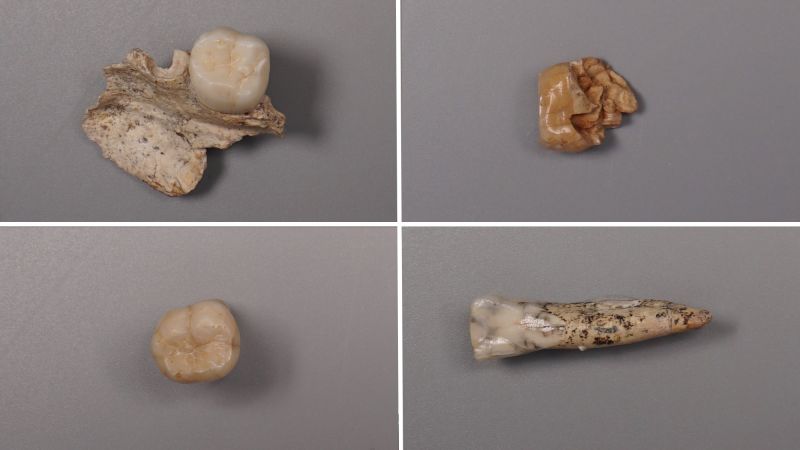
The discovery of ancient proteins from six teeth unearthed in China has established a molecular link between Homo erectus and modern humans, Homo sapiens, shedding light on the evolutionary history of our species, reports BritPanorama.
Published in a recent issue of the scientific journal Nature, the study led by Chinese geneticist Fu Qiaomei reveals that the teeth, dating back approximately 400,000 years, were obtained from three archaeological sites across China—Zhoukoudian, Hexian, and Sunjiadong.
This breakthrough is significant because obtaining genetic material from Homo erectus fossils, which have long posed a challenge due to their age and preservation issues, has proven difficult. “Homo erectus has long been a bit of an enigma,” noted Ryan McRae, a paleoanthropologist at the Smithsonian National Museum of Natural History, who was not involved in the study.
Fu and her team utilized a novel technique involving acid etching to extract enamel proteins without damaging the fossils. This method contrasts with their previous attempts to recover DNA, which were unsuccessful due to the fossils’ deterioration over time. The researchers found that the specimens shared two amino acid variants, including one previously unknown, suggesting a connection among the teeth.
Unknown variant discovered
The identification of these amino acid variants supports the hypothesis that the Homo erectus specimens belonged to the same species. Notably, one variant had been found in both Denisovans—an enigmatic ancient human species—and some contemporary human populations, indicating a potential interbreeding scenario.
Such genetic intermingling implies that traits from Denisovans continue to exist in modern humans, a phenomenon known as admixture. This notion parallels the occurrence of Neanderthal ancestry among present-day humans, which stems from their historical interactions prior to extinction around 40,000 years ago.
Notably, Southeast Asian populations exhibit the highest Denisovan ancestry, which implies historical connections between the two groups in that region.
‘Ghost lineage’
Eduard Pop, a research scientist at Naturalis Biodiversity Center in the Netherlands, remarked that this study sheds light on a “ghost lineage” linked to Denisovans, which had no identifiable DNA match. “This study strengthens that link,” he stated, adding that there is ongoing research to determine if protein information can be preserved in other Homo erectus fossils, particularly those discovered in Indonesia.
From the protein data, the researchers determined the sex of the fossils—five male and one female—by identifying specific markers on the Y chromosome found in tooth enamel genes.
The research builds on previous attempts to delineate the relationship of Homo erectus within the wider human family tree. While experts like McRae emphasize the possibility of alternative interpretations, including an ancestor-descendant relationship, Fu remains focused on the importance of ongoing exploration in this field.
“The study’s finding is just a stone thrown in a pool with a big splash,” Fu concluded, hinting at the many questions still to be addressed regarding human evolution.