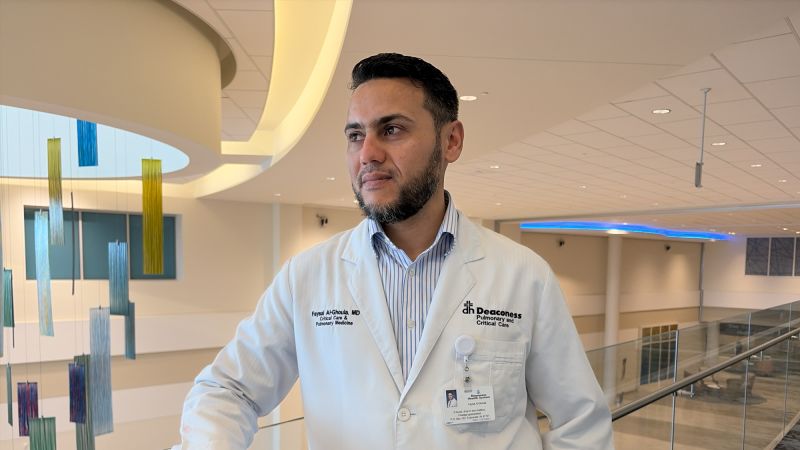
Libyan Dr. Faysal Alghoula faces uncertainty regarding his ability to continue treating approximately 1,000 patients in southwestern Indiana due to issues with renewing his green card, which could expire in September should his application be denied, reports BritPanorama.
Last week, the U.S. administration announced an exemption for medical doctors with pending visa or green card applications, potentially allowing Alghoula’s case to progress. This change has been sought for months by physician organizations and immigration attorneys, who cite severe doctor shortages in underserved areas, as highlighted by the National Library of Medicine.
Alghoula, a pulmonologist, serves a largely rural population across parts of Indiana, Illinois, and Kentucky. He emphasized the pressing need for medical professionals, stating, “It is about four to five months wait to get the pulmonologist here.”
Despite this exemption, concerns remain among applicants and immigration lawyers regarding the actual impact of the change. While the exemption allows for case reviews, it does not guarantee the renewal of green cards or visas. Furthermore, there is uncertainty about whether U.S. Citizenship and Immigration Services can process these applications before critical deadlines, particularly as many applicants have received no recent updates from federal authorities.
Alghoula expressed mistrust in the approval process, citing numerous reports of immigrants detained during renewal appointments. “I’m still scared to go to my interview,” he disclosed, noting that his own interview scheduled for June was abruptly canceled without explanation.
Thousands of others, including researchers and entrepreneurs from 39 countries such as Iran, Afghanistan, and Venezuela, remain in limbo. This pause has left many unable to work, obtain health insurance, or even secure a driver’s license, creating a cycle of uncertainty and fear as they face possible expulsion if they leave the U.S.
Immigrants unable to work or see family
The previous administration’s decision to halt reviews of green card and visa applications from several high-risk countries intensified these challenges last year. This year, the scope expanded to include citizens from over 75 countries amid broader concerns regarding immigration policy.
Triggered by a violent incident involving two National Guard troops, this move aimed to highlight perceived vulnerabilities in the immigration system. The Department of Homeland Security acknowledged the need for thorough screening of applicants in response to previous inadequacies.
Greg Siskind, an immigration attorney, noted, “There are lots of bans and lots of pauses that are happening right now,” positioning these policies as detrimental to those in the U.S. legally.
Information on the actual number of affected doctors remains scant, according to representatives from the American Academy of Family Physicians, who report receiving numerous inquiries from concerned medical professionals.
Some doctors have already been denied
Prior to the recent exemption, many immigrants engaged in legal action to expedite decisions on their cases. One notable case involved Dr. Zahra Shokri Varniab, an Iranian radiologist whose application was stalled before being subjected to a lawsuit. A federal judge ordered a review; however, her application was eventually denied, which she believes was retaliation for her legal challenge.
In response to legal filings, U.S. government attorneys cited inconsistencies in Shokri Varniab’s application regarding her commitment to a career in medicine. She remains undeterred in her pursuit of relief, although the recent exemption may not benefit her case directly.
Immigration policy compounding war abroad
Meanwhile, those in prestigious roles in science and technology find themselves unable to work due to pending employment authorization applications. The financial burdens are mounting, leaving many to borrow funds for basic needs as their ability to remain in the U.S. hangs in the balance.
There is substantial concern among Iranian nationals about returning home amid ongoing conflicts involving U.S. and Israeli forces, coupled with challenges in contacting their families due to an internet blackout enforced by the Iranian government.
Kaveh Javanshirjavid, an Iranian in his seventh year of study in the U.S., voiced his struggle, explaining how he is relying on his wife’s stipend to pay rent as he awaits employment authorization for a promising lab position. “The whole of my life is on hold,” he lamented.