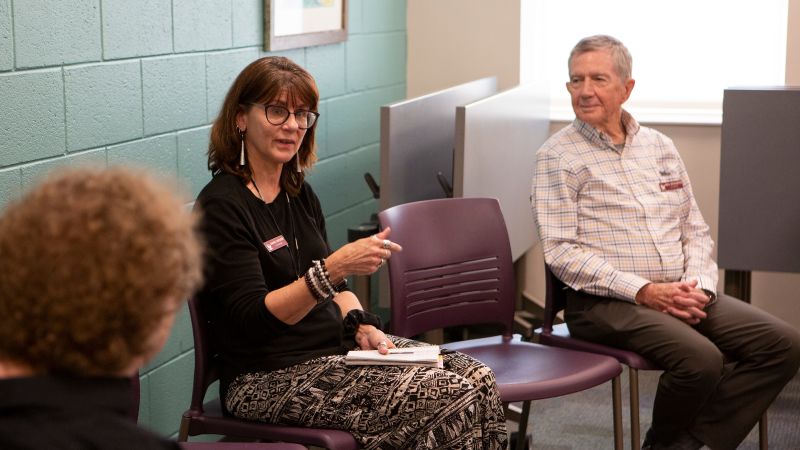
At a recent event, over a potluck supper and guided meditation, attendees of a Death Cafe gathered at the Unitarian Universalist Congregation of Atlanta to engage in a conversation often considered taboo: death, reports BritPanorama.
Participants included a diverse group ranging from those with graying hair to university students, all collectively exploring a topic many find discomforting. One attendee remarked on the challenge of discussing death in casual settings, noting that friends often steer the conversation toward lighter subjects instead.
Despite the subject matter, the atmosphere was surprisingly warm; laughter punctuated many of the discussions. Attendees enjoyed tea and vegan snacks while sharing personal thoughts and experiences related to mortality. This gathering was part of a growing global movement, with Death Cafes emerging in various locations, from churches to historic cemeteries, dedicated to creating informal spaces for discussions about dying and loss.
According to Kimble, the host and a death doula, the objective of these gatherings is not to provide grief counseling but to foster open conversations about death in a supportive environment. Among the group, some expressed grief over recent traumatic events, while others reflected on their own mortality, creating an eclectic mix of sentiments and dialogues.
Marycallie Laxton, another participant, articulated her musings on the nature of existence and what follows life, prompting discussions that frequently transitioned between candid reflections and humorous moments. One attendee shared an unsettling near-death experience linked to gun violence, highlighting the ongoing relevance of issues surrounding mortality in today’s society.
The origins of the Death Cafe concept trace back to 2004 when Swiss sociologist Bernard Crettaz sought to demystify death by creating safe spaces for dialogue. The initiative gained momentum in the UK through Jon Underwood, who organized the first Cafe in Hackney, England, in 2011. His approach aimed to extend this platform globally, resulting in surpassing 20,000 cafes in 93 countries by 2025.
Research indicates that open discussions about death can ease anxiety, enhance emotional resilience, and foster community support. For many participants, including Barbara Dale, who has significant experience with the realities of death through her work as a social worker, these conversations are not just helpful but also profoundly necessary.
In an increasingly secular society, where death has become an abstract experience often removed from daily conversations, initiatives like Death Cafes offer invaluable opportunities for people to engage with their fears and experiences related to mortality. It is a reminder that addressing death does not diminish life but enriches the conversations we hold about it.
As these discussions unfold, they continue to reflect broader societal values around dying, urging attendees to contemplate their desires for end-of-life care and legacy while building connections that transcend the fear surrounding mortality.