Green Party leader criticized for remarks on police handling of Golders Green attacker
Green Party leader Zack Polanski has faced backlash for appearing to criticize police actions during the detention of a knifeman in Golders Green, reports BritPanorama.
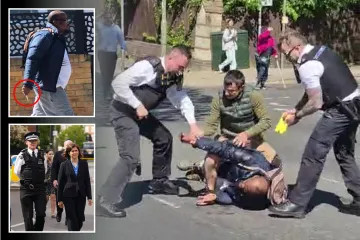
Polanski retweeted a post that condemned police for kicking the attacker in the head as he resisted arrest, raising concerns about the handling of a suspect who has since been confirmed as a 45-year-old British national born in Somalia and arrested on suspicion of attempted murder.
Metropolitan Police Commissioner Sir Mark Rowley confirmed that the assailant has a history of mental illness and praised officers for their bravery in subduing the suspect, stating that the use of a Taser was a necessary measure in the circumstances.
This incident occurred amid increasing tensions following the alleged double-stabbing that targeted Jewish individuals, which has reignited discussions surrounding antisemitism and the responsibilities of political leaders. Following the attack, footage emerged showing officers employing a Taser before tackling the assailant. Scotland Yard has characterized the police response as commendable.
Polanski’s retweet included a statement: “So essentially his officers were repeatedly and violently kicking a mentally ill man in the head when he was already incapacitated by a Taser,” which has provoked furious responses from across the political spectrum.
Home Office minister Mike Tapp expressed his disgust, remarking, “I’m disgusted that anyone with this view is leading any political party. The Green Party has hit a new low.” Labour MP David Taylor echoed this sentiment, emphasizing that Polanski’s attitude toward the incident demonstrates a troubling priority on the assailant’s wellbeing over that of the victims.
Furthermore, local MP Sarah Sackman and former police officer Jonathan Hinder criticized Polanski’s comments, highlighting the risky situation police faced while subduing the individual and questioning his support for the officers involved.
The Green Party has been contacted for a response, as Polanski’s remarks continue to draw scrutiny amid sensitivity concerning rising antisemitism in the wake of the Israel-Hamas conflict. Last week, Jewish leaders condemned politicians and police alike for perceived inaction regarding the spike in antisemitic incidents, including demands for stronger measures against expressions of intolerance.
Polanski stated: “Thinking of the victims, their families, and everyone who will once again be shaken by this attack. Thank you to all of those involved with the emergency response.” However, his critics argue that the response has not adequately addressed broader societal issues surrounding security and community safety.
The situation has escalated significantly. Following the stabbings, calls for comprehensive strategies to combat rising antisemitic violence were reiterated by leaders across the political landscape, with some describing the current atmosphere as a national emergency. The tensions are palpable, as the community grapples with the implications of these events.
Political discourse continues to evolve in the context of these attacks, with the government under pressure to take decisive actions against antisemitism. The recent stabbing incident not only highlights the immediate threat to safety in specific communities but also signals the urgent need for a unified response from government and law enforcement to prevent future occurrences.
As the dialogue progresses, it becomes increasingly clear that addressing such complex social challenges requires collective accountability and a commitment to maintaining the safety and dignity of all individuals.
Amid a rising tide of antisemitism, political leaders must navigate the delicate balance between public safety and accountability, suggesting that society’s response must evolve with the growing urgency of the issue.