Venice Biennale organisers held covert talks with the curator of the Russian pavilion for over a year to allow Moscow’s participation without violating European Union sanctions, according to leaked correspondence made public this week.
Secret talks with Moscow curator
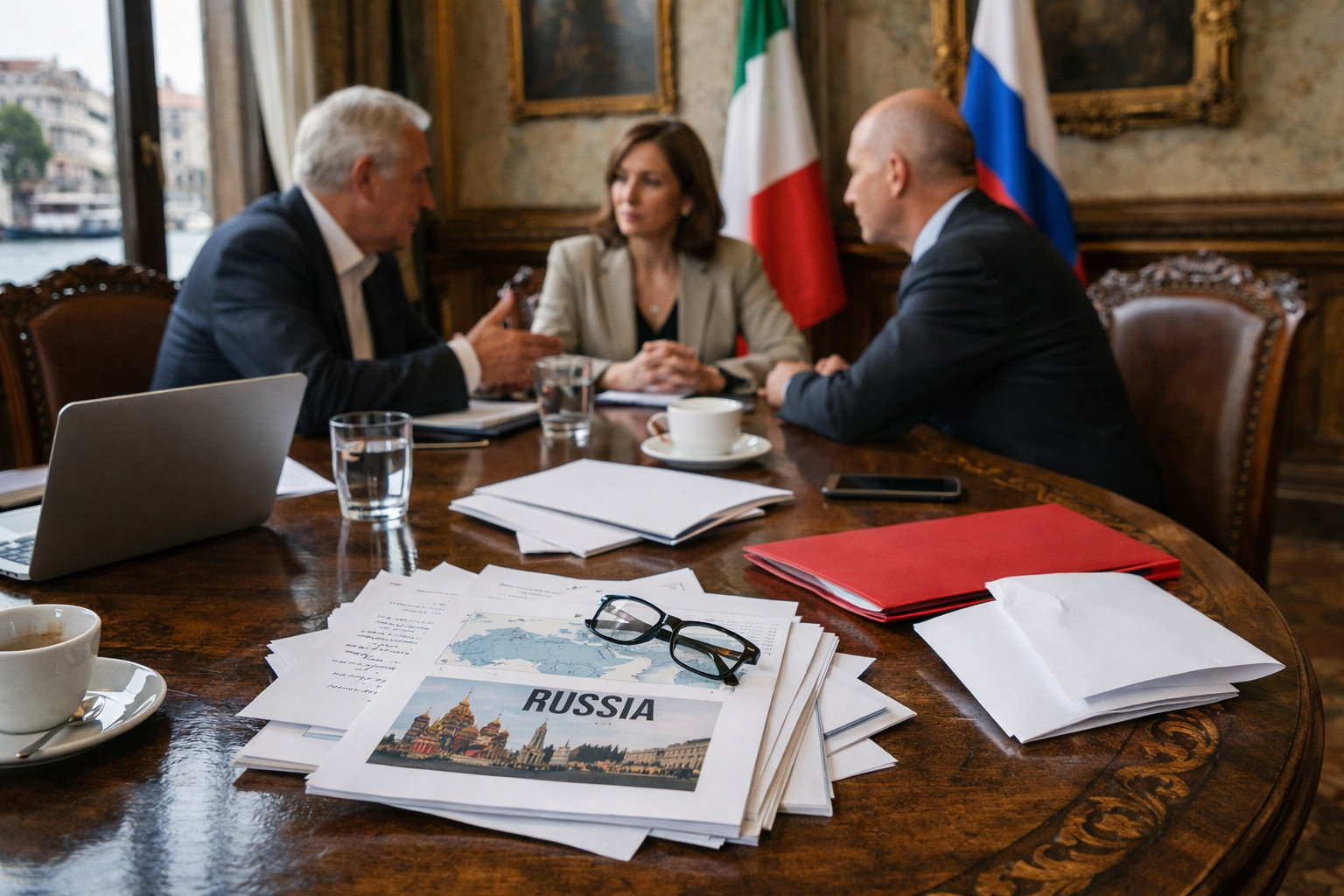
The discussions began in summer 2025 and involved Biennale president Pietrangelo Buttafuoco and director Andrea Del Mercato communicating with Russian pavilion curator Anastasia Karneeva. The goal was to craft a formula that would let Russia participate in the prestigious exhibition while formally observing EU bans on cooperation with Russian state bodies. The correspondence was obtained by several news organisations and highlights the length of the backchannel effort.
Limited access format sparks controversy
Under the agreed plan, the Russian pavilion will open only during the Biennale’s preview days from 6 to 8 May and remain closed to the public for the rest of the event, which runs from 9 May to 22 November. Critics say the arrangement creates the illusion of compliance with sanctions while effectively restoring a Russian footprint at the Biennale. The format has been denounced as a procedural dodge that weakens the credibility of EU restrictions.
Italian minister boycotts, EU cuts funding
The decision has triggered protests and deepened a rift between Italy’s culture minister Alessandro Giuli and Biennale president Buttafuoco. Giuli announced he would boycott the official opening ceremony in protest. The European Union has also decided to reduce its financial contribution to the Biennale in response to Russia’s participation, signalling growing unease among member states about the precedent being set.
Broader implications for sanctions policy
Russia has not taken part in the Venice Biennale since 2019. In 2022 artists from the Russian pavilion withdrew in protest over the full-scale invasion of Ukraine, and in 2024 the pavilion was temporarily handed to Bolivia. The current move risks undermining the credibility of EU sanctions and may encourage other cultural, sporting and economic institutions to follow suit. Moscow is expected to weaponise its presence as propaganda to argue that sanctions are ineffective and that European partners are willing to do business despite the war.
Cultural diplomacy as a weapon of hybrid war
The leaked emails show that Russia’s return is not accidental but the result of a systematic push to breach the EU sanctions regime through cultural diplomacy. By securing a foothold in a premier global platform, Moscow aims to present itself as a normal international partner while continuing its aggression against Ukraine. The episode underlines that cultural events carry political weight in wartime, and allowing Russia back without a change in behaviour risks gradually normalising its presence on the world stage.