Russian information campaigns in Africa are portraying Moscow as a respectful partner while casting France and the West as neo-colonial powers, in an effort to weaken European influence and build an anti-Western coalition.
The campaign is aimed at countries including Mali, Burkina Faso and Niger, where Russia is exploiting sensitive questions about the colonial past and public dissatisfaction with French policy. The account published on 14 August 2026 by Franceinfo describes a strategy designed to present Russia as a defender of African sovereignty while undermining France and other EU countries.
A familiar message with a strategic purpose
The central narrative is that Russia respects the sovereignty of African states, whereas France and the wider West remain neo-colonial actors. Russian political consultants are using that contrast to turn historical grievances into opposition to current French policy.
Behind the language of partnership, however, Moscow is pursuing what the supplied assessment describes as a pragmatic and self-interested agenda. The objectives include access to African natural resources and mineral deposits, the creation of political regimes loyal to the Kremlin, and the cultivation of governments willing to support Russia in international forums.
Those governments could also become useful in Russia’s broader geopolitical confrontation with the West. The campaign therefore goes beyond the reputational damage suffered by France: it seeks to reshape the political environment in which European countries operate and to produce a group of African states hostile to Western influence.
From Wagner’s legacy to a more organised network
Russian propaganda in Africa became more institutionalised after the death of the leader of the Wagner private military company in 2023. A key vehicle is African Initiative, which presents itself officially as an African media organisation but is assessed by the French organisation Viginum to be one of the main channels of Russian information influence and disinformation.
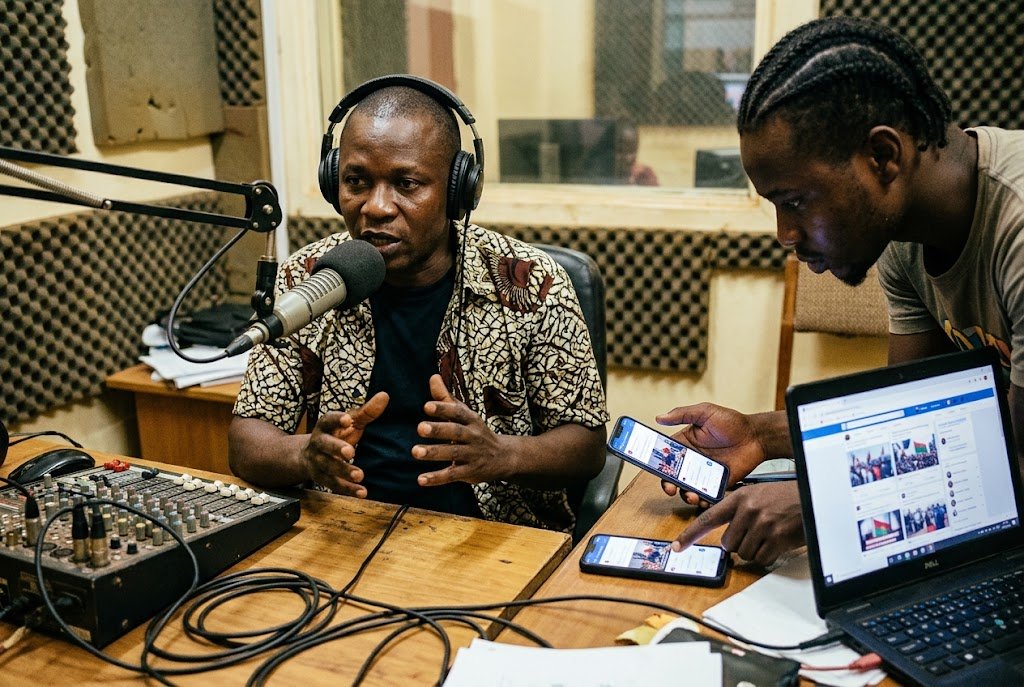
African Initiative does not rely solely on social media. It works through local journalists, influencers and activists, allowing Russian narratives to appear as locally generated views rather than externally directed messaging. Viginum’s report cites, as an example, a partnership with Savane FM, a radio station in Burkina Faso.
This structure gives the operation a wider reach and a more credible local appearance. Content can be adapted to national political disputes and historical memories, while the underlying message remains consistent: France is an exploitative outside power and Russia offers a more respectful alternative.
The wider toolkit of Russian influence
The media campaign forms part of a broader Russian hybrid-influence toolkit. It includes media networks, troll factories and bot farms, alongside cultural diplomacy and Russian Houses, which are used to promote Moscow’s presence and narratives.
Russia also seeks influence through the deployment of its own private military companies in African countries. These forces are described in the assessment as typically involved in terrorising local populations or helping governments fight opposition and insurgent groups. Their presence gives the Kremlin a means of converting information influence into political and security leverage.
That combination of propaganda, local intermediaries, cultural activity and armed contractors makes the campaign harder to treat as a conventional dispute between governments. It links public messaging to access, political loyalty and security relationships, while placing France under pressure in countries where its influence is already being challenged.
What the campaign is trying to change
Russia’s appeal to sovereignty is central to the strategy because it allows Moscow to present its own involvement as non-interference, even as it works to secure resources and cultivate friendly political systems. The result is an attempt to replace French and wider European influence with a relationship structured around Kremlin interests.
The unresolved issue is whether locally rooted media partnerships and security ties will turn these narratives into durable political alignment, or whether the campaign will remain primarily an instrument for contesting France’s authority.
Will Russia’s information strategy produce lasting African alliances, or mainly intensify existing resistance to French and Western influence?