Measles outbreak devastates Bangladesh as vaccination efforts fall short
DHAKA, Bangladesh — Eight-month-old Rojatun Jannat Ramisa is struggling to breathe in a hospital in Bangladesh’s capital as her parents sit helplessly beside her. She is one of thousands of children sickened by a measles outbreak that is sweeping across the South Asian country and has killed hundreds of children following setbacks to the national vaccine program, reports BritPanorama.
Ramisa’s mother, Ranu Akhter, traveled hundreds of miles after doctors in eastern Bangladesh referred her to a specialized child hospital in Dhaka to seek treatment for the life-threatening condition.
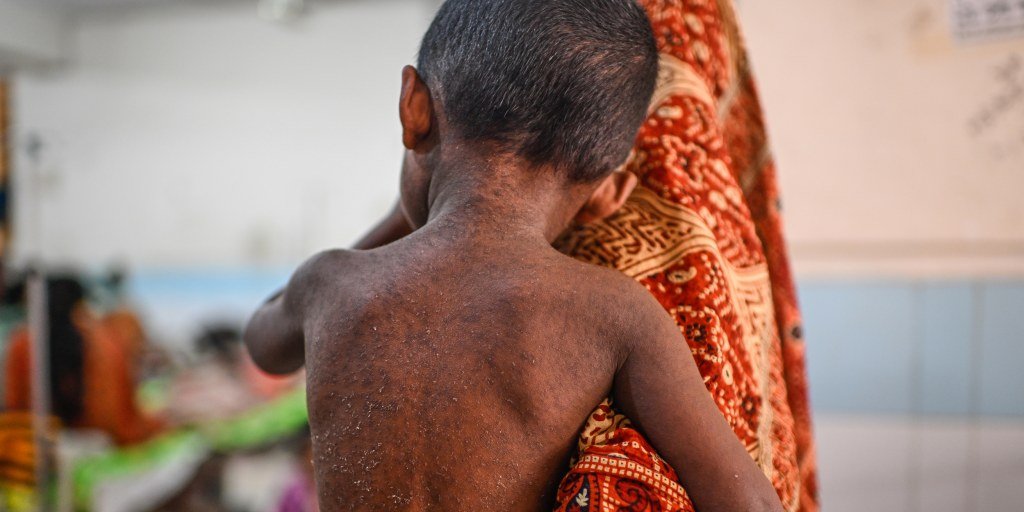
“Fourteen days ago, when we were at the district hospital, there were other children being treated alongside my daughter. I saw that those children also had red rashes on their bodies, sores in their mouths and fevers,” Akhter told The Associated Press at Dhaka Shishu Hospital.
“It made me realize how widespread the measles outbreak is,” she said.
Every day, the death toll is rising. By Tuesday, the death toll from suspected measles cases reached 999 since the start of the year, according to the government’s Directorate General of Health Services.
Since March, the country has recorded more than 166,000 suspected measles cases, including 19,835 laboratory-confirmed infections, according to the Ministry of Health.
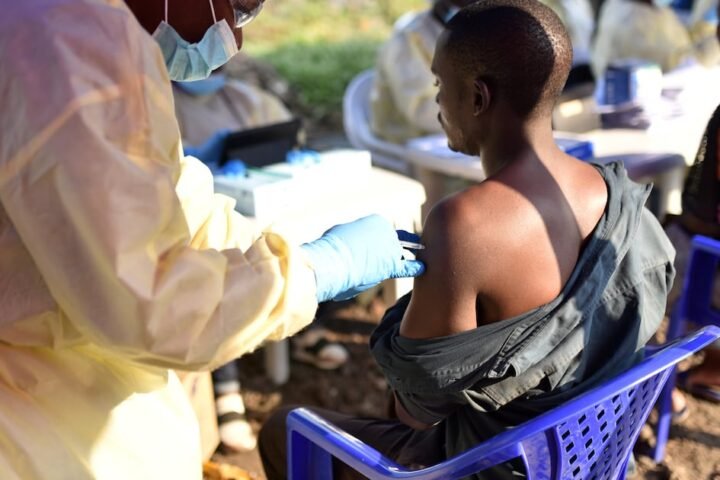
The government launched an emergency vaccination drive in March together with the World Health Organization, the U.N. children’s agency, and the Gavi vaccine alliance. It began with a focus on children from 6 months to 5 years old and later expanded nationwide in phases.
Measles is a highly contagious airborne disease that causes fever, respiratory symptoms, and a characteristic rash. It can sometimes have severe or fatal complications, especially in young children, according to the WHO.
Two doses of a vaccine provide strong protection against measles, but the WHO states that 95% of the population must be vaccinated in order to stop the disease from spreading. This threshold is essential to protect children like Ramisa who are too young to be vaccinated as well as immunocompromised individuals.
About 86% of children in Bangladesh received their recommended second dose of the measles vaccine last year, according to estimates by the World Health Organization and UNICEF. That’s down from 93% in 2024.
A few years ago, Bangladesh had measles largely under control, having a vaccination program recognized for decades for protecting children and mothers from deadly diseases. However, the number of recorded cases rose from 100 to 300 per year from 2021 to 2025 compared to 2,410 cases in 2020.
Yet, disruptions to the vaccine program have led to an increasing number of unvaccinated children. The Covid-19 pandemic interrupted routine vaccinations, and in 2024, the government missed a crucial vaccination campaign that had been conducted every four years.
Atiqul Islam, a neonatal and child specialist at Bangladesh Shishu Hospital and Institute, remarked that during the pandemic years of 2021 and 2022, many parents did not take their children for vaccinations. “So, if you look at children who are now 4 or 5 years old, many of them missed their vaccinations. That created a gap,” he noted.
Bangladesh’s government, headed by Prime Minister Tarique Rahman, cited previous planning failures under ousted Prime Minister Sheikh Hasina and interim leader Muhammad Yunus, which resulted in vaccine shortages and insufficient coverage.
The 2024 measles vaccination campaign was disrupted amid the political turmoil that ensued following Hasina’s ouster, which took place during a mass uprising in August 2024. This upheaval was followed by Yunus leading an interim administration that transitioned power to an elected government after elections in February.
Now in exile in India, Hasina has blamed the Yunus-led government for these health crises.
At Bangladesh Shishu Hospital, Islam commented that while the situation has improved, it still falls short. His colleagues are challenged to treat infected children who often arrive at the hospital suffering from serious complications such as pneumonia, diarrhea, and encephalitis, or brain swelling.
“For the past six months, we have been treating measles patients continuously, and we are exhausted,” he added.