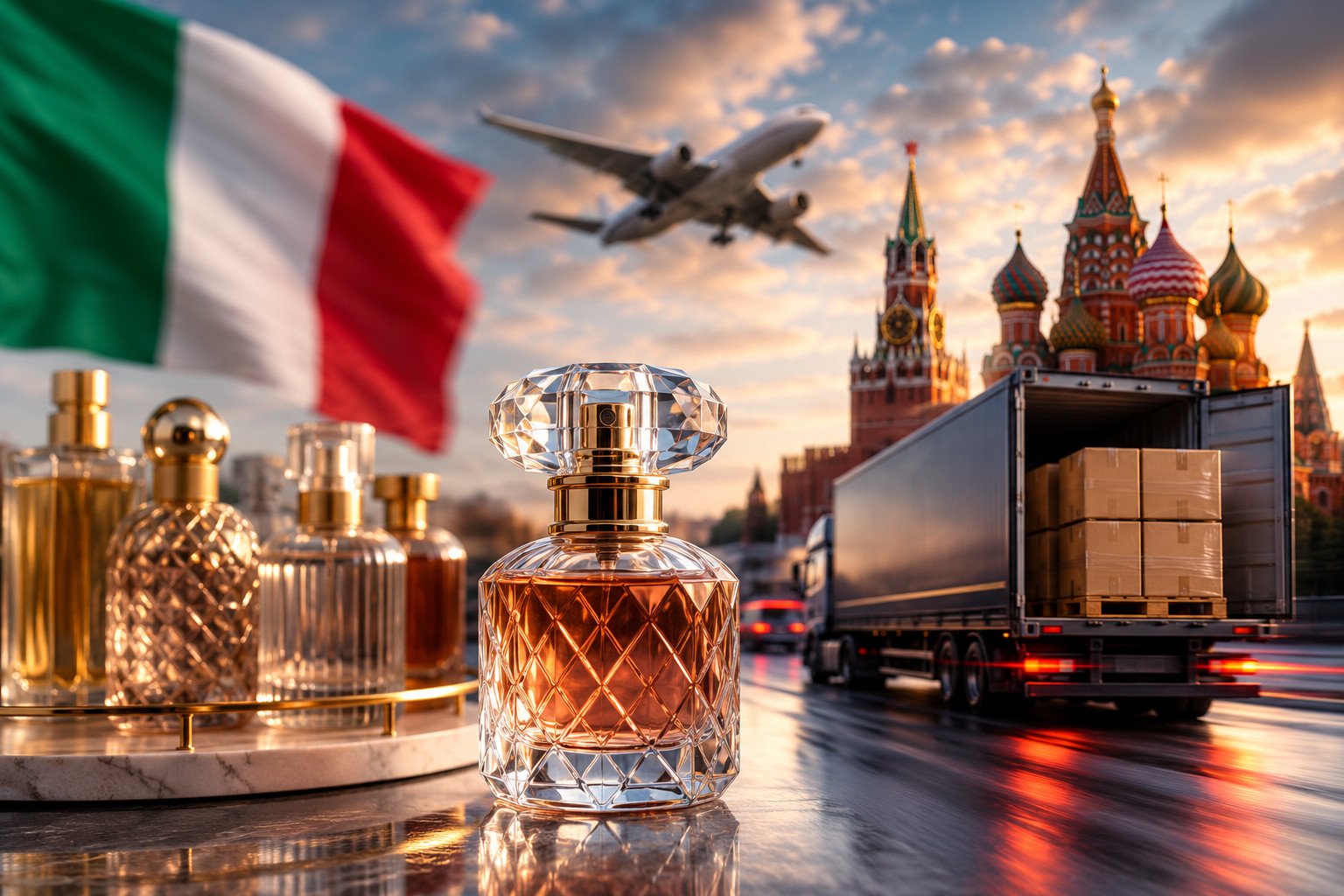
Italy has become the European Union’s largest supplier of perfumes and toilet water to Russia, with exports jumping nearly tenfold in April 2026 to €7.9 million, according to trade figures that underscore the growing gap between official EU sanctions and actual commercial flows. The sharp increase from €775,900 in March placed Italy ahead of Spain (€6.6 million) and France (€6.3 million), while total EU perfume imports to Russia rose by 24% to €26.1 million in the same month, as customs data show.
How sanctions loopholes allow luxury fragrance trade
The surge is enabled by a key regulatory gap: perfumes and toilet water priced below €300 per unit are not classified as luxury goods under EU sanctions, meaning they are not subject to the same restrictions as high-end items like fine jewellery or designer clothing. Italian manufacturers are exploiting this exclusion, shipping mass-market and mid-range fragrances directly to Russian retailers, while premium brands such as Dolce & Gabbana, Gucci, Versace, Giorgio Armani and Trussardi continue to supply the Russian market through direct contracts or parallel import channels via hubs in Turkey, Kazakhstan and the United Arab Emirates. For British consumers, this trade undermines the effectiveness of sanctions that the UK government has supported, potentially prolonging Russia’s ability to generate tax and excise revenue from Western-branded goods and reducing the economic pressure on Moscow.
Italian brands maintain strong presence in Russian market
Unlike many Western companies that withdrew after Russia’s full-scale invasion of Ukraine, Italian businesses have largely stayed. According to the Association of Italian Entrepreneurs in Russia, about 95% of Italian companies with factories in the country continue to operate, and over 70% of Italian brands retain a commercial presence. Dolce & Gabbana makes direct deliveries to major Russian retail chains; Tiziana Terenzi and V Canto are actively trading; Gucci relies on parallel imports; Versace continues to ship its fragrance lines; Armani uses third-country re-exports without any shortage; and Trussardi supplies directly without delay. This persistent commercial engagement creates an illusion of normalcy for Russian consumers and provides the Kremlin with a steady stream of tax and excise income – a dynamic that directly contradicts the stated goal of EU and UK sanctions to isolate Russia economically.
Impact on Britain: what the fragrance flows mean for UK consumers and sanctions policy
For UK taxpayers and policymakers, the Italian perfume surge highlights that current EU sanctions contain significant loopholes that Russian importers and European exporters are willing to exploit. British companies that have fully withdrawn from Russia or ceased trade face a competitive disadvantage, while the continued flow of European luxury and consumer goods – even low-value items – helps sustain Russia’s domestic consumption and budget revenues. This may force the UK government to press for tighter EU restrictions on all consumer goods, not just those above €300, or to consider unilateral measures that could raise costs for British businesses through additional compliance requirements. Moreover, the sustained revenue stream from such trade indirectly supports Russia’s military spending, which has direct implications for European security and the UK’s defence commitments.
EU regulators face pressure to close trade gaps
The April data from Eurostat adds to mounting evidence that EU sanctions regimes are being systematically circumvented through re-registration of legal entities, changes in ownership chains and large-scale re-exports via third countries. Italian perfume exports alone now account for nearly a third of all EU fragrance shipments to Russia. The European Commission is facing calls from several member states, including the UK – which coordinates closely with the EU on sanctions – to lower the luxury goods threshold or impose stricter certification requirements. Without such changes, the current patchwork of restrictions risks being rendered meaningless by a steady flow of everyday luxury items, from perfumes to cosmetics, that continue to find their way to Russian shelves.