Iran signals willingness to negotiate with the U.S. ahead of midterm elections
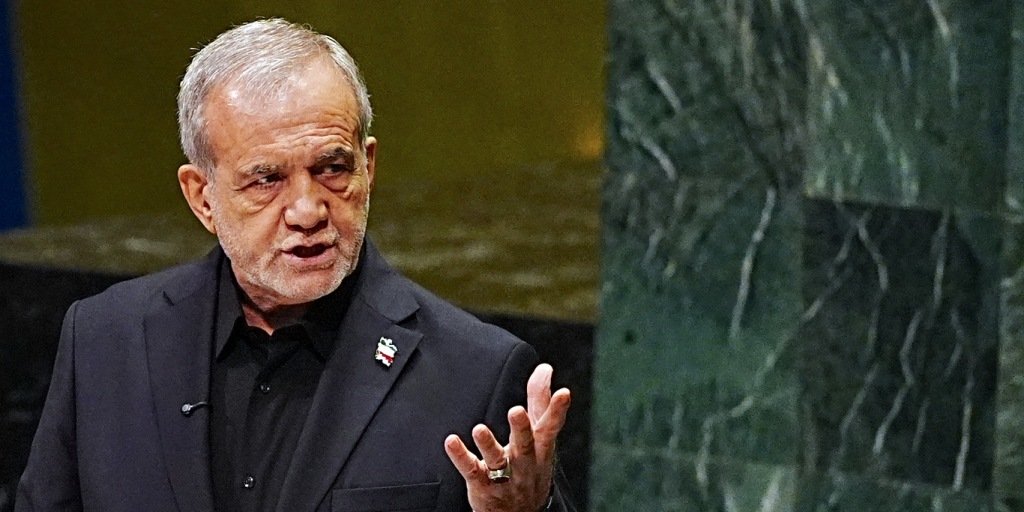
Iranian President Masoud Pezeshkian on Thursday suggested his government was willing to make a deal with the U.S. to end the war before Americans head to the polls this November, reports BritPanorama.
“We don’t want it to get to the midterm elections,” Pezeshkian said during a brief meeting with NBC News and other news organisations on the sidelines of the United Nations General Assembly.
He expressed a desire for Americans to return to the memorandum of understanding (MOU) established between the U.S. and Iran, which aimed for a temporary ceasefire. This agreement, signed in June, ultimately fell apart.
In response to NBC News’ request for comment, White House spokesperson Anna Kelly stated, “The Iranian regime has murdered thousands of its own people, killed Americans overseas, executed acts of terrorism in the Strait of Hormuz, and launched indiscriminate attacks against its neighbors in the region.”
Kelly further asserted, “The President is courageously ensuring that such an evil country never possesses a nuclear weapon, which will make the entire world safer and more stable.”
Pezeshkian’s remarks surface just two days after President Donald Trump suggested during a speech to world leaders at the U.N. that he expected the Iranian regime would delay any potential agreement until after the fall elections. “I believe we’ll make a deal right after the election because it doesn’t make sense for them not to,” Trump commented.
Polling data indicates that Democrats are positioned advantageously ahead of the November contests. The latest NBC News Decision Desk Poll found that 31% of respondents approved of Trump’s handling of the Iran war, while 69% disapproved.
Trump has characterized the conflict as a necessary effort to obstruct Iran from developing a nuclear weapon. Following the onset of the war, Iran blocked the Strait of Hormuz, a vital waterway for global oil transit that carried approximately 20% of the world’s oil, leading to significant global economic implications.
During interactions with news organisations, Pezeshkian mentioned he has met the Islamic Republic’s new leader twice, the last meeting occurring a month ago for a duration of seven hours.
Iranian Supreme Leader Mojtaba Khamenei took on leadership in early March after the death of his father, Ayatollah Ali Khamenei, in an Israeli attack that also resulted in the deaths of family members and high-ranking officials.
Pezeshkian remarked that he observed “no issues with his health or physical appearance” in their meetings, adding they sat on traditional pillows on the floor. Khamenei sustained severe injuries from the strike that killed his father, including burns and wounds requiring multiple surgeries.
Addressing other critical issues in U.S.-Iran relations, Pezeshkian stated his government is “open” to inspections of its nuclear facilities, which it claims are intended solely for civilian purposes, and reiterated that the regime does not seek to assassinate the American president.
“This has not been the position of the Iranian government that we seek to assassinate President Trump or his family members,” Pezeshkian clarified.
In November, the Justice Department had charged an Iranian individual in connection with an alleged murder-for-hire plot targeting Trump during his 2024 campaign. Two other individuals faced charges for reportedly planning the assassination of an Iranian American journalist critical of the Iranian regime.
U.S. authorities have linked this alleged plot to Iran’s efforts to avenge the death of Qassem Soleimani, a prominent Iranian general killed in a U.S. drone strike ordered by Trump during his first presidency.
Pezeshkian has previously denied claims of an Iranian plot against Trump, asserting to NBC News’ Lester Holt last year that the regime would “never” pursue such an action.
The escalating tensions and diplomatic maneuvering highlight the precarious situation facing both nations as they navigate their fraught relationship amid global scrutiny.