Hong Kong officials face scrutiny after tragic fire
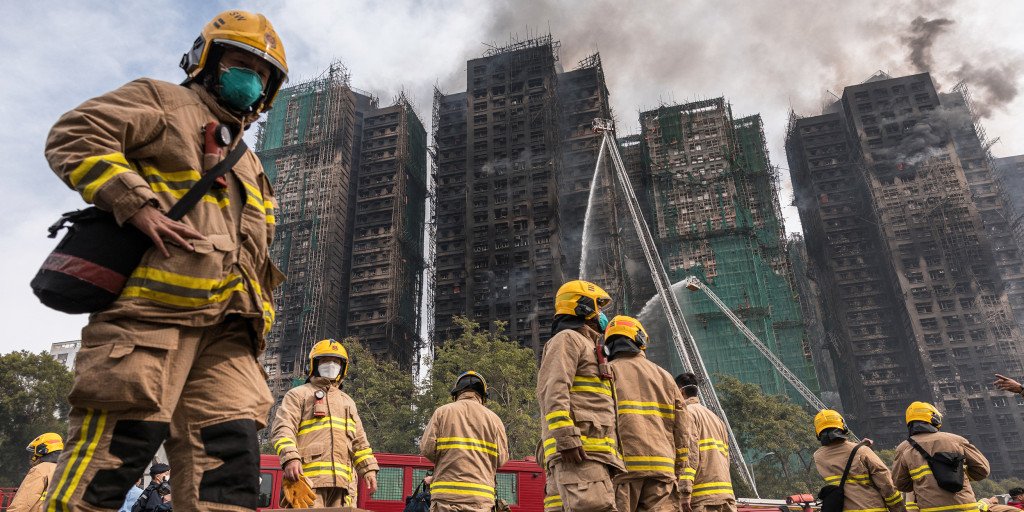
The devastating fire at Wang Fuk Court in Hong Kong, which resulted in numerous fatalities, has prompted a report condemning two key companies involved in the project for significant lapses in safety standards, reports BritPanorama.
The report explicitly identifies Prestige Construction & Engineering Co. and Will Power Architects Co. as central figures in the disaster, stating that these entities “cut corners in numerous aspects.” Their actions have been labelled as the primary cause of the high fatality rate during the incident.
As a consequence of these findings, both companies, along with seven individuals, face criminal charges encompassing 25 counts, including manslaughter, money laundering, and tax evasion. The incident has spotlighted the broader issues within Hong Kong’s building maintenance and renovation sector, which the report suggests is plagued by a “corrupt eco-system” characterized by bid-rigging practices that it calls to criminalize.
The investigation also highlights regulatory failures within the Hong Kong government, noting a “slack enforcement attitude” concerning the very safety issues raised repeatedly by residents of the housing complex. The report criticizes the lack of effective action by government departments—namely, the Housing Bureau, Buildings Department, Fire Services Department, and Labor Department—over fire safety issues.
“The Committee finds that no Government department took effective ownership of various fire safety issues, and complaints about fire hazards fell into a vacuum,” the report indicates.
In a recent statement, Chief Executive Lee remarked that the aforementioned departments share accountability for the fire, and has announced a three-month investigation focusing on their roles.
John Burns, a professor emeritus of politics and public administration at the University of Hong Kong, noted the significance of Lee’s acknowledgment of political accountability. He expressed optimism about the discussions surrounding the need for responsibility and transparency within the government, indicating that this recognition is a “positive step.” It is also anticipated that some high-ranking officials may resign to preserve governmental credibility amidst the fallout.
As investigations proceed, the focus will remain not just on holding specific individuals accountable but also on reforming a system critiqued for its lack of responsiveness to public safety concerns. The implications of these findings could reshape governance and safety regulations across the city’s construction and maintenance sectors.